
DOE in medical terms stands for Dyspnea on Exertion. It refers to shortness of breath that occurs during physical activity and improves with rest. DOE is a common symptom evaluated in clinical and hospital settings and can be linked to heart, lung, or overall fitness conditions.
If you’ve come across the term “DOE” in medical notes, during a doctor’s appointment, or in a test report, it can be confusing at first. Understanding what it means can help you make better sense of diagnoses, symptoms, and treatment plans.
Medical abbreviations are commonly used in healthcare, but they are not always easy for patients or families to understand. One such abbreviation is DOE, which often appears in clinical records and discussions about symptoms.
DOE is not a disease by itself. Instead, it refers to a symptom that helps doctors evaluate how well the body handles physical activity. It can provide important clues about a person’s overall health and possible underlying conditions.
In this article, we will break down what DOE means, why it is used by healthcare professionals, its common causes, real-life examples, and how it is different from other related medical terms.
Origin and Medical Meaning of DOE
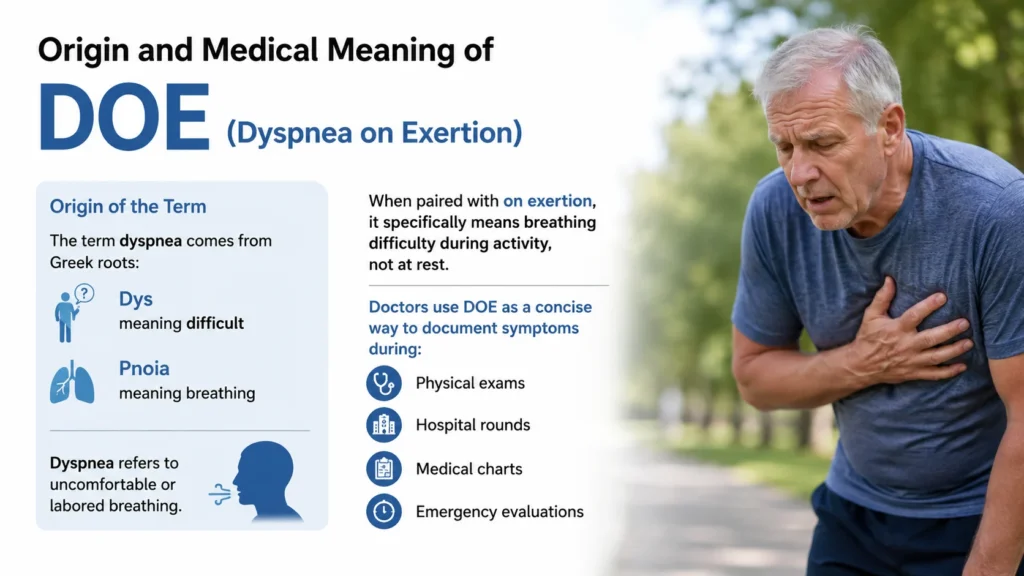
The term dyspnea comes from Greek roots:
Dyspnea refers to uncomfortable or labored breathing.
When paired with on exertion, it specifically means breathing difficulty during activity, not at rest.
Doctors use DOE as a concise way to document symptoms during:
- Physical exams
- Hospital rounds
- Medical charts
- Emergency evaluations
How DOE Is Used in Real Medical Settings

DOE is commonly noted when a patient reports:
- Feeling short of breath while walking
- Difficulty climbing stairs
- Needing to stop activity to catch their breath
Example medical note:
“Patient reports DOE after walking two blocks.”
This tells clinicians that the symptom occurs with activity, which helps narrow down possible causes.
DOE Medical Abbreviation
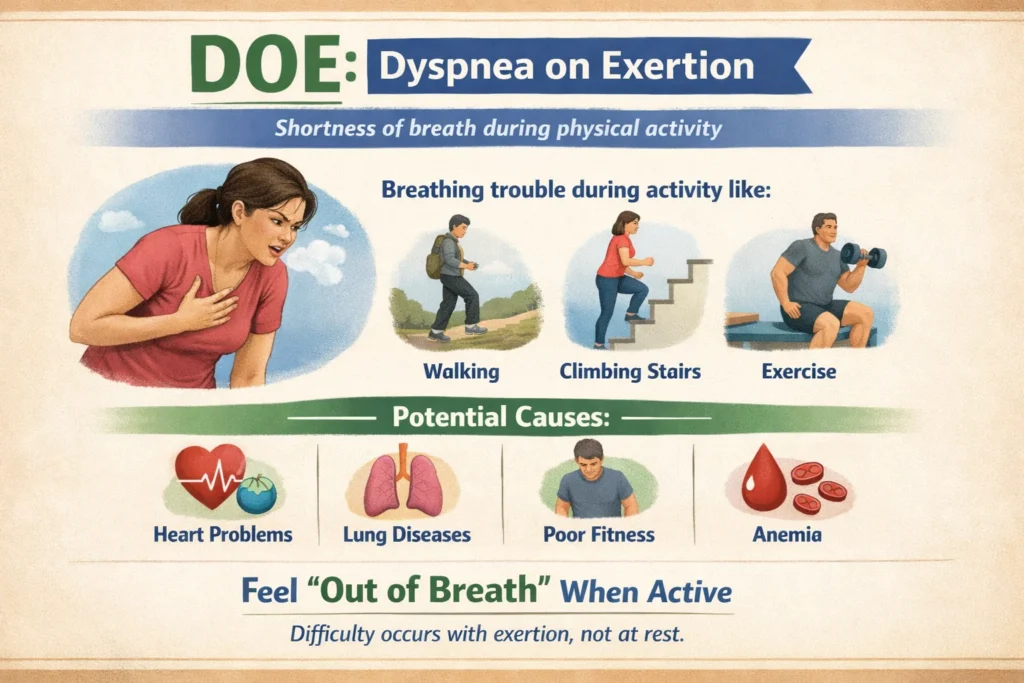
DOE in medical abbreviation for “Dyspnea on Exertion.”
It refers to shortness of breath that happens during physical activity or exercise, such as walking, climbing stairs, or doing any work that requires effort.
When a doctor writes DOE in a medical report, it means the patient experiences breathing difficulty only when they are active, not necessarily while resting.
This symptom can be linked to several conditions, such as:
- Heart problems (like heart failure)
- Lung diseases (like asthma or COPD)
- Poor physical fitness
- Anemia (low blood count)
In simple words, DOE means you feel out of breath when you move or exert yourself physically.
Common Causes of DOE
DOE can be linked to many conditions, ranging from mild to serious.
Frequent Medical Causes
| Category | Possible Causes |
|---|---|
| Heart-related | Heart failure, coronary artery disease |
| Lung-related | Asthma, COPD, pneumonia |
| Blood-related | Anemia |
| Fitness-related | Deconditioning, sedentary lifestyle |
| Other | Obesity, anxiety, post-illness recovery |
Important:
DOE alone does not confirm a diagnosis. Doctors consider medical history, exams, and tests before drawing conclusions.
Examples of DOE in Medical Context
Example Table
| SituationMedical DescriptionWhat It Means | ||
|---|---|---|
| Walking upstairs | “DOE with stair climbing” | Shortness of breath during exertion |
| Exercise | “DOE after light activity” | Reduced exercise tolerance |
| Recovery | “DOE improving with rest” | Symptom resolves when activity stops |
| Chart note | “No DOE at baseline” | No shortness of breath during activity |
DOE vs Similar Medical Terms
| Term | Meaning | Difference |
|---|---|---|
| DOE | Dyspnea on exertion | Occurs during activity |
| SOB | Shortness of breath | General term, activity or rest |
| Orthopnea | Breathing difficulty when lying flat | Position-related |
| PND | Sudden nighttime breathing difficulty | Occurs during sleep |
| Dyspnea at rest | Shortness of breath without activity | More concerning |
Quick Tip:
DOE is often an early warning symptom, while shortness of breath at rest may signal more urgent issues.
How Doctors Evaluate DOE
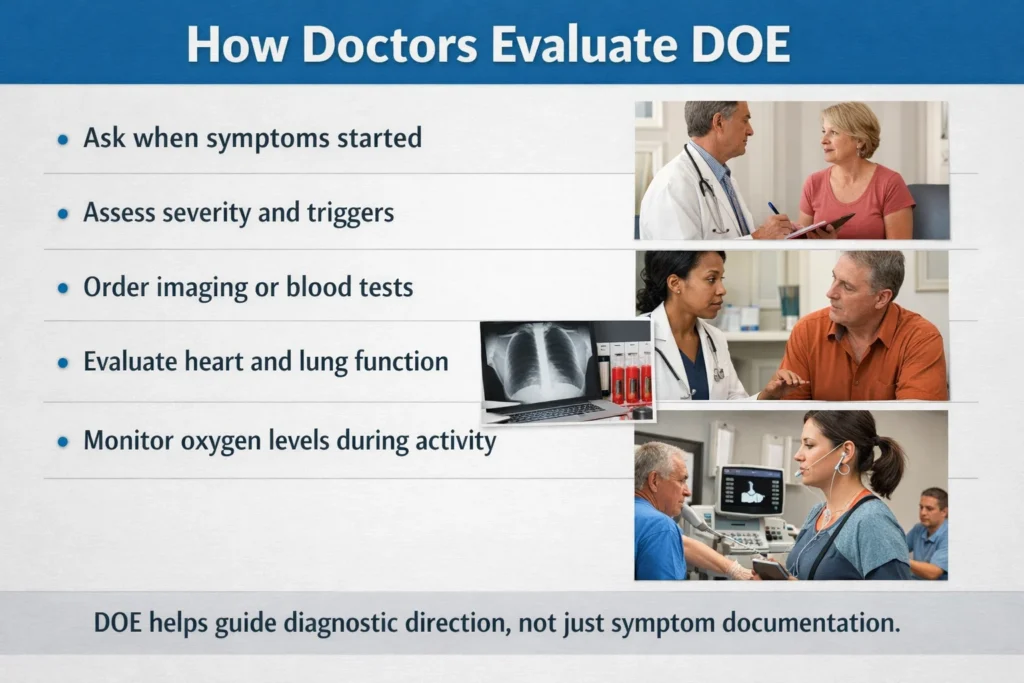
When a patient reports DOE, providers may:
- Ask when symptoms started
- Assess severity and triggers
- Order imaging or blood tests
- Evaluate heart and lung function
- Monitor oxygen levels during activity
DOE helps guide diagnostic direction, not just symptom documentation.
Is DOE Serious?
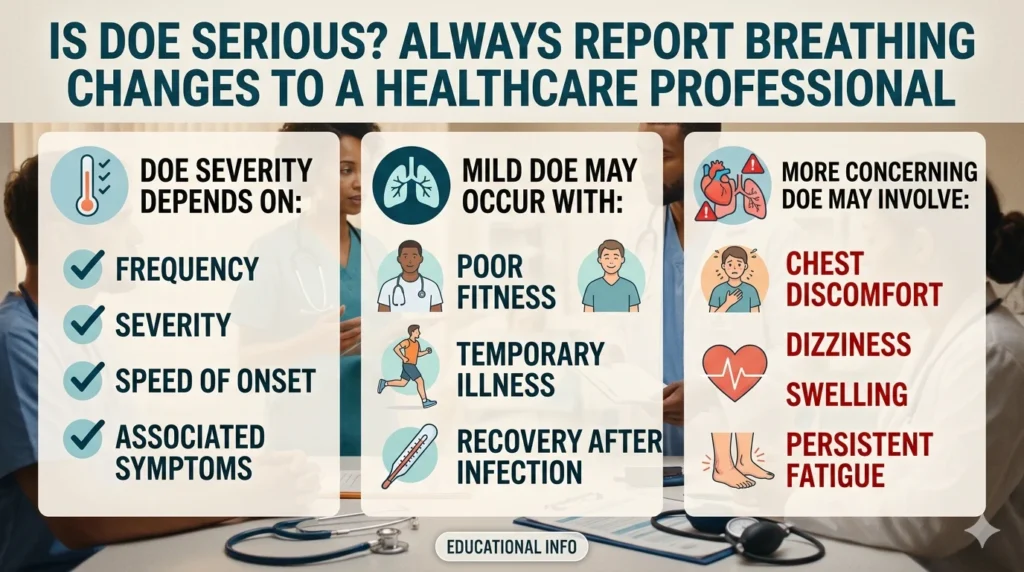
DOE can range from mild to serious depending on:
- Frequency
- Severity
- Speed of onset
- Associated symptoms
Mild DOE may occur with:
- Poor fitness
- Temporary illness
- Recovery after infection
More concerning DOE may involve:
- Chest discomfort
- Dizziness
- Swelling
- Persistent fatigue
Always report changes in breathing to a healthcare professional.
Polite and Clear Ways Doctors Explain DOE
Healthcare providers may explain DOE like this:
- “You’re experiencing shortness of breath when you exert yourself.”
- “Your breathing difficulty happens with activity, not at rest.”
- “This symptom helps us evaluate your heart and lungs.”
Clear explanations help patients feel informed rather than alarmed.
FAQs
- What does DOE stand for medically?
DOE means Dyspnea on Exertion. - Is DOE a diagnosis?
No, it is a symptom, not a disease. - Is DOE the same as shortness of breath?
It’s a specific type that happens during physical activity. - Can DOE be temporary?
Yes, especially after illness or reduced physical activity. - Is DOE related to heart problems?
It can be, but it may also involve lung or blood conditions. - How do doctors test DOE?
Through exams, imaging, blood tests, and exercise tolerance tests. - Is DOE common in hospitals?
Yes, it is frequently documented in patient charts. - When should DOE be checked by a doctor?
If it worsens, appears suddenly, or limits daily activities.
Practical Tips for Patients
- Track when symptoms occur
- Note what activities trigger DOE
- Report any changes promptly
- Follow prescribed treatment plans
- Don’t ignore persistent breathing difficulty
Conclusion
DOE, or Dyspnea on Exertion, is a widely used medical term that describes shortness of breath during physical activity. While it does not diagnose a condition by itself, it provides valuable clues that help doctors assess heart, lung, and overall health.
Understanding DOE empowers patients to communicate more clearly and stay informed about their health.
Discover More Related Articles:

Jessica Brown is a language-focused writer who creates well-researched articles on word meanings, abbreviations, and everyday expressions. She contributes to meanvoro.com, delivering simple, reliable, and reader-friendly content designed to make complex terms easy to understand.