Definition
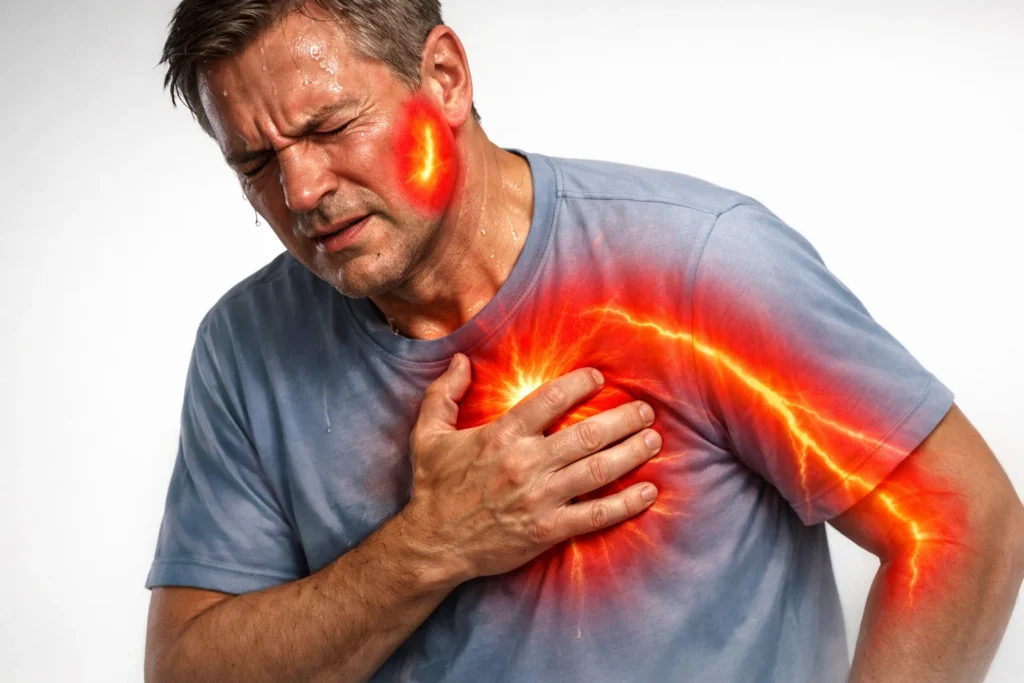
A heart attack (medically known as a Myocardial Infarction) typically feels like intense chest discomfort or pressure, often described as squeezing, heaviness, or pain that may spread to the arms, neck, jaw, back, or stomach.
Imagine feeling a strange pressure in your chest—something that doesn’t quite feel like normal pain. It builds slowly, maybe spreads to your arm, and suddenly you’re unsure whether it’s something minor or something serious.
That uncertainty is exactly why understanding what a heart attack feels like is so important.
A heart attack isn’t always dramatic or obvious. It doesn’t always look like what you see in movies. In fact, many people mistake the symptoms for indigestion, anxiety, or fatigue, which can delay life-saving treatment.
This guide breaks it all down in a simple, clear, and human way—so you can recognize the signs early and respond quickly.
What Does a Heart Attack Feel Like?
A heart attack can feel different depending on the person, but there are some common sensations most people report.
1. Chest Pain or Discomfort
This is the most common symptom.
- Feels like:
- Pressure or squeezing
- Fullness or heaviness
- Burning or tightness
- Location: Center or left side of the chest
- Duration: Lasts more than a few minutes or comes and goes
👉 Many people describe it as “an elephant sitting on the chest.”
2. Pain That Spreads (Radiating Pain)
The discomfort may travel to:
- Left arm (most common)
- Both arms
- Neck
- Jaw
- Upper back
- Shoulders
This spreading pain is a key warning sign.
3. Shortness of Breath
You may feel like:
- You can’t catch your breath
- Breathing feels shallow or difficult
This can happen with or without chest pain.
4. Cold Sweats
- Sudden sweating without physical activity
- Often described as clammy skin
5. Nausea or Vomiting
Some people feel:
- Sick to their stomach
- Like they have severe indigestion
6. Dizziness or Lightheadedness
- Feeling faint
- Sudden weakness
- Loss of balance
7. Unusual Fatigue
Especially common in women:
- Extreme tiredness
- Feeling drained even without activity
Example Scenarios
| Scenario | What It Feels Like | Tone |
|---|---|---|
| Friendly | “I thought it was just gas, but the pressure wouldn’t go away 😟” | Mild concern |
| Neutral | “There was a tightness in my chest that lasted 10 minutes” | Informative |
| Serious | “The pain spread to my arm and I started sweating heavily” | Urgent |
| Subtle Case | “I just felt really tired and short of breath all day” | Quiet warning |
Differences Between Men and Women
Heart attack symptoms can vary by gender.
In Men:
- Classic chest pain is more common
- Pain radiating to the left arm
In Women:
- Less obvious chest pain
- More likely to experience:
- Fatigue
- Nausea
- Back or jaw pain
- Shortness of breath
👉 This difference is why heart attacks in women are sometimes missed.
What Causes a Heart Attack?
A heart attack happens when:
- Blood flow to the heart is blocked
- Usually due to a blood clot
- The heart muscle starts to lose oxygen
This is often linked to coronary artery disease, where arteries narrow due to plaque buildup.
Origin & Medical Background
The term “heart attack” is the everyday name for myocardial infarction:
- “Myo” = muscle
- “Cardial” = heart
- “Infarction” = tissue death due to lack of blood
It has become widely used because it’s easier to understand than medical terminology.
Popularity & Real-World Usage
The phrase “heart attack” is used in:
- Medical conversations
- Everyday language
- Media and films
- Health awareness campaigns
Example uses:
- “He had a heart attack last night.”
- “These symptoms could mean a heart attack.”
Because of its seriousness, the term is always used in a neutral or urgent tone, never casually.
Comparison: Heart Attack vs Similar Conditions
| Condition | Key Feeling | Main Difference |
|---|---|---|
| Heart Attack | Pressure, spreading pain | Persistent and worsening |
| Panic Attack | Rapid heartbeat, fear | No physical heart damage |
| Indigestion | Burning stomach pain | Usually relieved with food/antacids |
| Angina | Chest pain during exertion | Goes away with rest |
👉 A panic attack may feel intense, but it doesn’t block blood flow to the heart.
Can a Heart Attack Feel Mild?
Yes—and that’s the danger.
Some heart attacks are:
- Quiet
- Slow-building
- Easy to ignore
These are sometimes called “silent heart attacks.”
Signs may include:
- Mild discomfort
- Fatigue
- Slight chest tightness
Alternate Meanings of “Heart Attack”
While primarily medical, “heart attack” can be used figuratively:
- “You almost gave me a heart attack!” 😅
→ Meaning: You scared me
This usage is informal and exaggerative—not related to actual health.
What To Do If You Think You’re Having a Heart Attack
Act immediately. Do not wait.
Steps to Take:
- Call emergency services right away
- Sit down and stay calm
- Chew an aspirin (if advised by a doctor)
- Avoid driving yourself
👉 Early treatment can save your life.
Polite or Professional Alternatives
In formal or medical contexts:
- “Cardiac event”
- “Myocardial infarction”
- “Acute coronary syndrome”
In everyday use:
- “Heart issue”
- “Chest emergency”
FAQs
1. What is the first sign of a heart attack?
Usually chest discomfort or pressure, but it can vary.
2. Can a heart attack happen without chest pain?
Yes, especially in women. Symptoms like fatigue or nausea may appear instead.
3. How long do heart attack symptoms last?
Typically more than a few minutes or come and go.
4. What does a mild heart attack feel like?
It may feel like indigestion, slight pressure, or fatigue.
5. Can young people have heart attacks?
Yes, though less common, especially with risk factors like smoking or stress.
6. Is a heart attack always sudden?
Not always. Some develop slowly over hours or days.
7. How is a heart attack different from cardiac arrest?
A heart attack is a blockage problem, while cardiac arrest is an electrical failure of the heart.
8. Can stress cause a heart attack?
Severe stress can trigger one, especially if heart disease is already present.
Conclusion:
Understanding what a heart attack feels like isn’t just helpful it can be life-saving. While chest pressure or pain is the most recognized symptom, many people experience less obvious signs like fatigue, shortness of breath, nausea, or discomfort spreading to the arm, jaw, or back.
When it comes to heart health, it’s always better to be cautious than to wait. Recognizing the signs early and responding fast can make all the difference.
Discover More Related Articles:
- What does similar mean in math: Complete Beginner’s Guide In 2026
- A Bed Bug Look Like: Size, Shape & Color In 2026

Madison Taylor is an experienced content writer who focuses on researching and explaining word meanings, slang, and texting terms. She writes for meanvoro.com, creating clear and accurate to help readers understand language easily.