
Definition
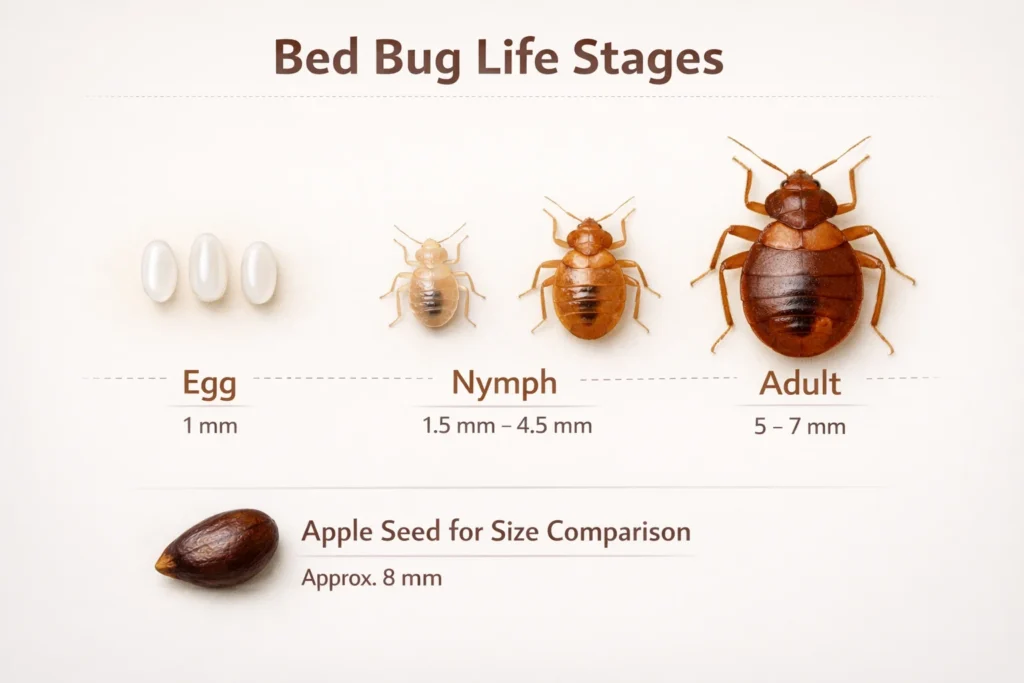
A bed bug is a small, flat, oval-shaped insect that is reddish-brown in color and about the size of an apple seed. Adult bed bugs typically measure 4–7 mm long, have no wings, and become more swollen and darker after feeding on blood.
Imagine waking up with itchy bites and wondering what caused them. One of the first questions people ask is: “What does a bed bug look like?”
Understanding how bed bugs look is the key to identifying an infestation early—before it spreads. These tiny pests are experts at hiding, but once you know their appearance, spotting them becomes much easier.
In this guide, you’ll learn exactly what bed bugs look like at every stage of life, how to distinguish them from similar insects, and what signs to watch for in your home.
What Does a Bed Bug Look Like?
Bed bugs go through several life stages, and their appearance changes slightly as they grow.
Adult Bed Bugs
- Size: About 4–7 mm (roughly the size of an apple seed)
- Shape: Flat, oval-shaped body
- Color: Reddish-brown
- After Feeding: Swollen and darker red
- Wings: None (they cannot fly)
- Movement: Quick crawlers
👉 Think of them as tiny, flattened beetles with a slightly shiny surface.
Baby Bed Bugs (Nymphs)
- Size: Much smaller (1–4 mm)
- Color: Pale white or yellowish
- Visibility: Harder to spot due to their tiny size and light color
🧠 Fun fact: After feeding, nymphs turn bright red because their bodies fill with blood.
Bed Bug Eggs
- Size: About 1 mm (very tiny)
- Color: White or translucent
- Shape: Oval, similar to a grain of rice
- Location: Found in clusters in cracks, mattress seams, or furniture joints
Bed Bug Shells (Shed Skins)
As they grow, bed bugs shed their outer layer.
- Color: Light brown or translucent
- Texture: Thin and empty-looking
- Where Found: Near hiding spots
These shells are often one of the earliest visible signs of infestation.
Quick Visual Identification Table
| Stage | Size | Color | Shape | Visibility |
|---|---|---|---|---|
| Egg | ~1 mm | White/translucent | Oval | Very hard |
| Nymph (young) | 1–4 mm | Pale/yellow | Oval | Hard |
| Adult | 4–7 mm | Reddish-brown | Flat, oval | Easier |
| Fed Adult | 5–7 mm | Dark red | Swollen | Easier |
| Shed Skin | Varies | Light brown | Thin shell | Moderate |
Where You’re Most Likely to See Bed Bugs 👀
Bed bugs don’t just sit out in the open. They hide in tight, dark spaces close to where people sleep.
Common Hiding Spots:
- Mattress seams and tags
- Bed frames and headboards
- Cracks in walls or furniture
- Behind wallpaper or picture frames
- Inside electrical outlets
🛑 Important: They are most active at night, so daytime sightings can indicate a larger infestation.
Origin and Real-World Presence of Bed Bugs
Bed bugs have been around for thousands of years. They were common in ancient civilizations and have made a major comeback in recent decades.
Why Are Bed Bugs So Common Today?
- Increased global travel
- Resistance to pesticides
- Easy transfer through luggage, clothing, and furniture
They are found worldwide—in homes, hotels, dorms, and even public transport.
Signs That Help You Identify Bed Bugs
Sometimes you may not see the bug itself—but you’ll notice clues.
Common Signs:
- Small red bites in a line or cluster
- Tiny dark spots (bed bug droppings)
- Blood stains on sheets
- Shed skins or eggs
- Musty odor in severe infestations
Examples in Context
Friendly/Curious Tone
- “I found a tiny brown bug on my mattress—could it be a bed bug?”
- “They look like little apple seeds, right?”
Concerned Tone 😟
- “I think I saw a flat reddish bug crawling near my pillow…”
- “These bites are in a line—are these bed bugs?”
Dismissive/Confused Tone
- “It’s probably just a mosquito… bed bugs are rare, right?”
Bed Bugs vs Similar Bugs
People often confuse bed bugs with other insects. Here’s how to tell them apart:
| Bug Type | Key Difference |
|---|---|
| Fleas | Smaller, jump instead of crawl |
| Ticks | Rounder body, attach to skin |
| Carpet Beetles | Hairy larvae, not flat or red |
| Cockroach Nymphs | Longer body, more elongated |
👉 Tip: If it’s flat, oval, reddish, and hiding near your bed—it’s likely a bed bug.
Alternate Meanings of “Bed Bug”
While “bed bug” mainly refers to the insect, it can sometimes be used informally:
- Figurative use: “That issue is a real bed bug” (meaning something annoying or persistent)
However, this usage is rare compared to the literal meaning.
Professional and Polite Alternatives
If you’re discussing bed bugs in formal settings (like hotels or rentals), you might use:
- “Pest issue”
- “Insect infestation”
- “Hygiene concern”
These sound more neutral and less alarming in professional communication.
Practical Tips to Identify Bed Bugs Quickly
- Use a flashlight to inspect mattress seams
- Check for tiny dark stains or shells
- Look in tight cracks and corners
- Inspect luggage after traveling
- Wash and heat-dry bedding regularly
FAQs:
1. Are bed bugs visible to the naked eye?
Yes, adult bed bugs are visible, but their small size makes them easy to miss.
2. What color are bed bugs before and after feeding?
Before feeding, they are reddish-brown; after feeding, they become darker and more swollen.
3. Do bed bugs have wings?
No, bed bugs do not have wings and cannot fly.
4. How small are baby bed bugs?
They can be as tiny as 1 mm, making them difficult to see.
5. What do bed bug eggs look like?
They are small, white, and oval—similar to tiny grains of rice.
6. Can bed bugs jump like fleas?
No, bed bugs crawl but do not jump or fly.
7. Where do bed bugs hide during the day?
They hide in cracks, mattress seams, furniture joints, and other dark spaces.
8. How can I confirm if it’s a bed bug?
Look at its shape (flat and oval), color (reddish-brown), and location (near sleeping areas).
Conclusion:
Bed bugs are small, flat, oval-shaped insects that are usually reddish-brown and about the size of an apple seed. While adults are visible to the eye, their eggs and young nymphs are much harder to spot, which is why infestations often go unnoticed at first.
The most important thing to remember is that bed bugs don’t fly or jump they hide in cracks, mattress seams, and furniture close to where people sleep. Early identification makes a huge difference in stopping them from spreading.
Recognizing these features early can save you from a bigger infestation later. Always check common hiding spots, stay alert after traveling, and act quickly if you notice any signs.
Discover More Related Articles:

Jessica Brown is a language-focused writer who creates well-researched articles on word meanings, abbreviations, and everyday expressions. She contributes to meanvoro.com, delivering simple, reliable, and reader-friendly content designed to make complex terms easy to understand.