
In a hospital or medical setting, NPO means “nothing by mouth.” It is a medical instruction indicating that a patient must not eat or drink anything, including food, water, or sometimes even medications taken orally.
If you or a loved one has ever seen NPO meaning medical written on a chart or heard a nurse say it, it can sound confusing or even worrying. Understanding what it means and why doctors use it can make hospital stays far less stressful.
NPO medical abbreviation that stands for “Nil Per Os,” a Latin term meaning “nothing by mouth.”
It is commonly used in hospitals to instruct patients not to eat or drink anything for a specific period.
Doctors usually recommend NPO before surgeries or certain medical tests to keep the stomach empty.
This helps prevent complications like vomiting or aspiration during medical procedures.
NPO Meaning
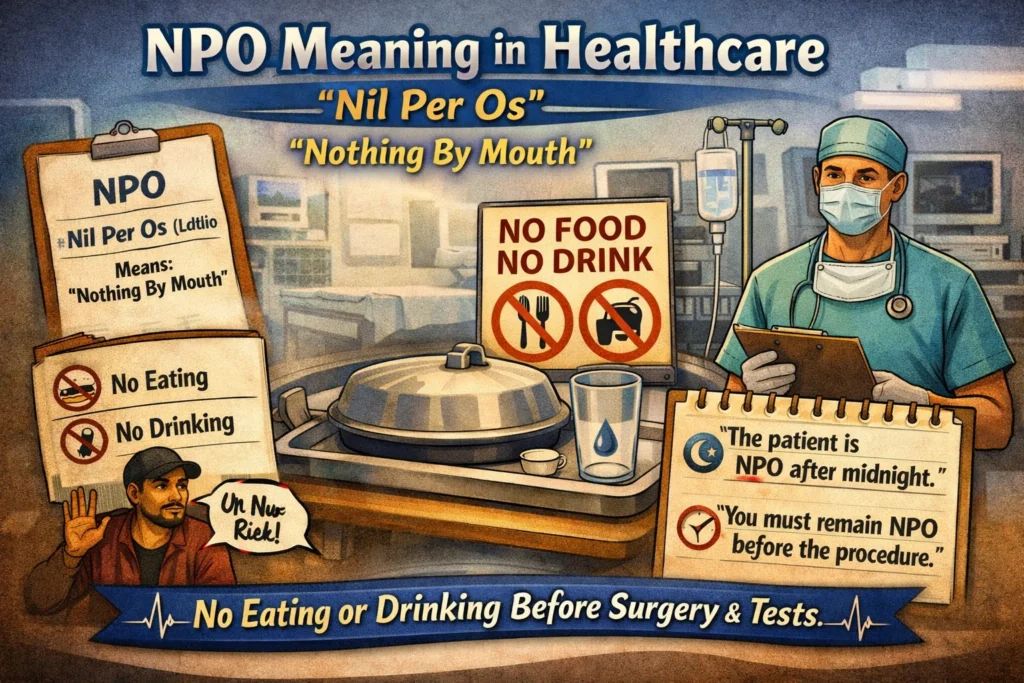
In hospitals and healthcare settings, npo meaning comes from the Latin phrase “nil per os,” which means “nothing by mouth.”
Doctors use this instruction when a patient should not eat or drink before surgery, medical tests, or certain treatments.
Examples:
- “The patient is NPO after midnight.”
- “You must remain NPO before the procedure.”
Origin and Meaning of NPO
The abbreviation NPO comes from the Latin phrase “nil per os,” which literally translates to “nothing through the mouth.”
Latin terms are still widely used in medicine because they:
- Are precise and universal
- Reduce confusion across languages
- Have long-standing historical use
Today, NPO is one of the most common medical abbreviations used in hospitals worldwide.
What Does NPO Mean in Medical Terms?
In medical terms, NPO stands for the Latin phrase “Nil Per Os,” which means “nothing by mouth.” Doctors use this instruction when a patient should not eat or drink anything for a certain period of time. This includes food, water, candy, gum, and sometimes even medications taken orally.
NPO is commonly required before surgery, medical procedures, or certain tests to reduce the risk of complications such as vomiting or aspiration during anesthesia.
Common Reasons Doctors Order NPO
- Before surgery or anesthesia
- Prior to medical imaging or tests
- During severe nausea or vomiting
- After certain surgeries or digestive problems
- To protect the airway and lungs
Example in a Sentence
- “The patient was placed on NPO status after midnight before surgery.”
Why NPO Is Important
Following NPO instructions helps keep patients safe during medical treatments and procedures. Eating or drinking when instructed not to can increase health risks during surgery or sedation.
Why Doctors Order NPO in the Hospital
Doctors may place a patient on NPO status for several important medical reasons. It is almost always done to protect patient safety.
1. Before Surgery or Procedures
One of the most common reasons for NPO orders is before surgery.
When a patient eats or drinks before anesthesia, there is a risk of:
- Vomiting
- Aspiration (stomach contents entering the lungs)
- Serious breathing complications
Example:
- “Patient is NPO after midnight for surgery in the morning.”
2. Before Medical Tests or Imaging
Certain tests require an empty stomach to ensure accurate results.
These include:
- Endoscopy
- Colonoscopy
- Some CT scans or ultrasounds
Food or liquid can interfere with images or results.
3. Digestive or Gastrointestinal Problems
Patients with stomach or intestinal issues may be placed on NPO to allow the digestive system to rest.
Common conditions include:
- Severe vomiting
- Bowel obstruction
- Pancreatitis
- Gastrointestinal bleeding
4. Risk of Choking or Swallowing Problems
Patients who have difficulty swallowing may be temporarily NPO to prevent choking.
This is common after:
- Stroke
- Major surgery
- Severe illness
What NPO Includes
Many people assume NPO only means “no food,” but it often includes more.
Typically Not Allowed:
- Food of any kind
- Water or juice
- Coffee or tea
- Candy or chewing gum
Sometimes Allowed
- Ice chips
- Essential medications with a sip of water
- IV fluids (not by mouth)
Always follow specific instructions from healthcare staff, as NPO rules can vary.
Example
| Situation | NPO Instruction Example | Purpose |
|---|---|---|
| Before surgery | NPO after midnight | Prevent anesthesia risks |
| Before endoscopy | NPO for 8 hours | Clear stomach for procedure |
| Digestive illness | Patient remains NPO | Rest the GI tract |
| Swallowing issues | NPO pending speech evaluation | Prevent choking |
| Emergency care | Patient kept NPO until diagnosis confirmed | Safety and monitoring |
How Long Does NPO Last?
NPO status can last:
- A few hours
- Overnight
- Several days (in serious cases)
Doctors reassess NPO orders frequently. Once it’s safe, patients are usually transitioned to:
- Clear liquids
- Soft foods
- Regular diet
Comparison With Similar Hospital Terms
| Term | Meaning | Difference From NPO |
|---|---|---|
| NPO | Nothing by mouth | No food or drink |
| Clear liquids | Water, broth, juice allowed | Partial intake |
| Regular diet | Normal food | No restrictions |
| PO | By mouth | Opposite of NPO |
| IV fluids | Fluids through veins | Not oral intake |
Tip:
If you see PO, it means something is allowed by mouth, while NPO means it is not.
Common Misunderstandings About NPO
- “I can still drink water”
Not always. Many NPO orders include no water. - “It means I can’t eat forever”
NPO is usually temporary and closely monitored. - “It’s optional”
NPO is a medical order and should be followed strictly.
Polite and Professional Ways Staff Explain NPO
Healthcare professionals often explain NPO in gentle, reassuring terms:
- “You’ll need to avoid eating or drinking for now.”
- “This is to keep you safe before your procedure.”
- “We’ll let you know when you can eat again.”
If you’re unsure, it’s always appropriate to ask:
- “Am I allowed to drink water?”
- “When will I be able to eat again?”
FAQs
1. What does NPO mean in a hospital?
It means nothing by mouth. The patient cannot eat or drink.
What does NPO stand for?
NPO most commonly stands for Nonprofit Organization, a group that operates to serve a public or social purpose rather than generate profits for owners or shareholders.
3. Can I take my medications if I’m NPO?
Sometimes yes, but only if approved by your doctor or nurse.
4. Does NPO include water?
Often yes. Some patients may be allowed ice chips if permitted.
5. How long will I be NPO?
It depends on your condition or procedure. Doctors reassess regularly.
6. Is NPO dangerous?
No. Patients receive fluids and nutrition through IV if needed.
7. What happens after NPO is lifted?
Patients usually start with liquids, then progress to solid foods.
8. Can I refuse NPO orders?
You can ask questions, but ignoring NPO instructions can be unsafe.
Conclusion:
NPO is a common and important medical instruction designed to keep patients safe. While it may feel uncomfortable or inconvenient, it plays a critical role in preventing complications during procedures, tests, and serious illnesses.
Knowing what NPO medical term means helps reduce anxiety and allows patients and families to feel more informed and confident during hospital care.
Discover More Related Articles:
- Hallelujah Mean in the Bible: A Guide for Christians in 2026
- RB Mean in Football: Responsibilities, Skills, and Famous Players (2026)

Madison Taylor is an experienced content writer who focuses on researching and explaining word meanings, slang, and texting terms. She writes for meanvoro.com, creating clear and accurate to help readers understand language easily.