Definition:
Creatine is a naturally occurring compound that helps produce energy in the body, and for women it supports improved strength, exercise performance, muscle recovery, and cognitive function when used as a dietary supplement.
If you’ve spent any time in fitness spaces recently, you’ve probably noticed a shift creatine is no longer seen as “just for bodybuilders.” It has become one of the most researched and widely used supplements for both men and women.
But a common question still comes up: what does creatine do for women exactly?
The short answer is simple: it helps the body produce energy faster, improves workout performance, supports lean muscle development, and may even boost brain function. But the real story is much more interesting especially for women who want strength, energy, better recovery, and long-term health benefits without changing their natural body shape drastically.
Let’s break it down in a clear, practical, and realistic way.
What Is Creatine?
Creatine is a substance naturally found in your muscles and brain. Your body produces it from amino acids (mainly in the liver and kidneys), and you also get small amounts from foods like:
- Red meat
- Fish
- Poultry
However, food alone doesn’t provide enough creatine to maximize performance benefits, which is why many people use it as a supplement.
Creatine’s main job is to help regenerate ATP (adenosine triphosphate) your body’s quick energy source. Think of ATP as your “instant fuel.” When it runs out during exercise or intense activity, creatine helps refill it faster.
How Creatine Works in Women’s Bodies
Creatine works the same way in women as in men, but the effects can feel more noticeable in women due to naturally lower baseline muscle creatine stores.
Here’s a simple breakdown:
- Your muscles use ATP for energy during movement
- ATP gets used up quickly during workouts
- Creatine helps restore ATP faster
- This allows you to train harder and recover faster
In everyday terms, it means:
👉 You don’t “run out of energy” as quickly
👉 You can push through more reps or intensity
👉 Recovery between sets improves
Benefits of Creatine for Women
Creatine offers a wide range of benefits that go beyond just “gym performance.” Let’s explore the most important ones.
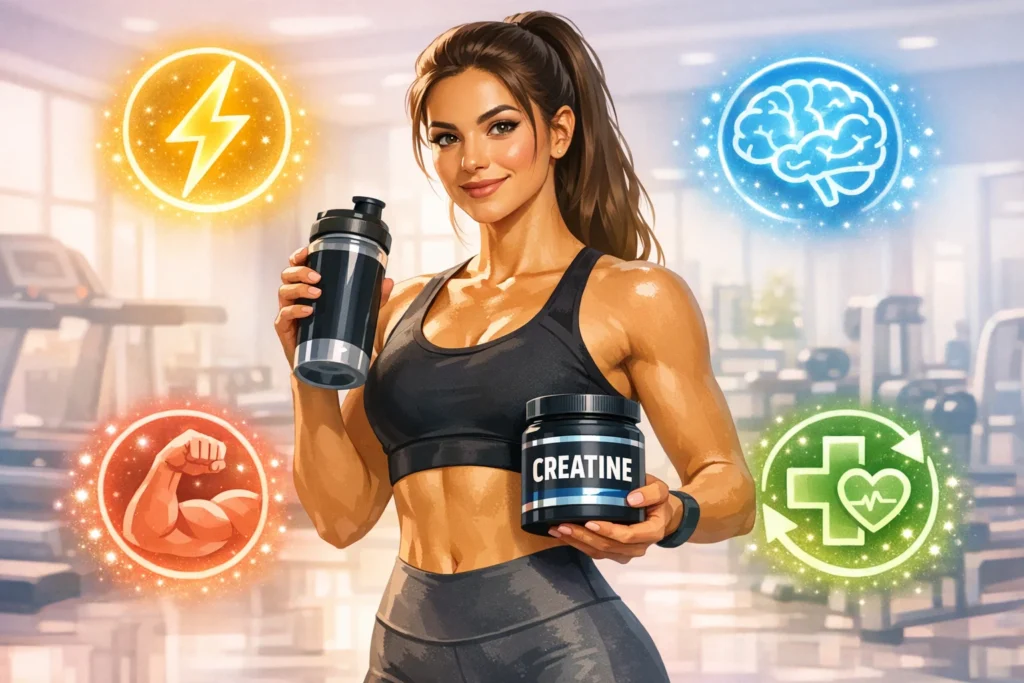
💪 1. Increased Strength and Muscle Toning
Creatine helps improve strength output, which allows women to lift heavier or perform more reps over time. This leads to:
- Lean muscle development
- Better body shaping
- Improved muscle tone without bulkiness
Important note: creatine does NOT automatically make women bulky. That depends on training and diet, not the supplement itself.
⚡ 2. Improved Energy During Workouts
Many women report feeling:
- Less fatigue during workouts
- More stamina in high-intensity exercise
- Better performance in cardio or strength training
This makes creatine especially useful for beginners or those returning to fitness.
🧠 3. Brain and Cognitive Support
Creatine is not just for muscles it also supports brain energy metabolism. Some studies suggest it may help with:
- Mental clarity
- Focus during stressful tasks
- Reduced mental fatigue
This is particularly helpful for busy lifestyles, studying, or long workdays.
🔄 4. Faster Recovery
After exercise, your muscles need to repair. Creatine helps reduce:
- Muscle soreness
- Recovery time between workouts
- Overall fatigue after training sessions
🧬 5. Bone and Aging Support
For women, especially as they age, creatine may support:
- Bone strength (when combined with resistance training)
- Muscle preservation
- Healthy aging and mobility
⚖️ 6. Improved Body Composition
Creatine can help shift body composition toward:
- More lean muscle
- Slight reduction in fat percentage over time (indirectly through better training performance)
Common Misconceptions About Creatine in Women
Let’s clear up some confusion:
- ❌ “Creatine makes women bulky” → False
- ❌ “It causes water weight gain only” → Partially misleading
- ❌ “It is a steroid” → Completely false
- ❌ “It’s unsafe for long-term use” → Not supported by research in healthy individuals
Creatine is one of the most studied supplements in sports nutrition and is generally considered safe for healthy adults.
How Women Should Take Creatine
The most common form is creatine monohydrate, which is affordable, effective, and widely studied.
Recommended dosage:
- 3–5 grams daily (standard maintenance dose)
Timing:
- Anytime of day is fine
- Post-workout is slightly preferred for consistency
Loading phase (optional):
Some people take:
- 20g/day split into 4 doses for 5–7 days
Then switch to maintenance dose
But loading is not required.
Example Table – Creatine Use for Women
| Goal | Effect of Creatine | Expected Result |
|---|---|---|
| Weight training | Increased strength | More reps & heavier lifts |
| Fat loss phase | Better workout energy | Improved calorie burn |
| Study/work focus | Brain energy support | Better concentration |
| Muscle recovery | Faster ATP regeneration | Less soreness |
| Aging support | Muscle preservation | Better mobility |
Side Effects and Safety
Creatine is generally safe, but some women may experience mild effects:
- Temporary water retention in muscles
- Slight weight increase (not fat)
- Mild bloating if not hydrated well
Safety tips:
- Drink enough water daily
- Use recommended dosage
- Choose pure creatine monohydrate
- Avoid mixing with excessive stimulants
If you have kidney disease or medical conditions, consult a healthcare professional before using any supplement.
Creatine vs Other Supplements
Let’s compare creatine with other common fitness supplements:
🥛 Creatine vs Protein
- Protein: builds and repairs muscle
- Creatine: improves energy and strength output
👉 Best used together, not separately.
⚡ Creatine vs Pre-Workout
- Pre-workout: gives short-term energy (often caffeine-based)
- Creatine: builds long-term performance capacity
💊 Creatine vs BCAAs
- BCAAs: support muscle recovery (limited effect if protein intake is sufficient)
- Creatine: improves performance and strength directly
Related Terms and Simple Clarifications
- Creatine loading → Fast saturation method
- Creatine monohydrate → Most common and effective form
- ATP energy system → Body’s quick energy source
- Muscle saturation → When creatine stores are full
Real-Life Examples of Creatine Use in Women
Positive example:
A woman doing strength training may notice:
- She can lift heavier weights after 2–4 weeks
- She feels less tired during workouts
- Recovery becomes faster
Neutral example:
A beginner may not feel instant changes but will notice gradual improvements in stamina.
Misunderstood example:
Some expect instant weight loss but creatine is not a fat burner. It works by improving performance, not directly burning fat.
Who Should Consider Creatine?
Creatine may be helpful for women who:
- Train in the gym regularly
- Want better strength and tone
- Feel fatigued during workouts
- Are focused on athletic performance
- Want cognitive and energy support
It may not be necessary for those who are completely inactive.
FAQs
1. What does creatine do for women’s bodies?
It improves energy production, strength, muscle recovery, and exercise performance.
2. Will creatine make women gain weight?
It may cause slight water retention in muscles, but not fat gain.
3. Is creatine safe for women?
Yes, it is considered safe for healthy individuals when taken in recommended doses.
4. Can beginners take creatine?
Yes, beginners can safely use it to improve workout performance.
5. Do women need to cycle creatine?
No cycling is required; it can be taken consistently.
6. When will results show?
Most people notice changes in 2–4 weeks with regular use.
7. Can creatine help with weight loss?
Indirectly yes, by improving workout intensity, but it is not a fat burner.
8. Should women take creatine daily?
Yes, daily use helps maintain muscle saturation and benefits.
Conclusion
So, what does creatine do for women in simple terms?
It helps improve strength, boosts workout performance, supports recovery, and may even enhance brain function. It is not a magic fat-loss supplement, but it is one of the most reliable and well-researched tools for improving physical performance and long-term fitness results.
For women looking to feel stronger, more energetic, and more consistent in their fitness journey, creatine is a practical and science-backed option.
Discover More Related Articles:
- Semi-Conservative Mean in DNA Replication: Mechanism and Advantages In 2026
- Dry Mean in a Drink: Why Some Drinks Taste Less Sweet in 2026

Madison Taylor is an experienced content writer who focuses on researching and explaining word meanings, slang, and texting terms. She writes for meanvoro.com, creating clear and accurate to help readers understand language easily.