Definition:
Athlete’s foot is a common skin condition (fungal infection) that typically looks like red, itchy, peeling, cracked, or scaly skin on the feet, especially between the toes or on the soles.
If you’ve ever noticed itchy, flaky, or unusual skin on your feet and wondered “What does athlete’s foot look like?”—you’re not alone. This is one of the most searched skin-related questions worldwide because the condition is extremely common, mildly uncomfortable at first, but often misunderstood.
Athlete’s foot (medically known as a fungal infection of the skin called tinea pedis) doesn’t always look the same in every person. Sometimes it appears as mild dryness, and other times it can show visible cracking, redness, or peeling skin.
In this guide, you’ll learn exactly how athlete’s foot looks, how it develops, how to tell it apart from similar conditions, and what signs to watch for early.
What Is Athlete’s Foot?
Athlete’s foot is a fungal skin infection that usually affects the feet—especially the spaces between toes, soles, and sometimes the heels. It thrives in warm, moist environments such as sweaty socks, tight shoes, locker rooms, and public showers.
It is caused by dermatophyte fungi, which feed on keratin (a protein found in skin, hair, and nails).
Even though the name suggests athletes get it most, anyone can develop it.
What Does Athlete’s Foot Look Like?
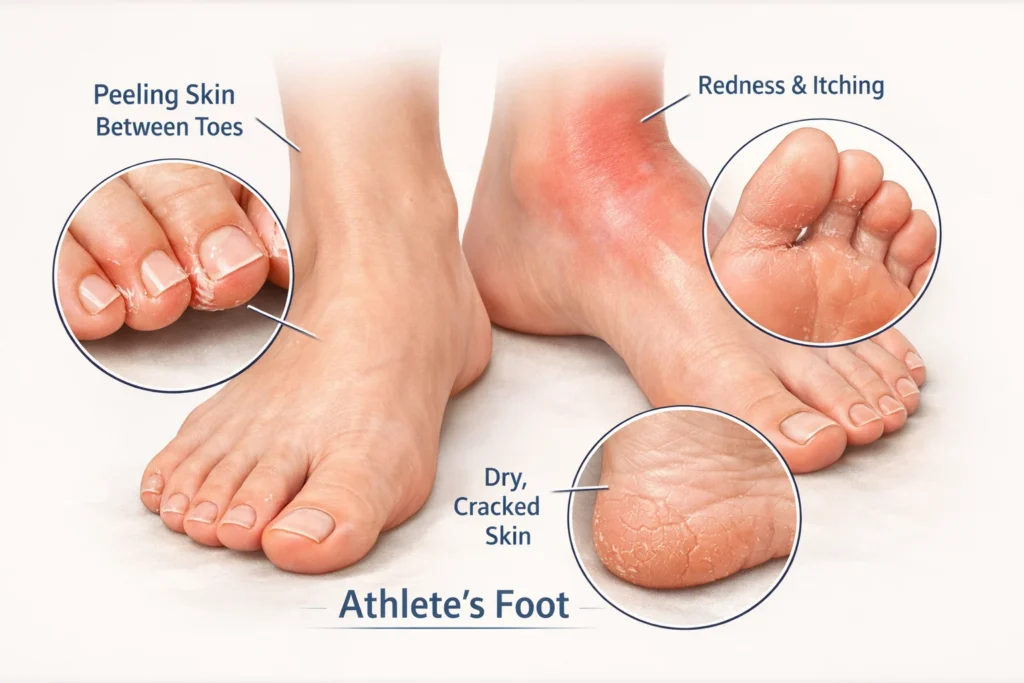
When people search “what does athlete’s foot look like,” they’re usually trying to identify visible symptoms. The appearance can vary depending on the stage and type of infection.
Here are the most common visual signs:
1. Redness and Irritated Skin
- Skin may look pink, red, or inflamed
- Often starts between the toes
- May spread to the sole or sides of the foot
2. Peeling or Flaking Skin
- Skin looks like it is shedding or peeling
- White, dry flakes may fall off
- Common in chronic or long-term cases
3. Itchy Skin
- Intense itching, especially after removing shoes
- Can worsen at night or after sweating
4. Cracked or Broken Skin
- Deep cracks may appear in severe cases
- Can feel painful or sensitive
5. Blisters (in some cases)
- Small fluid-filled bumps may appear
- Often on the soles or sides of the feet
6. Dry, Scaly Texture
- Skin may look rough or “sandpaper-like”
- Sometimes confused with eczema or dry skin
Types of Athlete’s Foot and How They Look
Athlete’s foot doesn’t appear in just one form. Dermatologists usually classify it into a few types:
Table: Types of Athlete’s Foot Appearance
| Type | What It Looks Like | Common Area |
|---|---|---|
| Interdigital | White, soft, peeling skin between toes | Between toes |
| Moccasin-type | Dry, thick, scaly skin on sole/heel | Bottom of feet |
| Vesicular | Small blisters filled with fluid | Soles or instep |
| Ulcerative (rare) | Open sores, cracked skin, pain | Between toes/foot edges |
Early Signs vs Advanced Signs
Recognizing early symptoms can help prevent worsening.
Early Stage Appearance:
- Slight itching
- Mild redness
- Small patches of dryness
Advanced Stage Appearance:
- Thick scaling skin
- Cracked heels or toes
- Peeling that spreads across foot
- Blisters or soreness
What Causes Athlete’s Foot?
Athlete’s foot appears when fungus grows on the skin due to:
- Sweaty feet trapped in shoes
- Walking barefoot in public showers or pools
- Sharing towels or socks
- Poor foot hygiene
- Tight or non-breathable footwear
It spreads easily in warm, damp environments.
Athlete’s Foot vs Other Skin Conditions
Sometimes athlete’s foot is confused with other conditions. Here’s how to tell the difference:
Difference Athlete’s Foot vs Dry Skin
- Dry skin: evenly rough, not itchy or contagious
- Athlete’s foot: itchy, peeling, often between toes
Athlete’s Foot vs Eczema
- Eczema: inflammation, may appear anywhere on body
- Athlete’s foot: mostly feet, fungal and contagious
Athlete’s Foot vs Ringworm
- Ringworm: circular rash on body
- Athlete’s foot: usually between toes or soles
Real-World Appearance Examples
Here are common ways people describe it:
- “My feet look white and peeling between my toes after wearing shoes all day.”
- “It feels itchy and looks like dry skin that won’t go away.”
- “Small blisters appeared after I used a public shower.”
- “The skin on my heel is cracked and flaky.”
These descriptions match typical athlete’s foot visuals in everyday life.
Is Athlete’s Foot Contagious?
Yes. It spreads through:
- Skin-to-skin contact
- Contaminated floors (gym showers, pools)
- Shared shoes or socks
This is why early identification of how it looks is important.
How to Recognize Athlete’s Foot Early
Watch for:
- Itching after removing shoes
- White or soft skin between toes
- Slight burning sensation
- Dry patches that don’t improve with lotion
The earlier it is identified, the easier it is to manage.
Prevention Tips
Even though this article focuses on “what does athlete’s foot look like,” prevention is just as important:
- Keep feet clean and dry
- Change socks daily
- Wear breathable shoes
- Avoid walking barefoot in public showers
- Use antifungal powder if prone to sweating
When Should You See a Doctor?
Seek medical advice if:
- It spreads quickly
- Pain develops
- Cracks become deep or bleeding
- Over-the-counter treatments don’t help
A healthcare professional can confirm diagnosis and suggest antifungal treatment.
FAQs
1. What does athlete’s foot look like at first?
It usually starts as mild redness, itching, or slight peeling between toes.
2. Can athlete’s foot look like dry skin?
Yes, early stages often resemble dry, flaky skin.
3. Does athlete’s foot always itch?
Most cases itch, but some only show dryness or scaling.
4. Can it appear on one foot only?
Yes, it often starts on one foot before spreading.
5. What color is athlete’s foot?
It can appear white, red, pink, or scaly depending on severity.
6. Can athlete’s foot look like a rash?
Yes, it may appear as a red, irritated rash.
7. Does athlete’s foot cause blisters?
In some cases, yes—especially vesicular type.
8. How can I tell if it’s athlete’s foot or eczema?
Athlete’s foot is usually between toes and contagious; eczema is not.
Conclusion
So, what does athlete’s foot look like? In simple terms, it often appears as itchy, red, peeling, or scaly skin on the feet, especially between the toes or on the soles. In more advanced cases, it may include cracking, blisters, or thickened skin.
The key takeaway is that early signs are subtle often mistaken for dryness but recognizing them early helps prevent it from spreading or becoming uncomfortable.
Keeping feet clean, dry, and protected in public spaces is the best way to avoid it.
Discover More Related Articles:
- Semi-Conservative Mean in DNA Replication: Mechanism and Advantages In 2026
- Dry Mean in a Drink: Why Some Drinks Taste Less Sweet in 2026

Jessica Brown is a language-focused writer who creates well-researched articles on word meanings, abbreviations, and everyday expressions. She contributes to meanvoro.com, delivering simple, reliable, and reader-friendly content designed to make complex terms easy to understand.