Definition
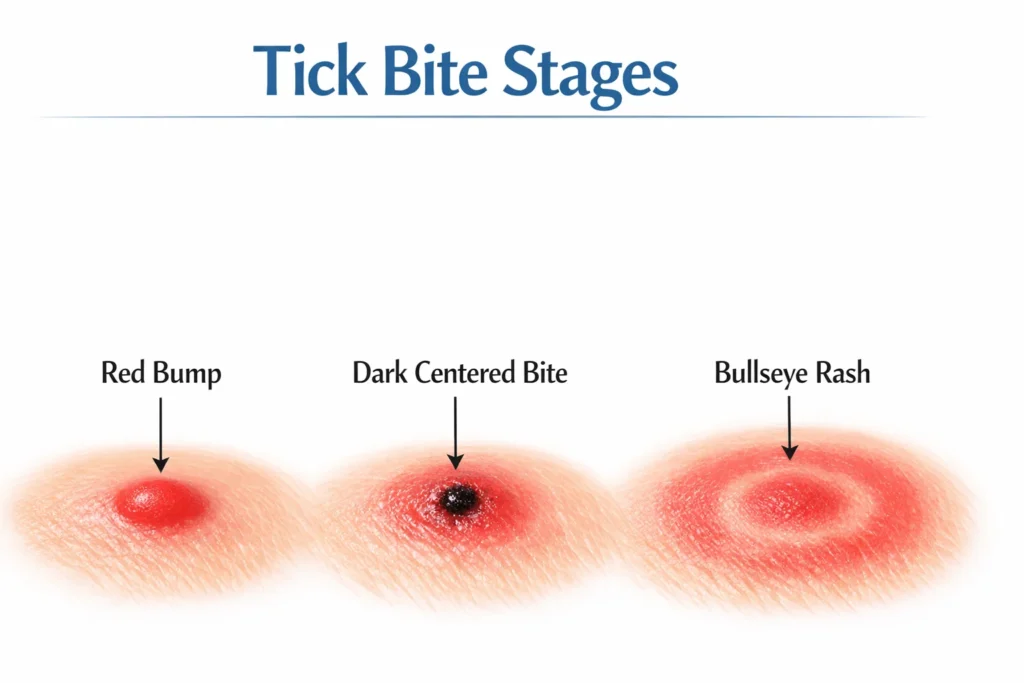
A tick bite typically appears as a small red bump on the skin, often similar to a mosquito bite at first. In many cases, it may develop a dark center where the tick was attached, mild swelling, or a bullseye-shaped rash (in some infections).
Ever come back from a walk in grass, a hike, or even just sitting outdoors and later notice a strange spot on your skin that you don’t remember being there? That’s often how people first discover a tick bite.
Ticks are tiny blood-feeding insects that attach to the skin and can go unnoticed for hours or even days. Because their bites are usually painless, many people only realize something happened when they see a mark or develop a rash.
Understanding what a tick bite looks like is important—not to cause panic, but to help you identify it early and respond properly. Early detection can make a big difference in preventing complications.
In this guide, we’ll break down everything you need to know in a simple, practical way—from appearance and symptoms to comparisons and real-world examples.
What Does a Tick Bite Look Like?
A tick bite can look slightly different depending on the person, the type of tick, and how long it stayed attached. However, there are some common visual signs:
Common Appearance of a Tick Bite
- Small red bump (similar to a mosquito bite)
- Mild swelling around the bite area
- Dark center or scab where the tick attached
- Itching or irritation (sometimes mild, sometimes none)
- Circular rash in some cases
More Serious Appearance (Possible Infection Signs)
- Expanding red ring or “bullseye” rash
- Warmth around the bite
- Increasing redness over days
- Flu-like symptoms (in some cases)
How Tick Bites Develop Over Time
Tick bites don’t always look the same right away. They change over time depending on how your body reacts.
Timeline of a Typical Tick Bite
| Time After Bite | What It Looks Like | What’s Happening |
|---|---|---|
| 0–24 hours | Small red dot or bump | Tick attaches and feeds |
| 1–3 days | Slight swelling, redness | Skin irritation begins |
| 3–7 days | Itching, possible rash | Immune response develops |
| 1+ week | Possible bullseye rash (if infected) | Infection may appear |
Key Signs That It Might Be a Tick Bite
Sometimes people confuse tick bites with mosquito bites or skin allergies. Here’s how to tell the difference.
Tick Bite Indicators:
- Bite is often painless
- You may find the tick still attached
- Rash may expand over time
- Center may look darker or scabbed
- Appears after outdoor exposure (grass, forest, pets)
Example Scenario:
You go hiking in tall grass. Two days later, you notice a small red spot on your leg that wasn’t there before. It doesn’t itch much, but it slowly grows slightly. This is a typical early tick bite appearance.
Types of Tick Bite Rashes
Not all tick bites look the same. Some are harmless, while others may signal infection.
1. Normal Tick Bite
- Small red bump
- Mild swelling
- No spreading rash
2. Allergic Reaction
- Itchy, raised bump
- Slight redness around area
- Similar to insect bite allergy
3. Bullseye Rash (Erythema Migrans)
- Circular rash with clear center
- Expands outward over time
- Often linked to Lyme disease risk in some regions
Where Tick Bites Commonly Appear
Ticks usually bite in warm, hidden areas of the body.
Most Common Locations:
- Behind knees
- Underarms
- Groin area
- Back of neck
- Around waistline
- Behind ears
- Hairline or scalp
These areas are harder to notice, which is why ticks can stay attached longer.
Tick Bite vs Other Insect Bites
It’s easy to confuse tick bites with mosquito, flea, or spider bites. Here’s a simple comparison:
| Feature | Tick Bite | Mosquito Bite | Flea Bite | Spider Bite |
|---|---|---|---|---|
| Pain | Usually painless | Mild itch | Very itchy | Sometimes painful |
| Appearance | Small red bump, possible dark center | Puffy bump | Small clusters | Red, sometimes blister |
| Spread | May expand slowly | Does not spread | Clustered bites | Local swelling |
| Attachment | Tick may still be attached | No | No | No |
Why Tick Bites Are Different
Unlike many insects, ticks don’t just bite and leave. They attach themselves to the skin and feed for hours or days.
Important Characteristics:
- They release saliva that prevents pain
- They can stay hidden for long periods
- Some carry bacteria or infections
- Early removal reduces risk significantly
Real-World Examples of Tick Bite Appearance
Example 1: Mild Case
A person notices a small red bump after gardening. It looks like a mosquito bite and disappears in a few days.
Example 2: Moderate Case
A child develops a red ring around a bite after playing in tall grass. The rash expands slightly but causes no pain.
Example 3: Concerning Case
An adult sees a bullseye-shaped rash after hiking. The area expands over days and feels warm.
When to Be Concerned About a Tick Bite
Most tick bites are harmless, but you should monitor them carefully.
Seek attention if you notice:
- Expanding rash over days
- Fever or fatigue after bite
- Joint pain or body aches
- Severe redness or swelling
- Tick attached for a long time (24+ hours)
How Long a Tick Bite Takes to Heal
- Mild bites: 3–7 days
- Moderate irritation: 1–2 weeks
- Rash-related cases: longer depending on cause
Healing depends on how quickly the tick is removed and how your body reacts.
Common Misunderstandings About Tick Bites
Myth 1: “All tick bites are dangerous”
Not true. Many tick bites are harmless.
Myth 2: “You always feel a tick bite”
Incorrect. Tick saliva numbs the area.
Myth 3: “All tick bites cause a bullseye rash”
False. Only some infections cause this pattern.
Polite and Professional Ways to Describe a Tick Bite
Instead of alarming language, you can describe it more calmly:
- “Small insect bite with mild redness”
- “Localized skin irritation after outdoor exposure”
- “Minor bite mark with no severe symptoms”
Prevention Tips (Practical Advice)
To avoid tick bites:
- Wear long sleeves in grassy areas
- Use insect repellent
- Check skin after outdoor activities
- Shower after hiking or gardening
- Keep pets checked regularly
FAQs:
1. What does a tick bite look like at first?
It usually looks like a small red bump similar to a mosquito bite.
2. Can you always see the tick on your skin?
No, ticks are often very small and may detach before you notice.
3. Does a tick bite always itch?
Not always. Many tick bites are painless or only mildly itchy.
4. What does an infected tick bite look like?
It may show a spreading red rash, sometimes in a bullseye pattern.
5. How long does a tick bite stay visible?
Usually a few days to two weeks depending on irritation.
6. Can a tick bite look like a pimple?
Yes, early tick bites are often mistaken for pimples or acne spots.
7. Where do tick bites usually appear?
Common areas include behind knees, waistline, scalp, and armpits.
8. Should I worry about every tick bite?
Not necessarily, but you should monitor it for changes or symptoms.
Conclusion
A tick bite often starts as a simple, small red bump that can easily be mistaken for a mosquito bite or skin irritation. The key difference is that tick bites may not hurt, may have a dark center, and sometimes develop a spreading rash over time.
Recognizing what a tick bite looks like helps you take early action—especially after outdoor exposure. While most bites are harmless, keeping an eye on changes is important for your health and peace of mind.
The best approach is simple: stay aware, check your skin after outdoor activities, and seek guidance if anything looks unusual or changes over time.
Discover More Related Articles:
- Semi-Conservative Mean in DNA Replication: Mechanism and Advantages In 2026
- Dry Mean in a Drink: Why Some Drinks Taste Less Sweet in 2026

Ryan Thompson is an experienced content writer specializing in slang terms, texting abbreviations, and word meanings. He writes for meanvoro.com, where he creates accurate and easy-to-understand language content for readers.