
Definition
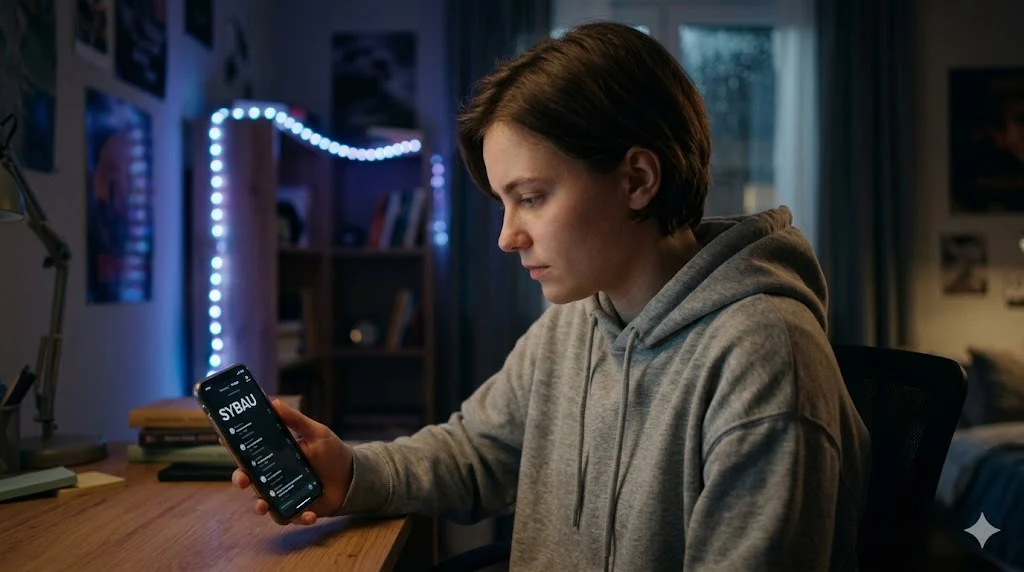
You’re scrolling TikTok. Someone drops “SYBAU” in the comments. You stare at it. It looks almost like a Welsh village name, or maybe a Japanese word you missed in class. But the way people are using it makes it clear: this isn’t a compliment.
Good news. You’re not alone. In June 2025, thousands of people searched “what does sybau mean” in a single week after the term flooded comment sections across TikTok, X (formerly Twitter), and Instagram. Some users genuinely thought it was a foreign language term. One viral tweet read: “I thought sybau was a Japanese word up until two days ago.”
It’s not Japanese. It’s not Welsh. And it’s definitely not polite.
This guide covers everything: the full SYBAU definition, its real origin, how it went from a forgotten 2003 slang term to a 2025 viral sensation, where and how people use it, whether it’s offensive, and every variation worth knowing. No filler. Just answers.
SYBAU Meaning: What Does SYBAU Actually Stand For?
Let’s get straight to it.
SYBAU stands for “Shut Your Bitch Ass Up.”
Five words. One blunt message. Zero room for misinterpretation.
Here’s the full letter breakdown:
| Letter | Word |
|---|---|
| S | Shut |
| Y | Your |
| B | Bitch |
| A | Ass |
| U | Up |
The phrase is essentially an angrier, more emphatic version of “shut up” one that adds a layer of dismissiveness and, depending on the tone, can range from a heated insult to a playful roast between friends. Think of it as STFU’s louder, more dramatic cousin.
Merriam-Webster now officially recognizes SYBAU in its slang dictionary, describing it as “an angrier way to say ‘shut up’ online.” That’s a significant cultural milestone for a term that spent 20 years living in the shadows of niche internet forums.
Why Does SYBAU Look Like a Foreign Word?
This question trips up a surprising number of people. The word looks foreign because of the letter combination, particularly the “AU” ending, which resembles Welsh plural suffixes (like “llyfrau” meaning “books”). Several Reddit and Twitter users genuinely debated whether it was Korean, Japanese, or Welsh before looking it up.
One popular tweet captured it perfectly: “finally googled what sybau means” with a reaction image of someone mind-blown.
The resemblance to Welsh or East Asian vocabulary is completely coincidental. SYBAU is a straightforward English acronym where each letter maps directly to a word in the phrase. The visual strangeness is actually part of its charm, which is one reason it spread so fast. It looks exotic enough to make people curious.
The Full Origin Story: Where Did SYBAU Come From?
This is where most articles get it wrong. SYBAU didn’t start on TikTok. It didn’t come from Gen Z. And it wasn’t invented in 2024.
It Started in 2003
The earliest known definition of SYBAU was submitted to Urban Dictionary on November 19, 2003, by a user named gh0ti a.k.a. markie. To put that in perspective: in 2003, people were using AIM, early forum boards, and IRC chat rooms. TikTok didn’t exist. The iPhone was still four years away.
The internet in 2003 ran on quick, aggressive shorthand. Gamers and forum users coined acronyms fast, mostly to cut through slow-loading pages and express maximum attitude in minimum characters. STFU, GTFO, BRD, and dozens of others were born in that era. SYBAU was one of them.
It Came from Black Online Communities
This is a fact many mainstream articles conveniently skip. SYBAU originated in Black online communities and is rooted in African American Vernacular English (AAVE). The phrase “shut your bitch ass up” was common in Black slang long before it became an acronym. The online compression into SYBAU happened organically in those same spaces.
Like much of internet slang that goes mainstream (think: “no cap,” “bussin,” “lowkey,” “rizz”), SYBAU traveled from Black internet culture outward into broader online spaces over time. TikTok didn’t create the term; it amplified it.
The Underground Years (2003 to 2023)
For roughly 20 years, SYBAU existed but never really popped. It lived in:
- Gaming chat rooms where players needed fast, sharp comebacks
- Discord servers (after Discord launched in 2015) where community members roasted each other
- Niche forums and roast threads that thrived on brutal shorthand
- X (Twitter) reply chains starting around 2020, particularly in Black Twitter spaces
The term wasn’t invisible, but it stayed subcultural. Most people outside those specific communities had never seen it.
The TikTok Explosion (2024 to 2025)
Then came the TikTok era. Short-form video culture created a perfect ecosystem for punchy acronym slang to thrive. Comment sections move fast, character limits push brevity, and content filters push people toward coded language.
SYBAU hit all three buttons:
- Fast to type | five letters, instant delivery
- Filter-resistant | automated moderation systems don’t flag “SYBAU” the way they’d flag spelled-out profanity
- Maximum impact | it lands harder than “shut up” and funnier than typing out the whole phrase
By late 2024, SYBAU was appearing in TikTok comment sections at scale. By early 2025, it was everywhere.
Two viral moments specifically accelerated the explosion:
Moment 1: TikTok user @swaggsolos posted a video in February 2025 claiming SYBAU “should be added to the dictionary.” It amassed over 1.1 million views.
Moment 2: TikTok user @onmybehalf posted a video where they misread SYBAU as “So You’re Beautiful and Unique” | a wholesome misinterpretation that became a meme itself. That video pulled in 1.6 million views.
Both videos, for completely opposite reasons, sent people to Google. Search volume for “what does sybau mean” spiked dramatically in February and March 2025.
The SYBAU Meme: Who Is the SYBAU Guy?
You can’t talk about SYBAU in 2025 without covering the meme that put a face to the acronym.
In mid-2025, a reaction image went viral combining:
- A photo of rapper Lazer Dim 700 holding up both hands
- The text “SYBAU” overlaid or captioned
- A broken heart emoji 💔
- A dead rose emoji 🥀
The image became known as the “SYBAU Picture,” “SYBAU Guy,” “SYBAU Photo,” or “SYBAU Meme Guy.” It spread across TikTok comment sections first, then migrated to X and Instagram. Redraws and edited versions followed shortly after, which is the hallmark of a meme that has truly arrived.
The 💔 and 🥀 combo wasn’t random. Those emojis had already been circulating in “JuggTok” subculture on TikTok a community rooted in a specific aesthetic of urban Black youth culture. SYBAU’s existing roots in those same communities made the combination feel organic and authentic.
How to Pronounce SYBAU
There’s no single correct pronunciation. It’s genuinely a matter of personal interpretation.
Here are the most common options:
| Pronunciation | Style |
|---|---|
| “see-bow” | Most common spoken version |
| “sigh-bow” | Second most common |
| “sea-brow” | Less common but used |
| S-Y-B-A-U (each letter) | Used in formal discussion of the term |
Most people who use SYBAU in text never have to say it aloud, which is partly why the pronunciation stayed inconsistent. It’s a written slang term first, a spoken one second.
How Is SYBAU Used? Context, Tone, and Real Examples
Context is everything with SYBAU. The same four letters can mean a lighthearted jab between best friends or a genuine insult to a stranger online. Understanding the tone helps you read it correctly every time.
The Three Main Tones
Tone 1: Hostile or Aggressive
This is SYBAU in its most literal use. Someone says something you find infuriating, incorrect, or obnoxious. You respond with SYBAU.
“Your opinion on this film is objectively wrong. SYBAU.”
“This take is awful. SYBAU.”
In this context, it’s a sharp, dismissive shutdown. It signals you’re done engaging and you want the other person to stop talking. It’s not friendly. It’s not ironic. It means exactly what it says.
Tone 2: Playful Roasting Between Friends
Among people with an established banter dynamic, SYBAU softens significantly. It becomes the verbal equivalent of rolling your eyes affectionately.
“Bro thinks he can beat me in 2K. SYBAU and load in.”
“You really just texted me that at 2am? SYBAU bestie.”
Here, the underlying message is teasing rather than genuinely hostile. Both parties understand the tone. It’s the same reason friends can call each other things that strangers absolutely cannot.
Tone 3: Meme Reaction to Absurd Content
This is the most common use in TikTok comment sections. Someone posts something dramatic, overblown, or ridiculous. The comment section responds with SYBAU as a collective eye-roll.
[TikTok post: “I told my situationship I loved him over text”] Comment: “SYBAU I’m so tired of these stories”
[Love Island spoiler video] Comment: “All these Love Island spoilers tonight SYBAU plzzzz”
In this mode, SYBAU functions more like “oh please” or “give me a break” than a direct insult. It’s dismissive but not necessarily mean-spirited.
Platform-by-Platform Usage
Different platforms shape how SYBAU gets used. Here’s a quick breakdown:
| Platform | Common Usage Context |
|---|---|
| TikTok | Comment reactions, meme captions, video responses |
| X (Twitter) | Reply chain comebacks, quote tweets, banter |
| Comments on drama posts, DMs between friends | |
| Discord | Gaming server chat, roast channels |
| Snapchat | Direct messages in group chats |
| Text messages | Friend group chats, casual banter |
| Roblox | In-game chat (often filtered, gets through anyway) |
TikTok is by far the dominant platform for SYBAU’s current usage. But it’s not exclusive to one app. Once a term reaches this level of cultural penetration, it flows freely across platforms.
Real Examples from Across the Internet
These are real-context examples (paraphrased to avoid reproduction) of how SYBAU has appeared in the wild:
On BlueSky: A user responding to an influx of performative relationship content flooding their food community feed: “I’m here for recipes. Sybau.”
On X (Twitter): A fan account posting criticism under a celebrity hate thread gets a SYBAU reply from another user defending the subject.
On TikTok: A creator responding to someone questioning why they wore shoes inside: “im about to go somewhere sybau”
Its On X (Twitter): Someone bragging about their minor social media following gets the reply: “google me… girl, sybau
Each of these shows a slightly different flavor. The food example is playful. The fan account one is defensive. The shoes one is lightly sarcastic. The “google me” one is pure dismissal. Same acronym. Very different energy.
Is SYBAU Offensive?
Yes and no. Here’s the full picture.
The key factors that determine whether it’s offensive:
- Who’s saying it | close friend vs. stranger
- Where it’s being said | private group chat vs. public comment section
- What it’s directed at | a bad take vs. a person
- What the broader tone of the conversation is | joking banter vs. genuine argument
As a rule of thumb: if someone you don’t know well drops SYBAU at you online, it’s probably not friendly. If your best friend sends it in your group chat after you say something ridiculous, it probably is.
Where SYBAU absolutely doesn’t belong:
- Work Slack channels or Microsoft Teams
- Emails to anyone professional
- Any conversation with someone significantly older who isn’t internet-native
- Any setting where profanity in general would be inappropriate
The Fake Definition: “So You’re Beautiful and Unique”
One of the most entertaining corners of the SYBAU story is the fake wholesome definition that circulated in 2025.
After SYBAU went viral, some TikTok users likely trolling newcomers began claiming SYBAU stood for “So You’re Beautiful and Unique.” The fake definition spread far enough that people genuinely debated which one was real.
To be crystal clear: the positive definition is fake and was invented as a joke. The real meaning has always been “Shut Your Bitch Ass Up” since at least 2003.
The fake definition does, however, illustrate something genuinely interesting about internet culture. When a new slang term explodes in popularity, multiple definitions compete for authority. People who find the real meaning too harsh invent gentler alternatives. People who enjoy chaos spread both versions simultaneously. By the time a curious parent googles the term, they might find three different answers.
This isn’t unique to SYBAU. It happened with “rizz,” with “no cap,” and dozens of other terms that hit mainstream awareness fast.
SYBAU Variations and Related Slang
SYBAU doesn’t exist in a vacuum. It’s part of a whole family of aggressive silence-commanding acronyms that internet culture has generated over the years.
Direct Variants of SYBAU
| Acronym | Meaning | Tone |
|---|---|---|
| SYBAU | Shut Your Bitch Ass Up | Aggressive to playful |
| SYAU | Shut Your Ass Up | Slightly milder |
| SYGAU | Shut Your Goofy Ass Up | Often used humorously |
| STFU | Shut The F*** Up | Classic, well-known |
SYAU strips out the “bitch” and lands a little softer. You’d use it in situations where you want the energy of SYBAU without quite as much venom.
SYGAU has a comedic quality to it. Calling something “goofy” defuses aggression slightly. It’s more likely to appear in a lighthearted roast than in a genuine argument.
The Broader Family Tree
SYBAU slots into a long tradition of internet silence commands:
- STFU | the grandfather of them all, coined in early internet forums
- GTFO | get the f*** out, used to dismiss someone entirely
- CTFO \ chill the f*** out, directed at someone being dramatic
- BRD | be right done (less aggressive; just means you’re leaving a conversation)
Each generation of internet culture creates its own version of these commands. SYBAU is the 2020s iteration more colorful, more AAVE-influenced, and better suited to the short-form video age.
Why Did SYBAU Go Viral in 2025 Specifically?
Timing is everything in internet culture. SYBAU existed for over 20 years before it blew up. What changed?
Several factors collided at exactly the right moment:
TikTok’s comment culture rewards punchy reactions. TikTok trained its users to consume and produce in short bursts. A five-letter acronym that delivers maximum impact fits that format perfectly. Long, articulate rebuttals don’t go viral in comment sections. SYBAU does.
Content filter evasion. Platforms like TikTok and Instagram have automated systems that flag and sometimes remove spelled-out profanity. Acronyms slip through those filters. This makes SYBAU functionally useful in spaces where typing out the full phrase would get your comment removed.
The meme gave it a face. The Lazer Dim 700 reaction image provided a visual anchor. People didn’t just have a word they had an image that embodied the feeling. That combination of text and image is how internet culture cements slang terms into genuine memes.
Gen Z’s love of reclaimed vintage internet slang. There’s been a documented trend of Gen Z rediscovering and reviving early 2000s internet culture. Terms like “brat,” “rizz,” “lowkey,” and “no cap” all have deeper roots than their TikTok fame suggests. SYBAU fits that same arc: old term, new audience, fresh virality.
The discovery-and-share loop. Slang goes viral when people don’t understand it and search for it. The more confusing the term looks (and SYBAU looks very confusing to anyone who didn’t grow up in those online spaces), the more people google it, the more content gets created explaining it, and the more people encounter it for the first time. It’s a self-reinforcing cycle.
SYBAU in Meme Culture: The Bigger Picture
Memes and slang are inseparable in the 2020s internet ecosystem. SYBAU is a good case study in how a term migrates from slang to meme to cultural shorthand.
The journey looks like this:
Stage 1: Subcultural origin | Used organically in specific communities (Black online spaces, gaming servers) as genuine expression
Stage 2: Cross-community spread | Picked up by adjacent communities (broader gaming, Discord culture, Black Twitter)
Stage 3: Mainstream discovery | A viral video or moment exposes the term to a massive new audience who don’t have the original context
SYBAU has completed all six stages as of 2025. That’s a full lifecycle, and it happened in roughly 18 months of mainstream exposure despite 20+ years of subcultural existence.
What SYBAU Tells Us About Internet Language in 2025
The SYBAU story isn’t just about one acronym. It reflects something real about how language moves online today.
Speed has accelerated dramatically. A term that spent 20 years underground can reach Merriam-Webster recognition in under two years if the right viral moment hits. The gatekeepers of “official” language simply can’t keep up with the pace of internet slang.
AAVE continues to shape mainstream internet English. This is not a new phenomenon it’s been happening since the early days of Black Twitter but it’s worth naming explicitly. The words and phrases that dominate Gen Z slang (no cap, bussin, slay, rizz, and now SYBAU) largely come from Black communities. Recognition of that origin matters.
Acronyms are having a specific moment. The current internet environment with its content filters, short-form video dominance, and mobile-first typing is perfectly engineered to favor acronym slang. Expect more terms like SYBAU to emerge and go viral.
Tone is everything. SYBAU is technically one phrase but functions as dozens of different social gestures depending on context. Internet communication increasingly relies on users to decode tone correctly which is why so many arguments start online when someone misreads a tone that was obvious to the sender.
A Quick Guide: When to Use SYBAU
Here’s a practical breakdown for anyone figuring out where this fits in their vocabulary:
When SYBAU Works
- In a group chat with friends who already have an established roasting dynamic
- Reacting to a genuinely absurd hot take in a meme context
- In a comment section where playful dismissal is the cultural norm
- As a joking reaction to a friend doing or saying something dramatic
When SYBAU Does Not Work
- At work, in any professional context
- In a conversation with someone who doesn’t know internet slang
- When you actually mean it as a serious insult toward someone vulnerable
- On any platform or account where content moderation could flag it for context
- In any academic, formal, or public-facing writing
The Golden Rule
If you’re unsure whether the person on the receiving end will take it as a joke or a genuine attack, don’t use it. SYBAU’s power comes from shared understanding of tone. Without that shared understanding, it just reads as hostile.
FAQs
What does SYBAU mean?
SYBAU stands for “Shut Your Bitch Ass Up.” It’s a vulgar internet acronym used to tell someone to stop talking, ranging in tone from genuinely hostile to playfully dismissive depending on context.
What does SYBAU stand for, letter by letter?
S = Shut, Y = Your, B = Bitch, A = Ass, U = Up.
Is SYBAU a new slang term?
No. The first documented definition appeared on Urban Dictionary on November 19, 2003. It only went viral in mainstream internet culture in 2024 and 2025, primarily through TikTok.
Where did SYBAU originally come from?
It originated in Black online communities and is rooted in AAVE (African American Vernacular English). It spread through gaming forums, Discord servers, and eventually TikTok.
Is SYBAU offensive?
Yes, the full phrase is vulgar. Between friends in a joking context it can be lighthearted, but directed at a stranger or used in a formal setting it’s considered rude and inappropriate.
What does SYBAU mean on TikTok?
The same thing “Shut Your Bitch Ass Up.” It became particularly popular on TikTok through viral videos in early 2025 and through the SYBAU Guy reaction meme in mid-2025.
What does SYBAU mean on Snapchat, Instagram, or Discord?
Identical meaning across all platforms. It’s platform-agnostic internet slang.
How do you pronounce SYBAU?
The most common pronunciations are “see-bow” and “sigh-bow.” Some people say each letter individually. There’s no single correct version.
Conclusion
SYBAU is one of those internet terms that looks mysterious until you know it, and then you start seeing it everywhere. Five letters. One very blunt message. Over 20 years of history behind it.
The full meaning is “Shut Your Bitch Ass Up.” It originated in Black online communities in the early 2000s, lived quietly in gaming and Discord culture for two decades, then exploded onto TikTok in 2024 and 2025 through viral videos and a widely shared meme featuring rapper Lazer Dim 700.
Whether it lands as a harmless joke or a genuine insult depends entirely on who’s saying it, who’s receiving it, and what the surrounding context makes clear. Among friends, it’s often just a dramatic way to say “oh, come on.” In a stranger’s comment section, treat it the way you’d treat any aggressive dismissal.
And if someone ever tells you SYBAU actually stands for “So You’re Beautiful and Unique” well, you know what to say back.
Discover More Related Articles:
- Blue Collar Meaning | Salary & Career Opportunities In 2026
- Six Seven Meaning | Social Media Trends & Pop Culture In 2026

Madison Taylor is an experienced content writer who focuses on researching and explaining word meanings, slang, and texting terms. She writes for meanvoro.com, creating clear and accurate to help readers understand language easily.