Definition:
SIMP in text slang refers to someone who shows excessive attention, admiration, or devotion toward another person (often romantically), sometimes in a way that is seen as unbalanced or overly eager.
If you’ve been scrolling through TikTok, Instagram comments, or even chatting with friends online, chances are you’ve come across the word “simp.” It pops up everywhere from playful jokes in group chats to viral memes that take over social media. But what does it actually mean when someone says it?
The slang term “simp” has become one of the most talked-about internet expressions in recent years, especially among teens and young adults. While it’s often used humorously, it can also carry a slightly negative or teasing tone depending on the context.
That’s why understanding its real meaning is important if you want to keep up with modern online conversations.
In simple terms:
A “simp” is a person who goes out of their way to impress or please someone they like, often at the expense of their own self-respect or boundaries (according to internet slang usage).
Origin and Evolution of “SIMP”
The word “simp” may feel like modern internet slang, but its roots go back further than TikTok or Twitter.
Early Origins
- The term “simp” is believed to be a shortened form of “simpleton”, which historically meant someone foolish or naive.
- It appeared in hip-hop culture in the 1990s and early 2000s, used casually to describe someone overly submissive in relationships.
Internet Explosion
The word became extremely popular around:
- 2019–2020 (TikTok era)
- Twitch and gaming communities
- Twitter memes and relationship jokes
During this time, “simp” shifted from a mild insult to a viral meme.
Modern Usage
Today, “simp” is used in three main ways:
- As a joking insult among friends
- As a meme term online
- As a light criticism of over-affectionate behavior
However, its meaning can vary depending on tone and context.
Meaning of SIMP in Texting and Social Media
In texting, “simp” is often used informally to describe someone who:
- Always prioritizes one person they like
- Gives too much attention without receiving the same effort back
- Acts overly kind, supportive, or eager in romantic situations
- Tries too hard to impress someone they admire
Important Note:
In modern usage, “simp” is often not meant seriously. It can be:
- Playful 😄
- Sarcastic 😏
- Light teasing among friends
But sometimes it can also be used in a negative or insulting way, depending on tone.
Real-World Usage and Contexts
The word “simp” is commonly used in:
1. Social Media Comments
People might comment “simp” under posts where someone is clearly showing admiration for a crush or influencer.
2. Gaming Culture
Gamers may jokingly call someone a “simp” if they always support or protect a particular player.
3. Friend Conversations
Friends often use it humorously:
- “Bro, you replied instantly again… simp behavior 😂”
4. Memes and Viral Content
Memes exaggerate “simp” behavior for humor, often showing:
- Over-the-top romantic gestures
- Funny reactions to crushes
- Dramatic loyalty scenarios
Examples of SIMP in Conversations
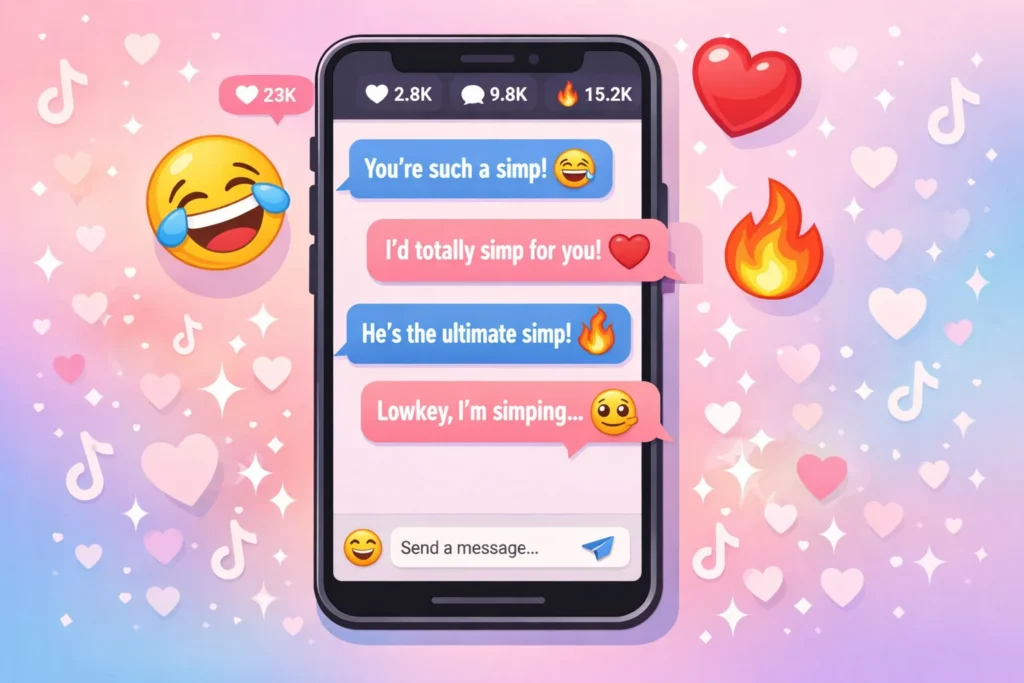
Here are some real-world texting examples showing different tones:
Casual Chat Examples
| Context | Conversation Example | Tone |
|---|---|---|
| Friendly teasing | “You bought her snacks again? Bro, you’re such a simp 😭” | Playful |
| Neutral observation | “He always supports her streams. That’s kind of simp behavior.” | Observational |
| Slight insult | “Stop simping over someone who doesn’t notice you.” | Negative |
| Self-aware joke | “I’m simping again, send help 😂” | Humorous |
More Contextual Examples
- “He stayed up all night helping her study… total simp move.”
- “I’m not simping, I’m just being supportive 😤”
- “Don’t simp too hard, keep your dignity bro.”
Different Tones of “SIMP”
The meaning of “simp” changes depending on how it is used.
1. Friendly / Funny Tone
Used among friends jokingly:
- “You’re simping again lol”
2. Neutral Tone
Descriptive, not insulting:
- “He’s always nice to her, kind of a simp personality.”
3. Negative Tone
Used as criticism:
- “Stop being a simp, she’s not interested.”
4. Self-Deprecating Tone
People use it on themselves:
- “I’m simping so hard right now…”
SIMP vs Related Internet Slang
Understanding “simp” becomes easier when compared with similar slang terms:
| Term | Meaning | Difference from SIMP |
|---|---|---|
| Simp | Overly attentive or devoted person in romantic context | Focus on emotional over-investment |
| Thirsty | Desperate for attention or affection | More aggressive/flirty behavior |
| Whipped | Controlled by partner in relationship | Already in relationship dynamic |
| Fanboy/Fangirl | Overly enthusiastic supporter | Not always romantic |
| Nice guy | Claims to be kind but expects something in return | More behavior-based criticism |
Key Difference:
- Simp = emotional over-investment in someone (often romantic)
- Others may focus more on behavior, control, or fandom
Alternate Meanings of SIMP
In modern internet slang, “simp” almost always means the same thing. However, outside slang:
- It may come from “simpleton” (older English usage)
- Rarely used as an acronym in niche contexts, but those meanings are not common in texting culture
👉 In everyday online communication, “simp” almost always refers to relationship behavior slang, not formal abbreviations.
Polite or Professional Alternatives
Since “simp” can sound insulting, it’s better to use softer expressions in formal or respectful situations.
Instead of saying “simp,” you can say:
- “Very attentive person”
- “Emotionally invested”
- “Overly caring in a relationship context”
- “Showing strong admiration”
- “Highly devoted”
Example Rewrites:
- ❌ “He’s a simp.”
- ✅ “He seems very emotionally invested in her.”
- ❌ “Stop simping.”
- ✅ “Try to maintain balance in how much effort you’re giving.”
Common Mistakes and Misunderstandings
Many people misunderstand the term “simp,” especially online.
1. Thinking It Always Means Weakness
Not true — it’s often used jokingly, not seriously.
2. Assuming It’s Always an Insult
It can be playful among friends.
3. Confusing It With Kindness
Being kind is not the same as “simping.” Intent and balance matter.
4. Overusing the Word
Social media often uses “simp” for everything, which dilutes its meaning.
FAQ:
1. What does SIMP mean in texting?
It refers to someone who shows excessive attention or affection toward someone they like.
2. Is SIMP an insult?
It can be, but often it is used jokingly or casually among friends.
3. Is being called a simp bad?
Not always. It depends on context and tone. Sometimes it’s just playful teasing.
4. Where did the word simp come from?
It likely comes from “simpleton” and became popular in internet and meme culture.
5. What is simp behavior?
Actions like constantly prioritizing someone, overdoing kindness, or seeking attention from a crush.
6. Is simp the same as being nice?
No. Being nice is healthy kindness, while “simping” implies imbalance or over-investment.
7. Why do people use the word simp online?
Because it became a viral meme used in jokes, comments, and social media trends.
8. Can girls be called simps too?
Yes, the term is gender-neutral in internet slang.
Conclusion
The term “simp” has become one of the most popular slang words in internet culture. In texting and social media, it usually refers to someone who shows excessive attention or emotional investment toward someone they like, often in a humorous or teasing way.
However, its meaning is flexible:
- It can be playful 😄
- It can be critical 😬
- Or it can simply describe behavior without judgment
Understanding context is key. What sounds like an insult in one chat might just be friendly banter in another.
Discover More Related Articles:
- B Width Mean in Shoes: Fit, Sizing, and Comfort Tips for 2026
- Repentance Mean in the Bible: Powerful Truth Most People Miss In 2026

Ryan Thompson is an experienced content writer specializing in slang terms, texting abbreviations, and word meanings. He writes for meanvoro.com, where he creates accurate and easy-to-understand language content for readers.