
Definition
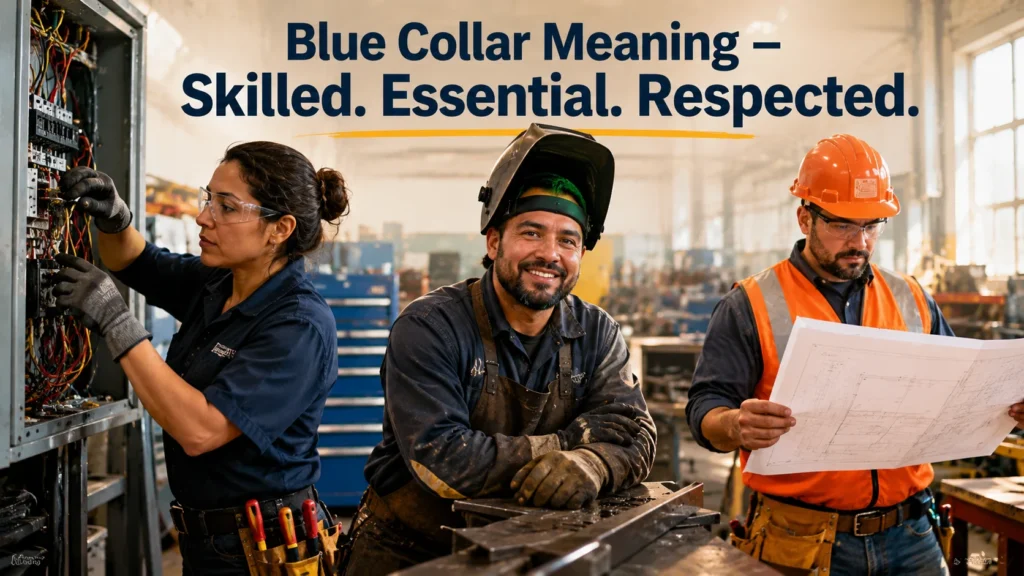
Blue collar jobs typically involve physical work, vocational training instead of a 4-year degree, and tasks like operating machinery, repairing systems, constructing buildings, or maintaining infrastructure.
When you hear the phrase blue collar, what comes to mind?
Maybe a hard hat, steel-toe boots, or someone fixing a truck engine at 7 a.m.
Or perhaps you think of electricians, plumbers, and welders—the people who literally build, repair, and power our world.
But here’s the thing: the blue collar meaning has shifted over time.
It used to be purely about manual labor and factory floors. Today, it includes skilled technicians, drone operators, renewable energy installers, and even some remote roles.
In this guide, we’ll unpack everything you need to know: where the term came from, how to use it correctly (and politely), how it compares to white collar and pink collar jobs, and why it still matters in modern conversations about work.
Whether you’re writing an article, preparing for a job interview, or just curious about American workplace culture—you’re in the right place. Let’s dive in.
What Does Blue Collar Mean?
Blue collar refers to workers who perform manual labor, skilled trades, or technical hands-on work, often paid by the hour rather than a fixed annual salary. The term originates from the durable blue fabrics (like denim or chambray) historically worn by mechanics, miners, builders, and factory employees to hide dirt and grease.
Examples of blue collar roles:
- Electrician
- Plumber
- Welder
- Truck driver
- HVAC technician
- Construction worker
- Machinist
- Industrial mechanic
Not blue collar (examples for clarity):
- Software engineer (white collar)
- Administrative assistant (often “pink collar”)
- Doctor (professional collar)
Where Did the Term “Blue Collar” Come From?
The term emerged in the early 20th century, around the 1920s–1930s, in the United States. Back then, workplace clothing was practical, not fashionable.
- Factory and dock workers wore heavy cotton, wool, or denim shirts in navy or indigo blue because those colors hid coal dust, grease, and sweat better than white or light shades.
- Meanwhile, office and managerial staff wore white dress shirts that stayed clean—giving us the term white collar.
By the 1950s, sociologists like C. Wright Mills helped popularize the blue collar vs. white collar distinction in books like White Collar: The American Middle Classes.
Over the decades, the blue collar meaning expanded.
- 1970s–80s: Heavy industry (steel, auto manufacturing) dominated the image.
- 2000s–today: Skilled trades, renewable energy, logistics, and even tech-adjacent roles (like fiber optic installers) fall under the blue collar umbrella.
Real-World Usage: How People Say “Blue Collar”
The way someone says blue collar tells you a lot about their attitude. Let’s look at three common tones.
✅ Friendly / Respectful Tone
Used to praise work ethic, skills, and contribution.
“My dad was a blue collar electrician for 40 years. He taught me that real value comes from fixing things, not just talking about them.”
“We need more young people in blue collar trades—great pay, no student debt, and real demand.”
“Respect to blue collar workers keeping our lights on and water running.” 💪🔧
😐 Neutral / Descriptive Tone
Used in journalism, HR, or economics without judgment.
“The report compares wage growth between blue collar and white collar sectors over the last decade.”
“Many blue collar jobs now require certifications in robotics or digital systems.”
⚠️ Negative / Dismissive Tone (Rare but real)
Sometimes used to imply lower education, lesser intelligence, or class prejudice. Avoid using it this way.
“It’s just a blue collar job—anyone can do it.” (False and disrespectful.)
“Why would you want a blue collar life when you could go to college?”
📌 Professional tip: Never use blue collar as an insult. Skilled trades often pay more than many office jobs and require serious expertise.
Blue Collar vs. White Collar vs. Pink Collar: A Clear Comparison
Understanding the blue collar meaning is easier when you compare it to related terms.
| Term | Typical Work Type | Common Attire | Pay Structure | Education Path | Example Jobs |
|---|---|---|---|---|---|
| Blue Collar | Manual / skilled trades | Uniforms, denim, safety gear | Hourly, overtime eligible | Vocational, apprenticeship, certs | Plumber, welder, mechanic |
| White Collar | Administrative / managerial / professional | Suits, blouses, dress shirts | Annual salary | Bachelor’s degree or higher | Accountant, lawyer, marketing manager |
| Pink Collar | Service & care roles | Varies (scrubs, retail uniforms) | Hourly or low salary | High school + on-job training | Nurse assistant, waitress, receptionist |
Note: Pink collar historically refers to roles dominated by women (nursing, teaching, clerical work). It’s sometimes considered outdated but still used in sociology.
Gray collar is another emerging term—workers who blend blue and white tasks (e.g., IT support technicians who physically repair servers).
Alternate Meanings of “Blue Collar”
Outside of work classifications, blue collar appears in:
- Marketing & consumer behavior – “Blue collar brands” like Carhartt, Milwaukee Tool, or Ford F-Series trucks.
- Politics – “Blue collar voters” often refers to working-class voters in manufacturing or trade unions.
- Music & culture – “Blue collar rock” (Bruce Springsteen, John Mellencamp) celebrates working-class life.
But in 99% of conversations, blue collar means hands-on, hourly, skilled or manual work.
Polite & Professional Alternatives to “Blue Collar”
Sometimes blue collar feels a little dated or vague. If you want more precise or respectful language, try these:
| Instead of … | Consider saying … |
|---|---|
| Blue collar worker | Skilled tradesperson, technician, craft professional |
| Manual laborer | Hands-on professional, field technician |
| Factory worker | Industrial production associate |
| Unskilled blue collar | Entry-level trade worker (or specify the trade) |
✅ Best practice: When in doubt, name the actual job.
“She’s a diesel mechanic” is always clearer and more respectful than “She’s blue collar.”
Practical Tips for Using “Blue Collar” Correctly
- Use as an adjective, not a noun for individuals
✔ “He comes from a blue collar family.”
✘ “He’s a blue collar.” (Sounds awkward and reductive.) - Avoid class assumptions
Blue collar ≠ poor. Many electricians and plumbers earn 70k–100k+ annually. - Stay current
Modern blue collar includes drone pilots, solar installers, and CNC machinists. - Respect the expertise
A master welder or lineman often has more specialized knowledge than a general office manager.
Example Table: Blue Collar Jobs by Skill Level
| Skill Level | Example Jobs | Typical Training | Median Hourly Wage (US, 2025 est.) |
|---|---|---|---|
| Entry-level | Construction laborer, production helper | On-the-job training | 15–20 |
| Skilled trade | Electrician, plumber, HVAC tech | Apprenticeship (2–5 years) | 25–45 |
| Advanced technical | Industrial mechanic, wind turbine tech | Certifications + experience | 30–50 |
| Supervisory / Master | Master electrician, site foreman | 5–10 years + license | 40–70+ |
FAQs
1. What does blue collar mean in simple words?
It means jobs that involve physical work, skilled trades, or working with your hands—often paid by the hour instead of a salary.
2. Is a nurse a blue collar worker?
Generally no. Nursing is often classified as pink collar (care-oriented). However, some practical nurses or EMTs share traits with blue collar work.
3. Is a chef blue collar?
Yes, many chefs are considered blue collar because the work is hands-on, physical, and often paid hourly (especially line cooks).
4. Can you be blue collar with a degree?
Absolutely. Many tradespeople have associate or bachelor’s degrees. Blue collar refers to type of work, not education level.
5. What is the difference between blue collar and white collar?
Blue collar = manual, skilled trades, hourly pay.
White collar = office, managerial, salary pay.
6. Are truck drivers blue collar?
Yes. Truck driving is a classic blue collar role—physical, licensed, and often paid by the mile or hour.
7. Why is it called blue collar and not something else?
Because early 20th-century manual workers wore durable blue shirts and denim to hide dirt—unlike office workers in white dress shirts.
8. Is blue collar a bad word?
No, not inherently. But it can sound dismissive if used with a negative tone. Always pair it with respect for the skill and value of the work.
Conclusion:
The blue collar meaning has grown far beyond dirty shirts and factory gates.
It now represents a proud, skilled, and essential part of the economy from the electrician wiring your home to the technician fixing an MRI machine.
Blue collar refers to workers who typically perform manual, skilled, or trade-related jobs, such as construction workers, electricians, mechanics, plumbers, and factory employees. The term originally came from the durable blue work shirts commonly worn in these professions.
Today, blue-collar jobs remain essential to society and often offer strong career opportunities, practical skills, and competitive wages. While the phrase distinguishes these roles from office-based “white-collar” jobs, it does not reflect a person’s value, intelligence, or importance. Both blue-collar and white-collar workers play vital roles in keeping businesses, communities, and economies running smoothly.
Discover More Related Articles:
- Unhinged Meaning | Pop Culture & Memes In 2026
- AWOL Meaning | Why Someone Suddenly Disappears Online In 2026

Jessica Brown is a language-focused writer who creates well-researched articles on word meanings, abbreviations, and everyday expressions. She contributes to meanvoro.com, delivering simple, reliable, and reader-friendly content designed to make complex terms easy to understand.