Definition:
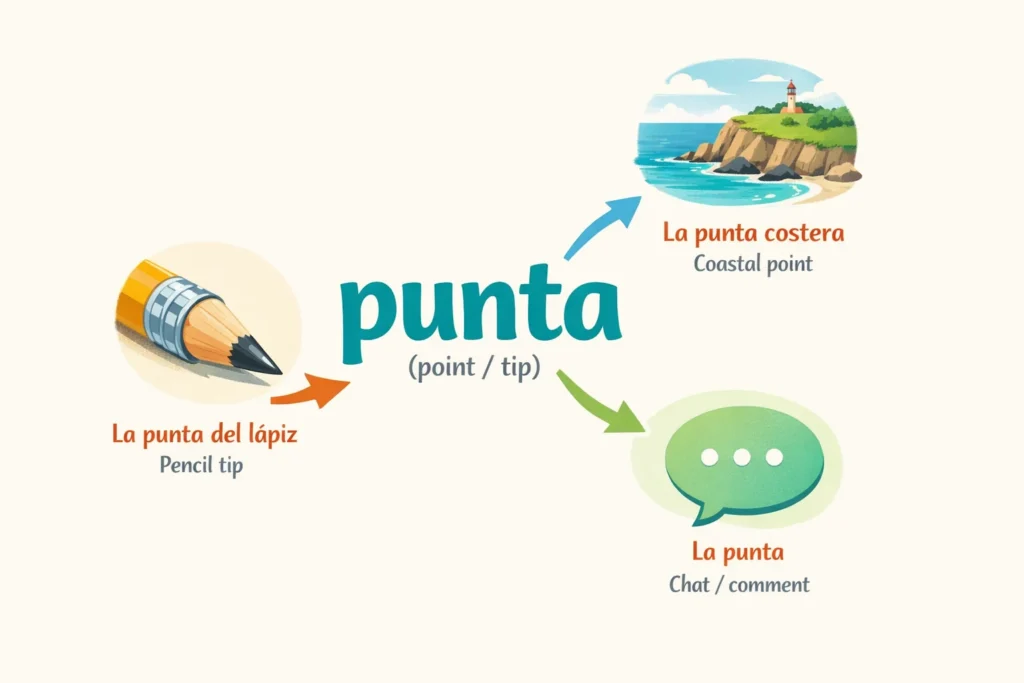
“Punta” is a Spanish word that literally translates to “point” or “tip” in English, but in everyday language it can also carry different meanings depending on context, including location-based usage (like “cape” or “point of land”).
If you’ve come across the word “punta” in a message, song, movie, or online chat and found yourself confused, you’re not alone. This small Spanish word carries multiple meanings, and its translation into English is not always straightforward.
In some cases, it’s completely neutral and geographical. In others, it can be informal or even rude depending on how and where it is used. That’s why understanding context is the key to interpreting what “punta” really means.
Let’s break it down in a clear, simple, and practical way so you can understand exactly what it means when you see it in real life conversations.
Origin and Etymology of “Punta”
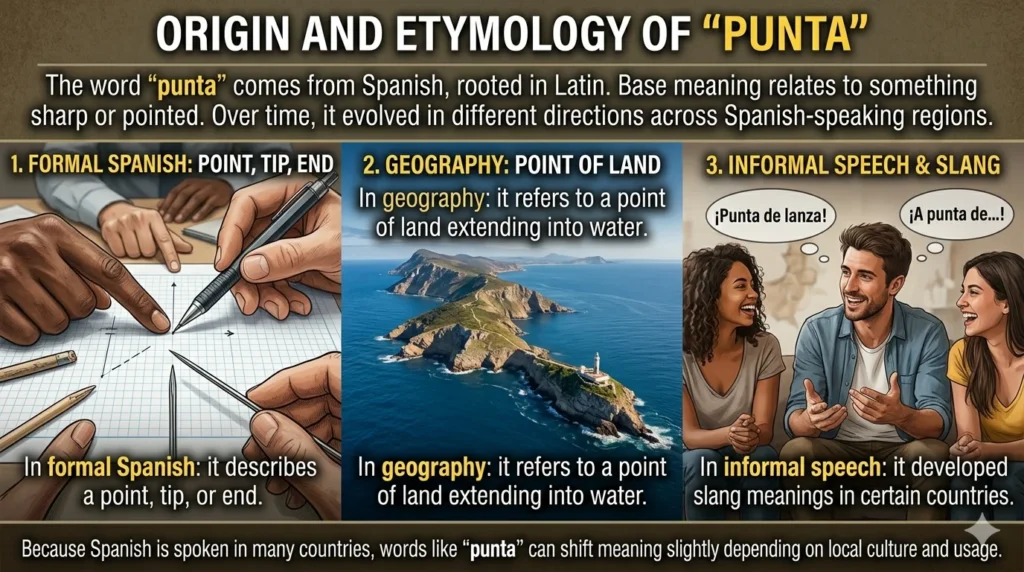
The word “punta” comes from the Spanish language and is rooted in Latin. Its base meaning relates to something sharp or pointed.
Over time, the word evolved in different directions across Spanish-speaking regions:
- In formal Spanish: it describes a point, tip, or end
- In geography: it refers to a point of land extending into water
- In informal speech: it developed slang meanings in certain countries
Because Spanish is spoken in many countries, words like “punta” can shift meaning slightly depending on local culture and usage.
Punta Meaning
Punta is a word with different meanings depending on the language and context, but it is most commonly used in Spanish and Italian.
In Spanish, punta means “point” or “tip” of something. It is used to describe the sharp end or outermost part of an object. For example, the punta of a knife refers to the tip of the knife.
In a broader sense, punta can also refer to the end or edge of something, such as land, a mountain, or a direction.
Simple explanation:
- Punta = tip / point / edge
- Used for the sharp or outermost part of an object
- Common in Spanish everyday language
Examples:
- Punta del lápiz → Tip of the pencil
- Punta de la isla → End/edge of the island
So, “punta” basically describes the frontmost or sharp end of something depending on how it is used.
What Does “Punta” Mean in English?
Punta in English
“Punta” in English generally means “point” or “tip.”
Depending on context, it can also mean “peak” or “end/edge.”
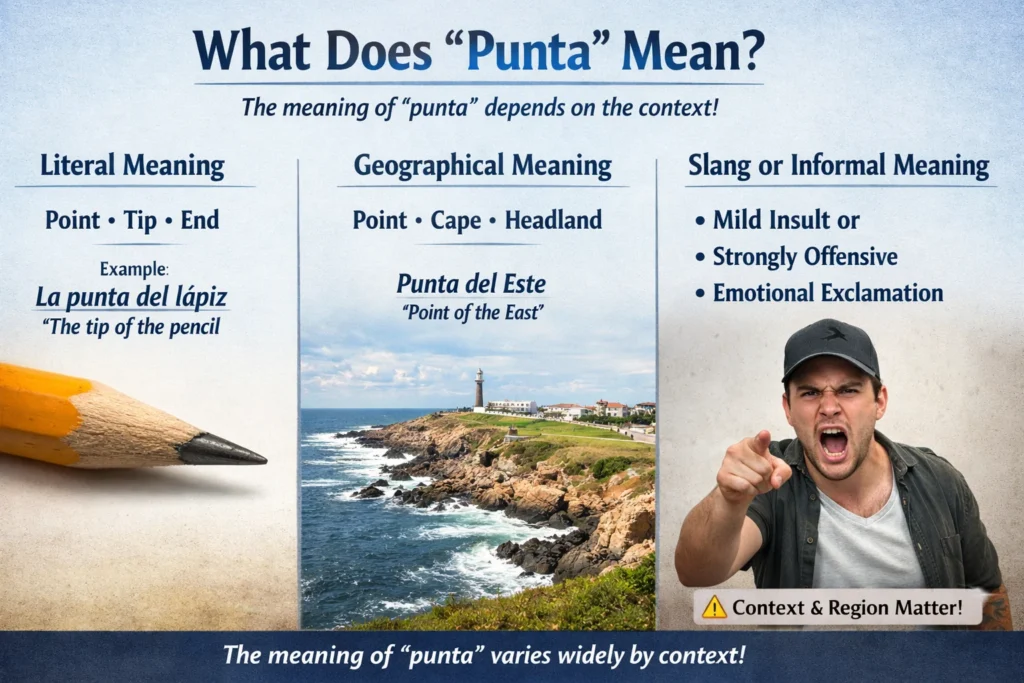
The English translation of “punta” depends entirely on context, but the main meanings include:
1. Literal Meaning (Most Common)
- Point
- Tip
- End
Example:
- La punta del lápiz → The tip of the pencil
2. Geographical Meaning
- Point (landform)
- Cape
- Headland
Example:
- Punta del Este → Point of the East (a coastal city name)
3. Informal or Slang Meaning (Regional)
In some Spanish-speaking countries, “punta” may appear in slang expressions. These can sometimes be:
- Mildly insulting
- Strongly offensive depending on tone and region
- Used as an emotional exclamation in speech
⚠️ Important note: The exact meaning varies widely, and not all uses are offensive. Context and region matter a lot.
Real-World Usage of “Punta”

Understanding how people actually use the word helps make its meaning clearer.
Everyday neutral use:
- Talking about objects
- Describing shapes or edges
- Geography or maps
Casual conversation:
- Used in idioms or expressions
- Appears in storytelling or travel descriptions
Informal speech:
- Can appear in emotional expressions
- May be used jokingly among friends
- In some cases, used as an insult depending on tone
Examples of “Punta” in Different Contexts
Here’s a helpful breakdown of how the meaning changes based on usage:
| Context Type | Spanish Example | English Meaning | Tone |
|---|---|---|---|
| Object | La punta del cuchillo | The tip of the knife | Neutral |
| Geography | Punta del mar | Sea point / cape | Neutral |
| Everyday speech | La punta del dedo | Fingertip | Neutral |
| Slang (regional) | ¡Qué punta! | Expression (varies by country) | Informal / possibly rude |
Tone and Connotation of “Punta”
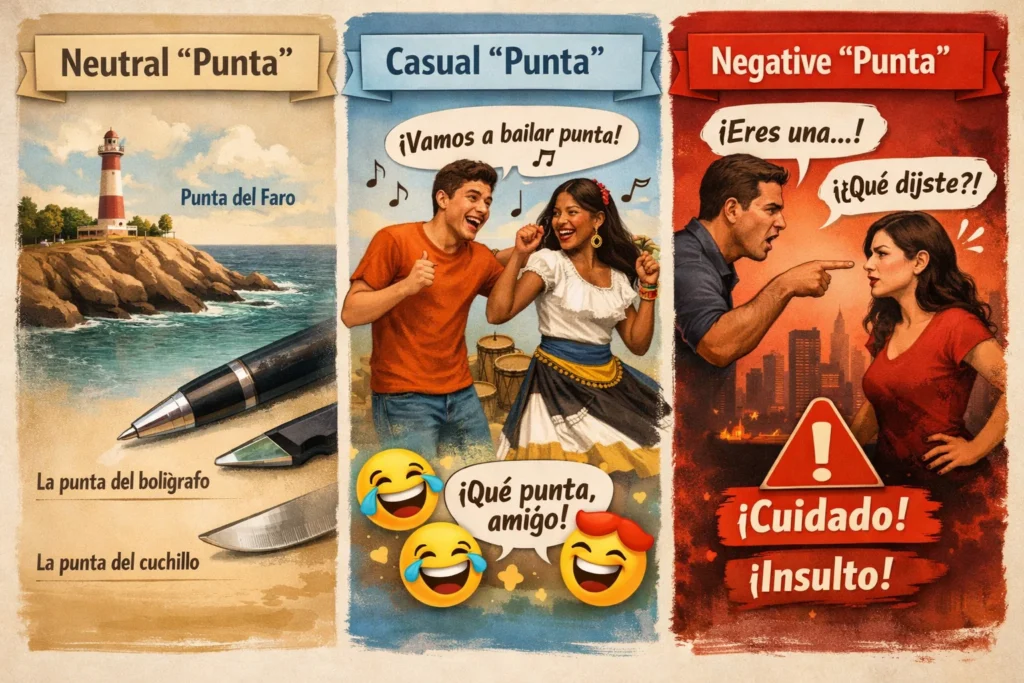
The tone of the word “punta” is extremely important in understanding its meaning.
Neutral tone:
- Used in science, geography, and everyday descriptions
- No emotional or offensive meaning
Casual tone:
- Used in informal speech
- May appear in jokes or expressions
Negative tone:
- Can be insulting in certain dialects
- Depends heavily on region and relationship between speakers
Comparison With Similar Spanish Terms
To better understand “punta,” it helps to compare it with similar Spanish words.
| Word | English Meaning | Difference |
|---|---|---|
| Punta | Point / tip | Refers to sharp ends or locations |
| Extremo | Extreme / end | More general “end” of something |
| Punta (slang use) | Informal expression | Can be emotional or rude depending on region |
| Cima | Peak / summit | Refers to top of something |
While “punta” focuses on pointed ends or locations, other words like “extremo” or “cima” refer to broader or higher positions.
Alternate Meanings of “Punta”
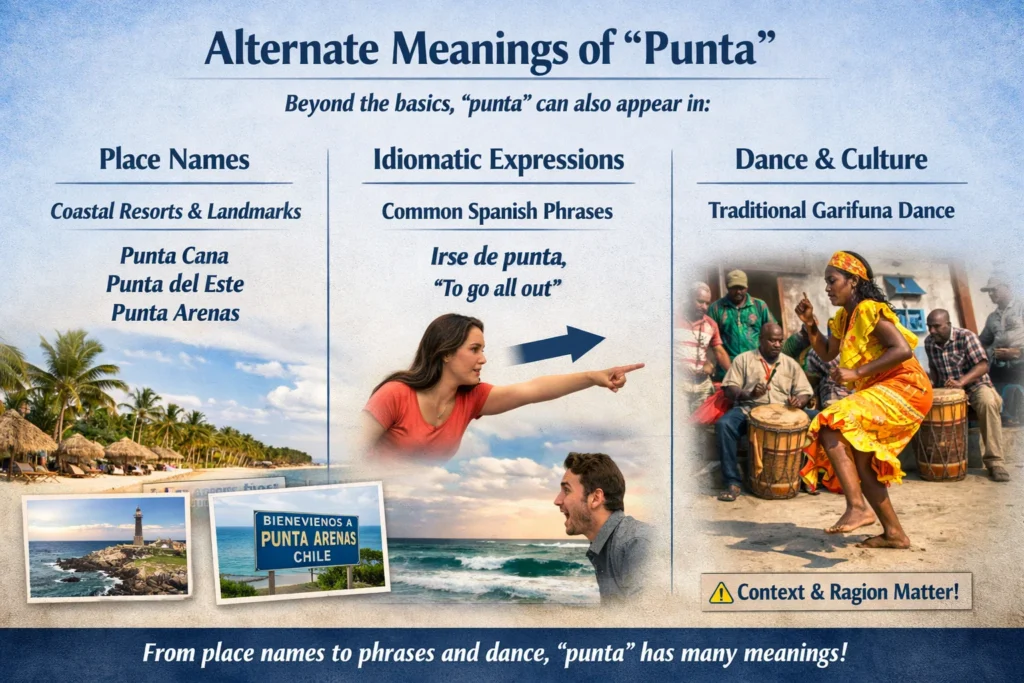
Although the main meanings are consistent, “punta” can also appear in:
1. Place names
Many Spanish-speaking countries have towns or cities with “Punta” in their names, such as:
- Coastal resorts
- Tourist destinations
- Geographic landmarks
These names usually refer to a point of land extending into water.
2. Idiomatic expressions
Spanish expressions sometimes include “punta,” where meaning is not literal.
Example:
- Expressions that imply direction, emphasis, or intensity
3. Dance or cultural references
In some regions, “punta” can refer to:
- A traditional dance style in Central America (especially Garifuna culture)
Polite or Professional Alternatives
If you’re translating or using English instead of “punta spanish,” here are better alternatives depending on context:
- Tip (for objects)
- Point (for shapes or land)
- Edge
- End
- Cape (for geography)
- Headland
These alternatives are more universally understood in English and avoid confusion.
Usage Tips for Learners
If you’re learning Spanish or encountering “punta” online, keep these tips in mind:
- Always check context first
- Pay attention to country or region
- Avoid assuming slang meaning immediately
- Look at surrounding words for clues
- When unsure, assume the neutral meaning
FAQs
1. What does “punta” mean in English slang?
It can vary, but in some regions it is used informally and may be offensive depending on tone and context.
2. Is “punta” a bad word?
Not always. In most cases, it simply means “point” or “tip.” Only in certain slang contexts can it be rude.
3. What does “punta del” mean?
It usually means “the point of” or “the tip of” something in English.
4. Why is “punta” used in place names?
Because it often refers to a geographic point of land extending into water.
5. How do you pronounce “punta”?
It is pronounced as poon-tah in Spanish.
6. Is “punta” used in all Spanish-speaking countries?
Yes, but meanings and tone can vary across regions.
7. Can “punta” be used politely?
Yes. In most formal contexts, it is completely neutral.
8. What does punta mean in Spanish?
“Punta” means “point” or “tip,” like the end of a sharp object.
Conclusion
The word “punta” is a great example of how language can change meaning depending on context. While its primary English translation is “point” or “tip,” it can also refer to geographical features or appear in informal slang depending on the region.
The most important thing to remember is:
- Context matters more than the word itself
- Most uses are neutral and harmless
- Slang meanings are regional and not universal
- Translation should always consider tone and situation
If you treat “punta” as a context-dependent word, you’ll rarely misunderstand it.
Discover More Related Articles:
- JOI Mean in Porn | Understanding the Adult Content Slang Term In 2026
- The Root Tele Mean in Television | Understanding the Word’s Origin In 2026
- Closed Circle Mean in Math |The Symbol Most Students Misunderstand In 2026

Madison Taylor is an experienced content writer who focuses on researching and explaining word meanings, slang, and texting terms. She writes for meanvoro.com, creating clear and accurate to help readers understand language easily.