Definition
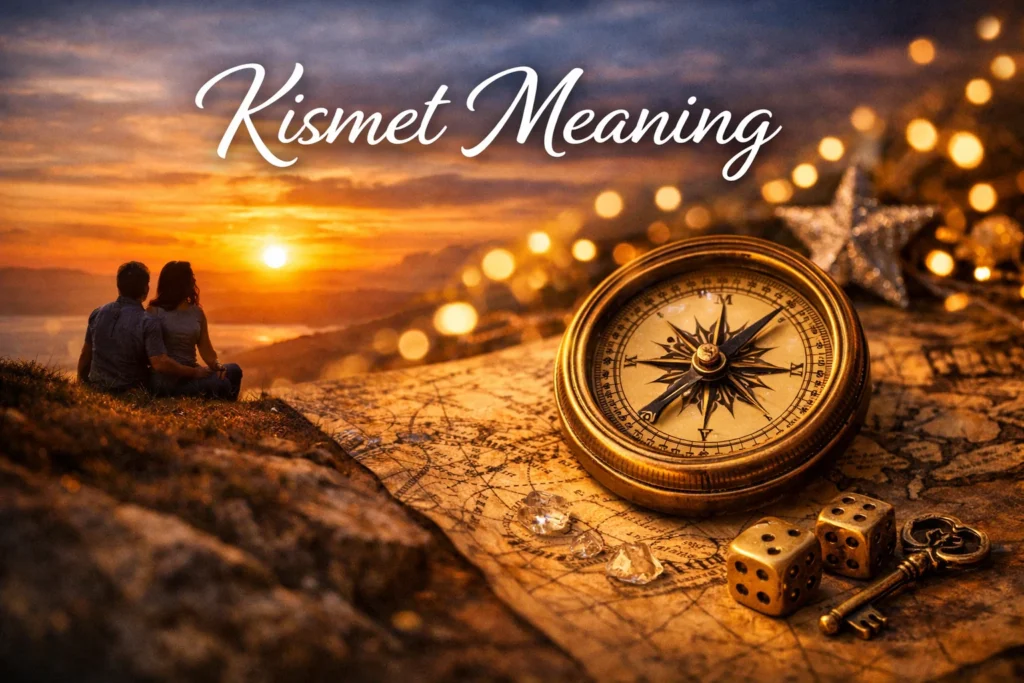
Kismet is a word that means destiny, fate, or something that is meant to happen. It is commonly used to describe events that seem guided by luck, destiny, or a higher power.
The word “kismet” is often used in conversations, movies, books, social media captions, and inspirational quotes. People use it when something feels perfectly timed or meant to be.
In modern English, kismet usually has a positive and emotional meaning connected to life events, relationships, success, or unexpected coincidences.
If you’ve ever heard someone say:
“Meeting her was pure kismet.”
they mean the meeting felt destined or fated.
In this guide, you’ll learn:
- What kismet means
- The origin of the word
- How people use it in conversations
- Examples of kismet in sentences
- Similar words and comparisons
- Common mistakes
- FAQs and usage tips
Let’s explore the meaning of kismet in a simple and easy way.
What Does Kismet Mean?
Kismet means:
fate, destiny, or something meant to happen
It describes situations that seem guided by destiny rather than chance.
People often use the word when:
- something unexpected happens perfectly
- two people meet by coincidence
- life events feel destined
- luck changes someone’s path
- situations feel “meant to be”
Example:
“Getting that job felt like kismet.”
This means the person believes the opportunity was destined to happen.
Another Example:
“Their friendship was pure kismet.”
This suggests the friendship happened naturally and fatefully.
Origin of the Word Kismet
The word kismet comes from the Turkish word “kısmet”, which originally came from Arabic.
It traditionally means:
- fate
- destiny
- portion assigned by life or God
Over time, English speakers adopted the word to describe lucky or destined events.
Today, kismet is widely used in:
- books
- movies
- poetry
- social media captions
- everyday conversations
How Kismet Is Used
Kismet is usually used in emotional or meaningful situations.
1. Kismet as Fate
This is the most common meaning.
Examples:
- “Maybe it was kismet.”
- “Their meeting was kismet.”
- “It felt like pure destiny and kismet.”
It often suggests events happened for a reason.
2. Kismet in Relationships
People commonly use kismet when talking about love or friendships.
Examples:
- “Meeting my best friend was kismet.”
- “Their relationship seemed like kismet.”
- “Some people believe soulmates are kismet.”
In relationships, it usually carries a romantic or emotional feeling.
3. Kismet in Daily Life
Kismet can also describe lucky timing or unexpected success.
Examples:
- “Finding that wallet was kismet.”
- “It was kismet that we arrived at the same time.”
- “Her success felt like destiny.”
Kismet Meaning in Different Contexts Table
| Context | Meaning | Usage |
|---|---|---|
| Relationships | Destiny in love/friendship | Emotional connection |
| Daily Life | Lucky fate or timing | Coincidences |
| Literature | Destiny or higher power | Symbolic meaning |
| Social Media | “Meant to be” moment | Captions and quotes |
Examples of Kismet in Sentences
Casual Conversation
- “Maybe it’s kismet.”
- “That meeting felt like kismet.”
- “It was pure fate.”
Relationship Example
- “Their love story was kismet.”
- “Meeting him changed everything.”
Inspirational Usage
- “Sometimes life works through kismet.”
- “Kismet brought them together.”
Kismet in Social Media and Pop Culture
The word kismet is popular online because it sounds emotional, poetic, and meaningful.
Platforms where it is commonly used:
- TikTok
- X (Twitter)
- YouTube captions
Example Captions:
- “Maybe it was kismet ✨”
- “A kismet moment.”
- “Some things are just meant to happen.”
People often pair the word with:
- romantic edits
- aesthetic videos
- motivational quotes
- travel memories
- friendship posts
Comparison: Kismet vs Similar Words
| Word | Meaning | Difference |
|---|---|---|
| Kismet | Destiny/fate | Often emotional or poetic |
| Fate | Predetermined outcome | More general |
| Destiny | Future path or purpose | Strong life meaning |
| Coincidence | Random event | Not necessarily destined |
| Serendipity | Lucky accident | Focuses on luck |
Why People Use the Word Kismet
People use kismet because:
- it sounds poetic
- it expresses emotional meaning
- it describes “meant to be” moments
- it adds depth to conversations
- it feels more unique than “fate”
The word is especially common in emotional storytelling and social media captions.
Common Mistakes When Using Kismet
1. Using It for Ordinary Situations
Kismet is usually reserved for meaningful or emotional moments.
Incorrect:
“Eating cereal was kismet.”
This sounds unnatural because the situation is too ordinary.
2. Confusing It With Luck
Kismet is closer to destiny than random luck.
Luck = accidental success
Kismet = something meant to happen
3. Overusing the Word
Using kismet too often can make writing sound dramatic.
It works best for important moments.
Is Kismet Positive or Negative?
| Usage Type | Positive or Negative |
|---|---|
| Romantic moments | Positive |
| Inspirational stories | Positive |
| Emotional life events | Usually positive |
| Serious destiny themes | Neutral |
Most modern uses of kismet are positive and emotional.
FAQs
What does kismet mean?
Kismet means fate, destiny, or something meant to happen.
Is kismet the same as destiny?
They are very similar, but kismet often sounds more emotional or poetic.
Where does the word kismet come from?
It comes from Turkish and Arabic origins meaning fate or destiny.
Is kismet a positive word?
Usually yes. It often describes meaningful or beautiful life events.
Can kismet describe relationships?
Yes, people often use it for romantic or emotional connections.
Is kismet formal or informal?
It can be used in both casual and literary writing.
What is an example of kismet?
“Meeting her felt like kismet.”
Is kismet popular on social media?
Yes, especially in captions, quotes, and emotional posts.
Conclusion
Kismet is a beautiful word that means fate, destiny, or something that feels meant to happen. It is often used to describe emotional moments, meaningful coincidences, relationships, and life-changing experiences.
Whether you see it in books, TikTok captions, Instagram posts, or everyday conversations, understanding the meaning of kismet helps you better appreciate how people describe destiny and meaningful moments in modern communication.
Discover More Related Articles:
- IDTS Mean in Text | TikTok, Snapchat, Instagram In 2026
- What Does Surreal Mean | Art & Literature In 2026

Jessica Brown is a language-focused writer who creates well-researched articles on word meanings, abbreviations, and everyday expressions. She contributes to meanvoro.com, delivering simple, reliable, and reader-friendly content designed to make complex terms easy to understand.