
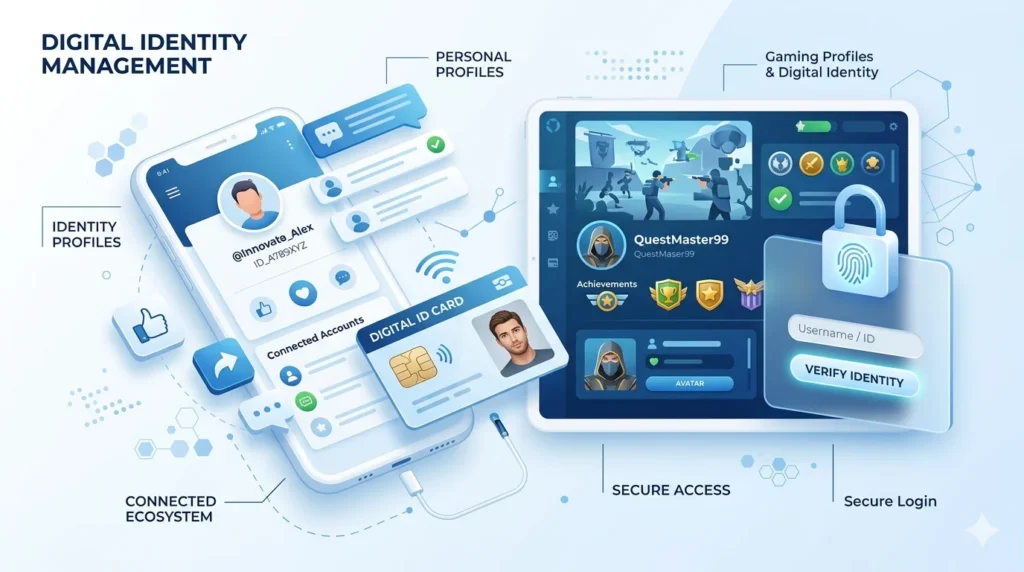
Definition
“ID” most commonly means “Identification” or “Identity.” In digital communication, it is often used to refer to a username, account name, or online profile ID used to identify a person on social media, apps, or websites.
In today’s digital world, short forms like “ID” are everywhere—on social media, in texting, gaming, online forms, and even in casual conversations. But the meaning of “ID” can change depending on where and how it is used.
That’s why many people search for “ID meaning” to understand whether it refers to identity, username, something slang-related, or even something completely different in texting.
In most cases, ID simply stands for “Identification” or “Identity”, but in online chats and social media, it can also refer to a username, profile ID, or digital identity.
This guide explains everything in a simple, friendly way so you can fully understand what ID means in different contexts.
What Does ID Mean?
The abbreviation ID has a very broad meaning, but the core idea is always the same: it is used to identify someone or something.
Most common meanings of ID:
- Identification (official documents like ID card)
- Identity (personal or digital identity)
- User ID (account or username online)
- Game ID (gaming profile name)
- Social media ID (Instagram, Snapchat, TikTok handle)
So, ID basically means a way to recognize or distinguish a person in a system.
ID Meaning in Texting and Social Media
In texting or social media conversations, ID usually refers to a username or profile identity.
Example usage:
- “Send me your Insta ID”
- “What’s your Snapchat ID?”
- “I forgot your gaming ID”
In this context, ID means:
👉 Your account name or username on an app
ID Meaning in Real Life (Official Use)
Outside social media, ID has a more formal meaning.
Examples:
- National ID card
- Student ID
- Employee ID
- Passport ID number
Example:
- “Show your ID at the entrance”
- “My student ID is required for exams”
In this case, ID means official proof of identity.
ID Meaning in Gaming
In gaming culture, ID is very commonly used.
Gaming ID means:
- Your player username
- Your in-game identity
- Your account profile
Example:
- “Add me using my Free Fire ID”
- “What is your PUBG ID?”
Gamers often recognize each other through IDs instead of real names.
ID Meaning on Social Media
On platforms like Instagram, TikTok, and Snapchat, ID refers to:
- Username
- Handle
- Profile name
Example:
- “Follow my Insta ID”
- “Drop your TikTok ID”
Here, ID = your visible digital identity.
Table: Different Meanings of ID
| Context | ID Meaning | Example |
|---|---|---|
| Official use | Identification | “Show your ID card” |
| Social media | Username | “What’s your Insta ID?” |
| Gaming | Player profile | “Send your PUBG ID” |
| Texting | Account identity | “I forgot your ID” |
Origin of the Term ID
The term ID comes from the word “Identification,” which has been used in legal and official systems for decades.
With the rise of the internet:
- “User ID” became common in websites
- Social media adopted “ID” as username slang
- Gaming communities shortened “player identity” to “ID”
Over time, ID became a universal digital term.
Examples of ID in Real Conversations
💬 Social media chat:
A: “What’s your Insta ID?”
B: “@alex_123”
🎮 Gaming chat:
A: “Send your Free Fire ID”
B: “Here: 987654321”
🪪 Official use:
“Please show your ID at the counter.”
ID vs Username: Are They the Same?
In most online contexts, yes—but not always.
| Term | Meaning |
|---|---|
| ID | Broader identity reference |
| Username | Specific login name |
👉 On social media, both are often used interchangeably.
ID vs UID (Common Confusion)
Many people confuse ID with UID.
Difference:
- ID = General identification
- UID = Unique Identification Number
UID is more specific and usually system-generated.
Alternative Words for ID
Depending on context, you can also say:
Instead of ID (social media):
- Username
- Handle
- Profile name
Instead of ID (official):
- Identity card
- Identification document
- Credentials
Instead of ID (gaming):
- Player tag
- Game profile
- Account name
When Do People Use “ID”?
People use ID in different situations:
- Creating accounts
- Adding friends online
- Logging into systems
- Verification processes
- Gaming interactions
- Social media networking
Common Misunderstandings About ID
❌ Mistake 1: Thinking ID is slang only
It is not slang—it is a formal term used in official systems.
❌ Mistake 2: Assuming ID always means social media username
It can also mean identity documents or numbers.
❌ Mistake 3: Confusing ID with password
ID identifies you; password secures your account.
Why ID Is Important in Digital Life
ID is essential because it:
- Identifies users online
- Helps secure accounts
- Differentiates people in systems
- Enables social media interaction
- Supports gaming profiles
Without IDs, online systems cannot function properly.
FAQs:
What does ID mean in texting?
ID usually means username or account name on social media or apps.
What does ID stand for in real life?
It stands for Identification or Identity, often used in official documents.
Is ID the same as username?
Yes, in social media and gaming, ID is often used as a username.
What is gaming ID?
Gaming ID is your player profile or account name in online games.
What does ID mean on Instagram?
It refers to your Instagram username or handle.
Is ID a password?
No, ID identifies your account, while password protects it.
Why do people ask for ID?
To find, add, or verify someone’s identity on apps or in real life.
Can ID have different meanings?
Yes, it can mean identity, username, or identification depending on context.
Conclusion
The meaning of ID is simple but highly flexible depending on where it is used. In most cases, it refers to Identification or Identity, while in digital communication it commonly means username or online profile name.
In everyday life, ID is important for official purposes like identity cards, student IDs, and verification documents. In the digital world, it helps people connect, recognize each other, and manage accounts safely.
Understanding ID helps you navigate both online platforms and real-life systems more easily.
Discover More Related Articles:
- What Does PS Stand For | In Grammar & Writing Style For 2026
- “Based” Mean in Text: Origin, Usage & Popularity In 2026

Ryan Thompson is an experienced content writer specializing in slang terms, texting abbreviations, and word meanings. He writes for meanvoro.com, where he creates accurate and easy-to-understand language content for readers.