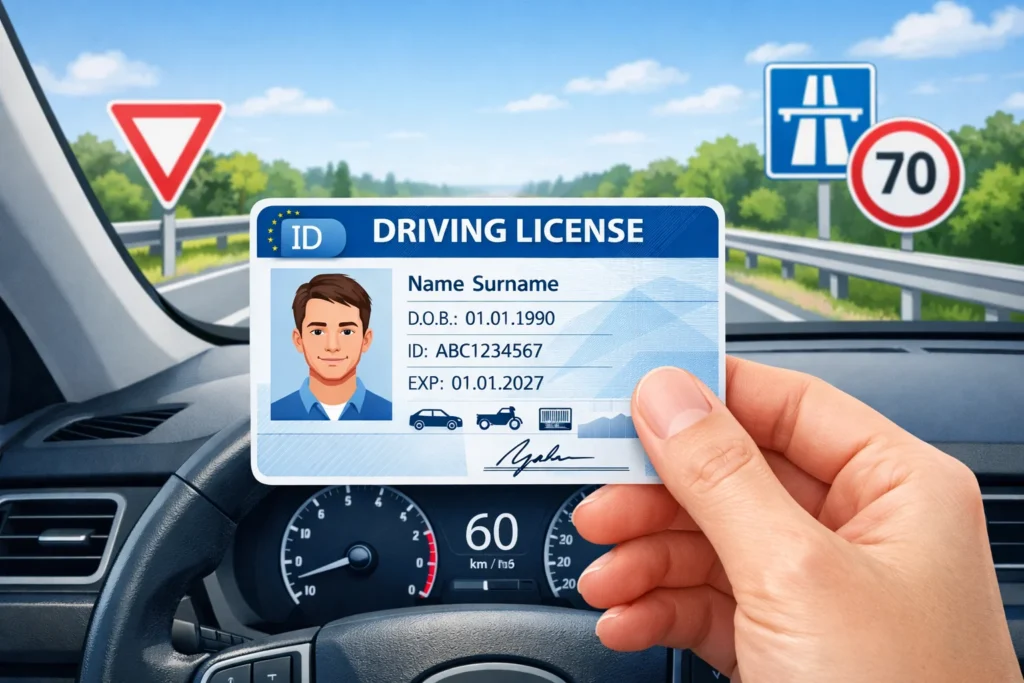
Definition
DL stands for Driving License, which is an official government-issued document that allows a person to legally operate a motor vehicle such as a car, motorcycle, or truck on public roads.
If you’ve ever filled out an online form, applied for a job, or verified your identity, you’ve probably come across the term DL. Many people search “what is a DL” because it appears in documents, ID cards, driving applications, and even online verification systems.
But what exactly does DL mean?
Is it related to driving, education, or something else?
The truth is, DL is most commonly used in legal and transportation systems, and it plays an important role in identity verification and road safety regulations in many countries.
In this complete guide, you’ll learn what DL means, its full form, types, uses, importance, and common examples in real life.
What Does DL Mean?
DL is a short form of Driving License. It is an identity document that confirms a person has passed the required driving tests and is legally allowed to drive.
In simple words:
👉 A DL is your official permission to drive vehicles on the road.
It is issued by government transport authorities after proper testing and verification.
Why Is a DL Important?
A Driving License is not just a card—it is a legal requirement in most countries.
Key Importance of DL:
- Proves you are a qualified driver
- Required by law to drive vehicles
- Works as a valid identity document
- Helps in road safety enforcement
- Used in traffic police verification
Without a valid DL, driving is illegal and can lead to fines or penalties.
Types of Driving License (DL)
Different types of DL are issued depending on the vehicle category.
1. Learner’s License (LL)
This is a temporary license for beginners.
- Valid for a short period
- Allows learning driving
- Must be supervised by an experienced driver
2. Permanent Driving License
After passing the driving test, a permanent DL is issued.
- Allows legal driving independently
- Valid for several years
- Must be renewed after expiry
3. Commercial Driving License
For professional drivers who operate heavy or commercial vehicles.
Examples:
- Trucks
- Buses
- Delivery vehicles
4. International Driving Permit (IDP)
Allows a person to drive in foreign countries.
- Used for travel abroad
- Valid in multiple countries
- Requires a valid national DL first
How to Get a DL?
The process of getting a Driving License usually includes several steps:
Step 1: Apply for Learner’s License
You must first apply for a learner’s license by passing a basic traffic rules test.
Step 2: Practice Driving
You must practice driving under supervision for a specific time period.
Step 3: Driving Test
A practical driving test is conducted by transport authorities.
Step 4: Get Permanent DL
After passing the test, you receive your official driving license.
Information Found on a DL
A Driving License usually contains important personal and legal details.
| Detail | Description |
|---|---|
| Name | Full name of the driver |
| Photo | Identity photograph |
| License Number | Unique ID number |
| Date of Birth | Age verification |
| Address | Residential information |
| Vehicle Class | Type of vehicles allowed |
Real-Life Examples of DL Usage
Example 1: Traffic Police Check
A police officer may ask:
“Please show your DL.”
This means they are asking for your Driving License.
Example 2: Job Application
Some jobs require:
“Valid DL required.”
This means you must have a driving license to apply.
Example 3: Vehicle Rental
When renting a car, companies ask:
“Do you have a valid DL?”
Without it, you cannot rent or drive a vehicle.
DL vs Other IDs
Sometimes people confuse DL with other identity documents.
DL vs CNIC / ID Card
| DL | ID Card |
|---|---|
| For driving permission | General identity proof |
| Issued after driving test | Issued to citizens |
| Vehicle-related document | General identification |
Common Abbreviations Related to DL
| Abbreviation | Meaning |
|---|---|
| DL | Driving License |
| LL | Learner’s License |
| IDP | International Driving Permit |
| RTO | Regional Transport Office |
Benefits of Having a DL
Having a valid driving license provides many advantages:
- Legal permission to drive
- Accepted identity proof
- Required for transport jobs
- Useful for travel and rentals
- Increases personal independence
Risks of Driving Without DL
Driving without a valid license is illegal in most countries.
Possible consequences:
- Heavy fines
- Vehicle seizure
- Legal action
- Insurance problems in accidents
That’s why obtaining a DL is very important.
Alternate Meaning of DL
Although DL mainly stands for Driving License, it can also mean different things in other contexts:
| Context | Meaning |
|---|---|
| Technology | Deep Learning |
| Education | Distance Learning |
| Sports | Defensive Line (rare usage) |
However, in everyday life, DL almost always means Driving License.
Tips for DL Applicants
- Learn traffic rules properly
- Practice driving regularly
- Stay calm during driving tests
- Always carry your DL while driving
- Renew your DL before expiry
FAQs
What is a DL?
DL means Driving License, a legal document that allows a person to drive vehicles.
Is DL mandatory for driving?
Yes, it is legally required in most countries.
What are the types of DL?
Learner’s, permanent, commercial, and international driving licenses.
How can I get a DL?
You must apply, pass a learner test, practice driving, and then pass a driving test.
What happens if I drive without DL?
You may face fines, penalties, or legal action.
Is DL a valid ID proof?
Yes, it is commonly accepted as identity proof.
Can DL be used internationally?
Yes, with an International Driving Permit (IDP).
What is the full form of DL?
DL stands for Driving License.
Conclusion
DL stands for Driving License, an essential legal document that allows individuals to drive vehicles safely and legally on public roads.
It is not just an ID card—it represents responsibility, driving skills, and road safety awareness.
From learner permits to international driving rights, DL plays an important role in transportation systems worldwide.
Understanding what a DL is helps you stay informed, legally compliant, and safer on the road.
Discover More Related Articles:
- What Does a Tick Bite Look Like: Signs, Symptoms & Pictures In 2026
- What Does a Cavity Look Like | Signs, Stages, Causes & Treatment In 2026

Jessica Brown is a language-focused writer who creates well-researched articles on word meanings, abbreviations, and everyday expressions. She contributes to meanvoro.com, delivering simple, reliable, and reader-friendly content designed to make complex terms easy to understand.