
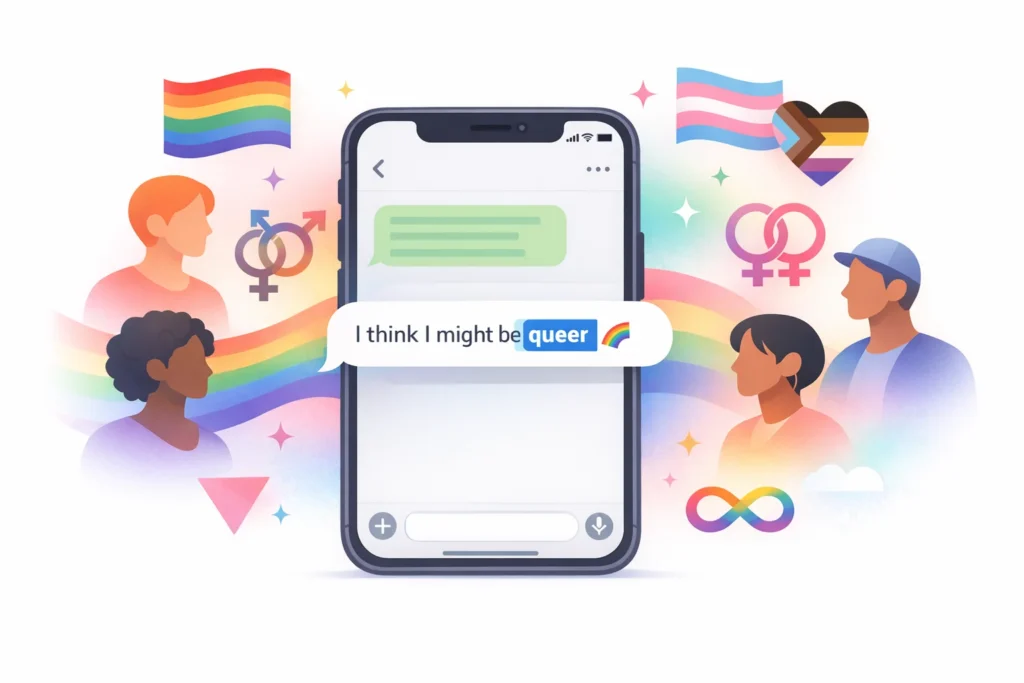
Definition:
“Queer” in text refers to a term used to describe a person who identifies outside of traditional heterosexual or cisgender categories.
If you’ve ever seen the word “queer” in a text message, social media post, or online chat and felt unsure about what it means, you’re not alone. This term has a long history, and its meaning has evolved significantly over time. Today, it can carry different interpretations depending on context, tone, and the way it’s used.
In texting and digital communication, “queer” is most commonly used as a self-identity term related to gender and sexual orientation, but it can also appear in older or informal contexts with different meanings. Understanding how it is used helps avoid confusion and ensures respectful communication.
Let’s break it down clearly and simply.
It can also be used as an umbrella term for diverse sexual orientations and gender identities, though meaning depends on context and intent.”
Origin and Evolution of the Word “Queer”
The word “queer” has a complex history:
Early Usage
- Originally meant “strange,” “odd,” or “unusual” in English.
- Used in literature and everyday language without connection to identity.
Negative Connotation (20th Century)
- Became a derogatory term used against LGBTQ+ individuals.
- Considered offensive when used to insult someone.
Modern Reclamation
- From the late 1980s onward, the LGBTQ+ community began reclaiming the word.
- Today, it is widely used as:
- An inclusive identity label
- A political and cultural term
- A way to reject rigid labels
How “Queer” Is Used in Text Messages and Online Chat
In texting culture, meaning depends heavily on tone and context.
1. Identity-Based Usage (Most Common Today)
Used to describe sexual or gender identity:
- “I’m queer.”
- “They identify as queer.”
2. Inclusive Umbrella Term
Refers to a broad spectrum of identities:
- “Queer community event this weekend.”
- “Queer representation in media is improving.”
3. Casual or Informal Context
Sometimes used in everyday conversation among friends:
- “That movie has a really queer storyline.”
4. Historical or Offensive Context (Less Common but Important)
- May still appear in older messages or misunderstood usage.
- Example: “That’s so queer” (can be offensive depending on intent).
Tone Matters: How “Queer” Changes Meaning
| Context | Example | Tone | Meaning |
|---|---|---|---|
| Identity | “I’m queer.” | Positive | Self-identification |
| Community | “Queer rights matter.” | Neutral/positive | LGBTQ+ inclusion |
| Informal description | “Queer film festival” | Neutral | LGBTQ+ themed |
| Offensive usage | “That’s so queer” | Negative | Outdated insult |
Real-Life Examples in Text Conversations
Friendly Tone
- “Hey, I’m going to a queer art exhibition today 😊”
Neutral Tone
- “She joined a queer support group at school.”
Supportive Tone
- “That queer book recommendation was amazing!”
Potentially Harmful Tone (avoid)
- “That’s so queer” ❌ (can be disrespectful depending on intent)
Related Terms and Comparisons
Understanding “queer” becomes easier when compared with similar identity terms:
LGBTQ+ vs Queer
- LGBTQ+: Specific labels (lesbian, gay, bisexual, transgender, etc.)
- Queer: Broad umbrella term for non-heterosexual or non-cisgender identities
Gay vs Queer
- Gay: Typically refers to men attracted to men (or same-gender attraction)
- Queer: More inclusive, broader identity spectrum
LGBTQ+ vs Queer Community
| Term | Scope | Usage |
|---|---|---|
| LGBTQ+ | Structured categories | Formal, academic, political |
| Queer | Flexible umbrella term | Informal, cultural, personal identity |
Alternate Meanings of “Queer”
Although rare in modern texting, “queer” can still mean:
- Strange or unusual (old English usage)
- Confusing or suspicious (informal slang, outdated)
Example:
- “That situation feels a bit queer.” (old-fashioned meaning)
⚠️ Today, this usage can be misunderstood or seen as offensive, so it is usually avoided.
Polite and Respectful Alternatives in Text
If you’re unsure how to use the word “queer,” here are safer alternatives depending on context:
For Identity Discussions
- LGBTQ+
- LGBTQ+ community
- Non-heterosexual identities
- Diverse gender identities
For Casual Conversation
- “LGBTQ+ themed”
- “Inclusive”
- “Diverse representation”
When Should You Use “Queer” in Text?
Appropriate Situations
- When someone self-identifies as queer
- Discussions about LGBTQ+ topics
- Academic or cultural conversations
- Community events or support groups
Avoid Using When
- You are unsure of someone’s identity
- It could sound offensive or dismissive
- You are using it as a negative label
FAQs:
1. What does queer mean in texting?
It usually refers to someone who identifies outside traditional sexual or gender norms.
2. Is queer a positive or negative word?
Today, it is generally positive when used by or about LGBTQ+ individuals, but context matters.
3. Can I use queer for anyone?
No, it should only be used if someone identifies with it or in appropriate contexts.
4. Is queer the same as gay?
Not exactly. Queer is broader and includes multiple identities.
5. Why do people use the word queer?
It is used for inclusivity and as a reclaimed identity term.
6. Is queer offensive?
It can be offensive if used disrespectfully or as an insult.
7. What does queer community mean?
It refers to people who identify as LGBTQ+ or non-heteronormative.
8. What should I say instead of queer?
You can say LGBTQ+, diverse identities, or inclusive community if unsure.
Conclusion:
The meaning of “queer” in text depends heavily on context, tone, and intention. While it once had negative connotations, it has been widely reclaimed as a positive, inclusive identity term within LGBTQ+ communities.
To use it correctly:
- Always consider context
- Respect personal identity choices
- Avoid outdated or offensive usage
- Use alternatives when unsure
Understanding this word helps improve respectful communication in today’s digital world, where language evolves quickly and meaning matters more than ever.
Discover More Related Articles:
- “NT” Mean in Gaming: GO, and Other Multiplayer Games for 2026
- Forced Air Mean in a House: A Homeowner’s Beginner Guide for 2026

Jessica Brown is a language-focused writer who creates well-researched articles on word meanings, abbreviations, and everyday expressions. She contributes to meanvoro.com, delivering simple, reliable, and reader-friendly content designed to make complex terms easy to understand.