Definition
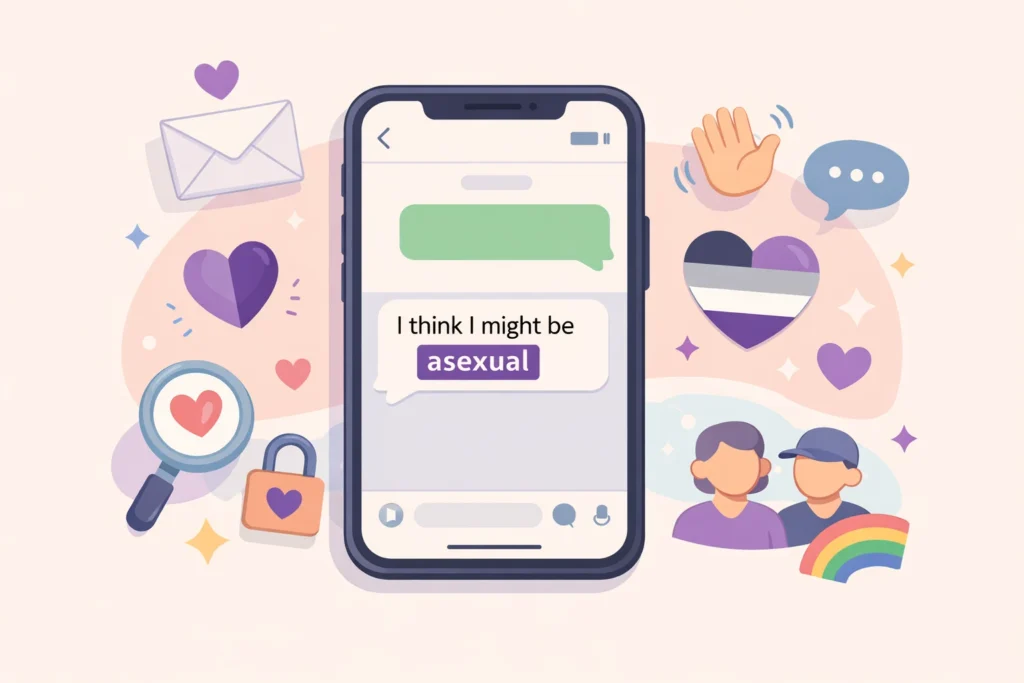
Asexual (in text/slang context) refers to a person who experiences little to no sexual attraction toward others. In online conversations or messages, “asexual” is used to describe a sexual orientation, not a slang abbreviation.
In today’s digital world, texting and social media have become major spaces where people express identity, emotions, and personal experiences. Words like asexual, straight, gay, and bisexual are commonly used in chats, bios, and comments to describe who someone is or how they identify.
However, confusion often happens because many slang terms in texting are abbreviations (like “LOL” or “IDK”), while “asexual” is not an abbreviation at all—it is a full identity term. That’s why people often search “what does asexual mean in text” to understand its real meaning.
Understanding this term helps promote clearer communication, respect, and awareness in online conversations.
Origin and Background of the Term “Asexual”
The word asexual comes from two parts:
- “A-” meaning “without”
- “Sexual” referring to sexual attraction
So, it literally means “without sexual attraction.”
The concept has existed in academic discussions for decades, but it became more widely recognized in online spaces in the early 2000s with the rise of LGBTQ+ awareness communities and social media platforms.
Today, it is a well-recognized identity in discussions about human sexuality and is often included in LGBTQ+ education and awareness content.
How “Asexual” Is Used in Text Conversations
In texting, “asexual” is usually used in one of these ways:
1. Self-Identification
People may use it to describe themselves:
- “I’m asexual.”
- “She is asexual, so she doesn’t experience sexual attraction.”
2. Explanatory Context
Used when explaining relationships or preferences:
- “They are asexual but still want a romantic relationship.”
- 3. Awareness or Discussion
- “Do you know what asexual means?”
- “Asexuality is often misunderstood in conversations.”
Real-World Examples of “Asexual” in Text
Here are some common examples of how the word appears in messages:
| Context Type | Example Sentence | Tone |
|---|---|---|
| Self-identity | “I just realized I’m asexual.” | Neutral / Personal |
| Explanation | “Asexual people don’t feel sexual attraction.” | Informative |
| Supportive chat | “Thanks for sharing that you’re asexual 😊” | Friendly |
| Misunderstanding | “Wait, does asexual mean you don’t date anyone?” | Curious |
| Clarification | “Being asexual doesn’t mean you can’t love someone.” | Educational |
These examples show that the word is mainly used in identity and awareness conversations, not as slang or abbreviation.
Common Misunderstandings About “Asexual”
Many people misunderstand what asexual means. Here are some common myths:
Myth 1 – Asexual means no relationships at all
Not true. Asexual people can still have romantic relationships.
Myth 2 – Asexual means someone is “cold” or “emotionless”
Incorrect. Emotional feelings and friendships are completely normal.
Myth 3 – It is the same as celibacy
No. Celibacy is a choice; asexuality is an orientation.
Myth 4 – Asexual people cannot fall in love
Many asexual people still experience romantic attraction.
Comparison With Related Terms
Understanding asexuality becomes easier when compared with related concepts.
| Term | Meaning | Key Difference |
|---|---|---|
| Asexual | Little or no sexual attraction | Orientation, not choice |
| Celibate | Chooses not to have sex | Behavioral choice |
| Aromantic | Little or no romantic attraction | Focus on romance, not sexual attraction |
| Bisexual | Attraction to more than one gender | Sexual attraction exists |
| Straight | Attraction to opposite gender | Sexual attraction exists |
Polite and Respectful Alternatives in Conversation
When discussing or referring to someone who is asexual, respectful language is important.
Instead of:
- “They don’t feel anything”
Use:
- “They identify as asexual”
- “They experience little or no sexual attraction”
- “They are part of the asexual spectrum”
These alternatives keep conversations respectful and accurate.
Is “Asexual” Ever Used as Slang in Text?
No, “asexual” is not slang or shorthand in texting. However, confusion may happen because many internet terms are abbreviations.
Unlike:
- LOL (laugh out loud)
- BRB (be right back)
- IDK (I don’t know)
“Asexual” is a complete word used in formal and informal communication.
Why the Term Is Popular in Online Conversations
The term became widely used online for several reasons:
- Increased awareness of LGBTQ+ identities
- Social media education and discussions
- Representation in blogs, videos, and forums
- People finding language to describe their identity
- Support communities forming online
Platforms like TikTok, Reddit, and Instagram have especially helped spread awareness.
Context Matters – Tone in Text Conversations
The meaning of “asexual” stays the same, but tone can change how it feels in conversation:
- Neutral tone: “I’m asexual.”
- Supportive tone: “That’s completely valid—you’re asexual.”
- Confused tone: “Wait, what does asexual mean?”
- Dismissive tone (avoid): “That’s not real.” ❌
Respectful communication is important when discussing identity-related terms.
FAQs
1. What does asexual mean in simple words?
It means a person does not feel sexual attraction toward others or feels it very rarely.
2. Is asexual the same as not dating?
No, asexual people can still date and form romantic relationships.
3. Can someone be asexual and still fall in love?
Yes, romantic attraction is separate from sexual attraction.
4. Is asexual a choice?
No, it is considered a sexual orientation, not a choice.
5. How do you use asexual in a sentence?
Example: “My friend is asexual, so she doesn’t experience sexual attraction.”
6. Is asexual a slang term in texting?
No, it is not slang; it is a real identity term.
7. What is the difference between asexual and aromantic?
Asexual relates to sexual attraction, while aromantic relates to romantic attraction.
8. Why do people say they are asexual online?
Many people use it online to explain their identity and connect with supportive communities.
Conclusion
The term asexual in text conversations refers to a sexual orientation where a person experiences little or no sexual attraction. It is not slang or an abbreviation but a meaningful identity term used in both casual and formal discussions.
Understanding this term improves communication and helps create more respectful and inclusive online conversations.
Discover More Related Articles:
- “NT” Mean in Gaming: GO, and Other Multiplayer Games for 2026
- Forced Air Mean in a House: A Homeowner’s Beginner Guide for 2026

Ryan Thompson is an experienced content writer specializing in slang terms, texting abbreviations, and word meanings. He writes for meanvoro.com, where he creates accurate and easy-to-understand language content for readers.