
Definition
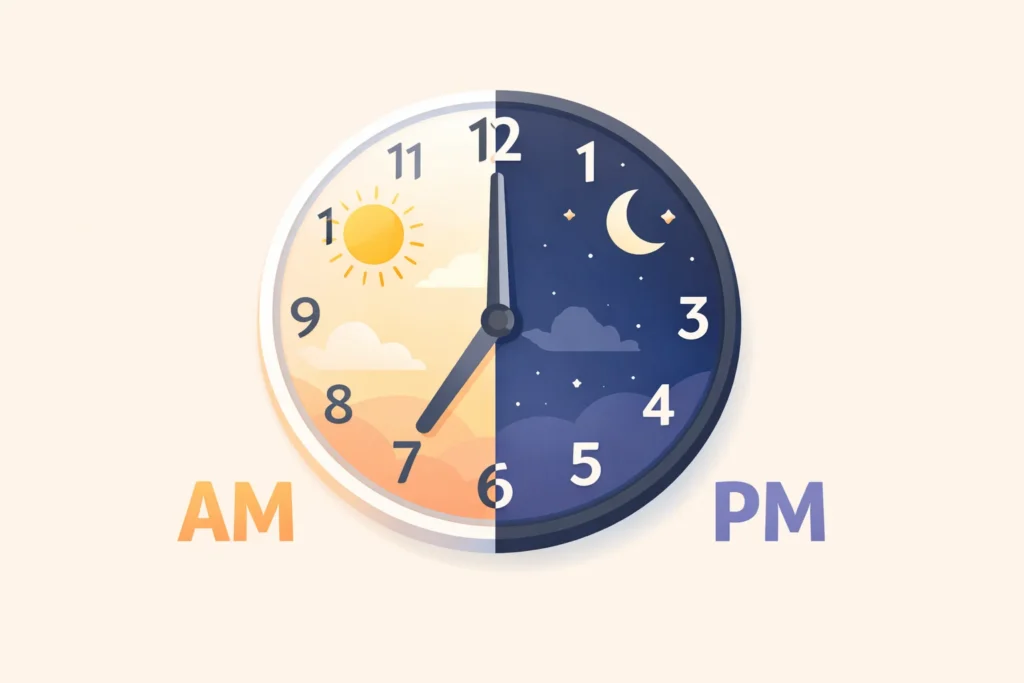
“AM” stands for Ante Meridiem, a Latin term meaning before midday, and it is used to indicate the time from midnight (12:00 AM) to noon (11:59 AM) in the 12-hour clock system.
You’ve probably seen “AM” everywhere—on your phone, clock, school timetable, or even flight schedules. But have you ever stopped and wondered what it actually stands for and why we use it?
“AM” might look like a simple abbreviation, but it has a long history, a Latin origin, and an important role in how we measure time today. Whether you’re setting alarms, reading schedules, or planning your day, understanding “AM” helps you avoid confusion and manage time better.
In this guide, we’ll break down everything about what AM stands for, how it’s used in real life, its origin, examples, comparisons, and even common questions people ask online.
Origin of AM (Ante Meridiem)
The abbreviation AM comes from Latin:
- Ante = Before
- Meridiem = Midday (noon)
So, Ante Meridiem literally means “before midday.”
This system comes from ancient Roman timekeeping, where the day was divided based on the position of the sun. Even though we now use digital clocks and modern time systems, the 12-hour format with AM and PM is still widely used around the world.
Why Latin is Used in Timekeeping?
Latin was historically the language of science, astronomy, and education in Europe. Many time-related terms still use Latin because early astronomers developed time measurement systems using it.
What Does AM Mean in Real Life?
In everyday usage, AM tells us the time is in the morning or early day hours.
AM Time Range:
- 12:00 AM = Midnight (start of day)
- 11:59 AM = Just before noon
Simple Breakdown:
- Early morning hours → AM
- Before lunch time → AM
- Midnight to noon → AM
Real-World Examples of AM Usage
Understanding AM becomes easier when you see it in daily life:
1. Daily Routine
- Wake up at 6:00 AM
- School starts at 8:00 AM
- Morning jog at 5:30 AM
2. Transportation
- Train departs at 9:15 AM
- Flight boarding at 10:00 AM
3. Digital Devices
- Alarm set for 7:00 AM
- Meeting scheduled at 11:00 AM
Tone and Usage in Conversation
“AM” is neutral and commonly used in both formal and informal settings.
Example Sentences:
- Neutral: The meeting is at 9:00 AM.
- Friendly: Let’s meet at 10 AM 😊
- Slightly urgent: Be there by 6 AM sharp!
- Casual text: Up at 7am again 😴
💡 Notice: In casual texting, people often drop the dot and write “AM” or even “am”.
AM vs PM: Key Differences
The most common confusion is between AM and PM. Here’s a simple comparison:
| Feature | AM (Ante Meridiem) | PM (Post Meridiem) |
|---|---|---|
| Meaning | Before midday | After midday |
| Time Range | 12:00 AM – 11:59 AM | 12:00 PM – 11:59 PM |
| Period of Day | Night to morning | Afternoon to night |
| Example | 7:00 AM (morning) | 7:00 PM (evening) |
Common Misunderstandings About AM
Many people get confused about specific times:
1. Is 12 AM midnight or noon?
- 12:00 AM = Midnight
- 12:00 PM = Noon
2. Does AM mean morning only?
Not exactly. AM includes:
- Late night (after midnight)
- Early morning
- Up to just before noon
3. Is AM used globally?
Not everywhere. Some countries prefer the 24-hour clock system instead.
AM in the 24-Hour Clock System
In the 24-hour system:
- 1:00 AM = 01:00
- 6:00 AM = 06:00
- 12:00 PM = 12:00
- 11:00 PM = 23:00
This system avoids confusion between AM and PM completely.
Alternate Meanings of AM
Although “AM” mainly refers to time, it can also have other meanings depending on context:
Common alternate meanings:
- AM (Amplitude Modulation) → used in radio broadcasting
- AM (Academic Manager) → education/job roles
- AM (Active Member) → organizational roles
- AM (Account Manager) → business/job title
- AM (Morning abbreviation in texting) → informal writing
⚠️ Context is important—meaning changes depending on where you see it.
AM in Digital Communication
In texting and online communication, “AM” is often used in a relaxed way.
Examples:
- See you at 8 AM 👍
- Woke up at 5 AM again 😩
- Call me at 10am
People often:
- Skip punctuation (AM vs A.M.)
- Use lowercase (am) in casual chats
Polite or Professional Alternatives
Instead of relying on AM/PM, you can also say:
Professional:
- “in the morning”
- “before noon”
- “early morning meeting”
Casual:
- “morning time”
- “around breakfast time”
These alternatives can feel more natural in speech or writing.
Table: AM Usage in Everyday Life
| Situation | Example | Meaning |
|---|---|---|
| School | 8:00 AM | Morning classes |
| Work | 9:00 AM | Office start time |
| Travel | 6:30 AM | Early departure |
| Health | 5:00 AM workout | Early morning exercise |
| Sleep | 1:00 AM bedtime | Late night |
Why Understanding AM Matters
Knowing what AM stands for helps you:
- Avoid scheduling mistakes
- Improve time management
- Understand global communication
- Read digital and analog clocks correctly
Even though it seems simple, misunderstanding AM can lead to missed meetings, flights, or appointments.
FAQs:
1. What does AM stand for in time?
AM stands for Ante Meridiem, meaning before midday.
2. Is 12 AM day or night?
12 AM is midnight (start of a new day).
3. What is the full form of AM?
The full form is Ante Meridiem.
4. What time does AM end?
AM ends at 11:59 AM, just before noon.
5. Why do we use AM and PM?
To divide the 24-hour day into two 12-hour periods for easier understanding.
6. Is AM only used in English?
No, it is used globally in the 12-hour clock system.
7. What is 7 AM in 24-hour format?
7 AM = 07:00
8. Can AM be written in lowercase?
Yes, in casual texting people often write “am”.
Conclusion
“AM” may look like a small abbreviation, but it plays a big role in how we understand time. Standing for Ante Meridiem, it represents the hours from midnight to noon and helps us organize our daily routines effectively.
From school timings to alarms and travel schedules, AM is everywhere in daily life. Understanding it clearly helps you avoid confusion and manage time more efficiently—especially when working across different time zones or using digital devices.
Discover More Related Articles:
- What does similar mean in math: Complete Beginner’s Guide In 2026
- A Bed Bug Look Like: Size, Shape & Color In 2026

Madison Taylor is an experienced content writer who focuses on researching and explaining word meanings, slang, and texting terms. She writes for meanvoro.com, creating clear and accurate to help readers understand language easily.