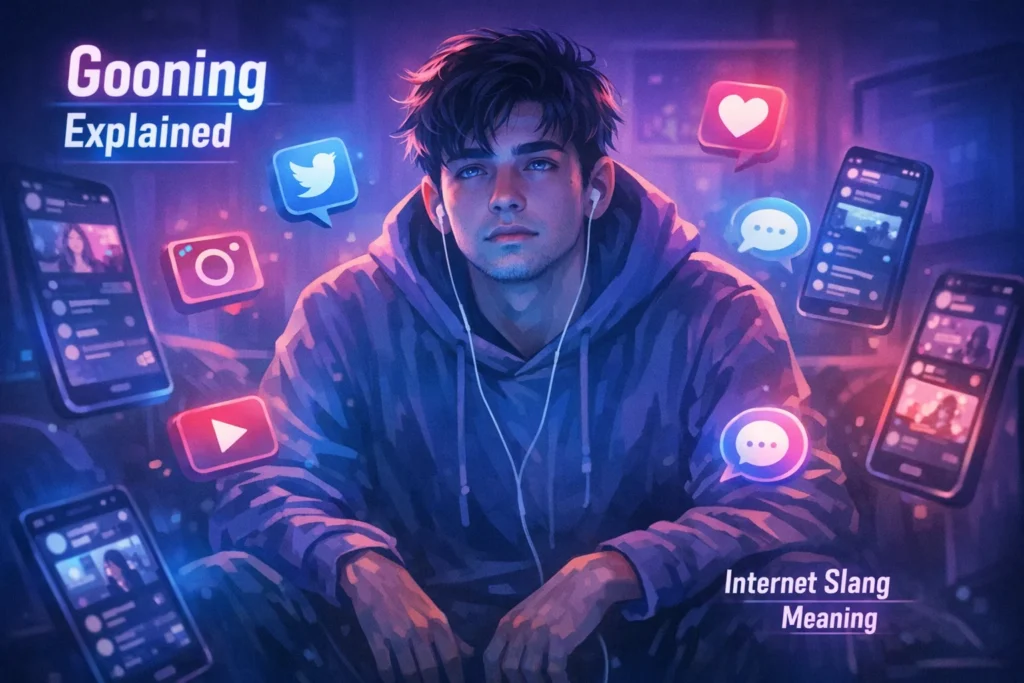
Definition
Gooning is an internet slang term used to describe a state of deep, trance-like fixation on highly stimulating content, often in online or digital environments, where a person becomes mentally absorbed, distracted, or “lost in the moment” for an extended period of time.
In today’s fast-moving digital world, internet slang changes almost as quickly as the apps we use. One term you may have seen popping up in chats, memes, or social media comments is “gooning.” At first glance, it might sound confusing or even a bit strange, especially if you’re not familiar with online slang culture.
In texting and online conversations, it is commonly used in two ways:
- Neutral/slang meaning: Being extremely zoned in, distracted, or hyper-focused on something online (like scrolling, videos, or content bingeing).
- Adult internet slang meaning (less commonly discussed in safe/public spaces): A term that originated in niche online communities and is associated with intense overstimulation contexts.
In everyday messaging, people often use it casually to mean someone is stuck scrolling, spacing out, or mentally “checked out” while consuming content.
Origin of the Word “Gooning”
The term “gooning” comes from internet subcultures and evolved through online forums and meme culture. Like many slang words, it shifted meaning depending on the community using it.
How it evolved:
- Early usage: Initially appeared in niche online communities.
- Meme culture adoption: Spread through forums and social media platforms.
- Modern texting use: Now often used humorously to describe someone who is:
- Staring at their phone too long
- Deep in a scrolling loop
- Mentally “checked out” from reality
Over time, the word became more flexible, and its meaning can change depending on context.
Why “Gooning” Became Popular in Text & Social Media
The rise of short-form content platforms like TikTok, Instagram Reels, and YouTube Shorts made terms like “gooning” more common.
Reasons for popularity:
- Social media addiction jokes
- Meme culture about “doomscrolling”
- Relatable behavior (getting stuck online for hours)
- Gen Z and internet slang trends
People now use it humorously to describe everyday digital habits.
How “Gooning” Is Used in Real Conversations
In texting, “gooning” is usually used casually or jokingly. The tone depends heavily on context.
Common usage meanings:
- Being mentally zoned out
- Excessive scrolling on social media
- Watching too much content without stopping
- Laughing at someone who is “stuck online”
Examples of “Gooning” in Text
Neutral / Casual Tone
- “Bro I was gooning on TikTok for 3 hours last night 😭”
- “Stop gooning and finish your homework.”
- “I was just gooning through reels and lost track of time.”
Funny / Friendly Tone
- “You’re literally gooning again, put the phone down 😂”
- “My brain after 5 hours of gooning: empty.”
Slightly Dismissive Tone
- “He’s just gooning instead of replying.”
- “She’s been gooning all day, no productivity at all.”
Example Table: Context of Usage
| Situation | Meaning of “Gooning” | Tone |
|---|---|---|
| Watching TikTok for hours | Mindless scrolling | Casual / funny |
| Ignoring messages | Distracted online behavior | Slightly annoyed |
| Meme conversation | Joking about addiction to content | Humorous |
| Over-focus on content | Deep digital absorption | Neutral |
Is “Gooning” a Bad Word?
Not exactly.
The word itself is not inherently offensive, but it can:
- Sound slang-heavy or niche
- Carry different meanings depending on the community
- Be misunderstood outside internet culture
In general texting:
- ✔ Safe among friends in casual tone
- ✔ Common in meme conversations
- ⚠ Not suitable for formal communication
Comparison With Similar Internet Slang
To better understand “gooning,” here are related terms often used in similar contexts:
1. Doomscrolling
- Endless scrolling through social media or news
- Usually negative (can feel mentally draining)
2. Brainrot
- Internet slang for consuming too much online content
- Often used humorously to describe mental fatigue
3. Hyperfixation
- Deep focus on one topic or activity
- Can be neutral or related to interests
4. Zoning Out
- Losing awareness of surroundings due to distraction
Quick Comparison Table
| Term | Meaning | Emotion | Usage |
|---|---|---|---|
| Gooning | Deep online absorption | Neutral/funny | Social media slang |
| Doomscrolling | Excessive negative scrolling | Negative | News/social apps |
| Brainrot | Overexposure to content | Humorous | Meme culture |
| Hyperfixation | Intense focus on one thing | Neutral | Psychology + slang |
Alternate Meanings of “Gooning”
While “gooning” is mostly used in internet slang, in rare or older contexts:
- “Goon” (noun) can mean a foolish or silly person.
- “Gooning” may loosely refer to acting silly or mindlessly.
However, in modern texting culture, it almost always refers to digital distraction or deep online engagement.
When Should You Use or Avoid “Gooning”?
When it’s okay to use:
- Casual chats with friends
- Meme conversations
- Social media comments
- Humor-based texting
When to avoid it:
- Professional emails
- Academic writing
- Conversations with unfamiliar people
- Formal communication settings
Polite or Professional Alternatives
If you want a cleaner or more professional way to say “gooning,” you can use:
- “I was distracted online”
- “I got caught up scrolling”
- “I spent too much time on social media”
- “I lost track of time online”
- “I was deeply engaged in content browsing”
These alternatives work better in school or work settings.
Why People Relate to “Gooning” So Much
One reason the term became popular is because it reflects modern digital habits.
Common relatable behaviors:
- Scrolling without realizing time passing
- Switching between apps repeatedly
- Watching short videos endlessly
- Getting stuck in entertainment loops
In a way, “gooning” represents how easily attention can be absorbed in the digital world.
Psychology Behind “Gooning”
From a behavioral perspective, this kind of engagement happens because:
- Short videos trigger constant dopamine responses
- Algorithms continuously suggest new content
- The brain prefers easy entertainment over effortful tasks
That’s why people often say they were “gooning” when they lose track of time online.
Is “Gooning” Addictive Behavior?
Not necessarily a clinical term, but it can describe habitual overuse of digital content.
Signs someone might be spending too much time in this state:
- Losing track of time often
- Ignoring responsibilities
- Feeling “stuck” on apps
- Difficulty stopping scrolling
FAQs:
1. What does gooning mean in texting?
It means being deeply absorbed or stuck in online content, often scrolling or watching videos for a long time.
2. Is gooning a bad word?
No, it is slang and not offensive, but it is informal.
3. Why do people say gooning?
It is used humorously to describe getting lost in social media or internet content.
4. Is gooning the same as doomscrolling?
Not exactly. Doomscrolling is usually negative, while gooning is more casual or humorous.
5. Where did gooning come from?
It originated from internet slang and online communities and evolved through meme culture.
6. Can gooning be used in professional writing?
No, it is too informal for professional or academic contexts.
7. What is a simple meaning of gooning?
It means being mentally “zoned out” while consuming online content.
8. Is gooning always negative?
No, it is often used in a funny or casual way among friends.
Conclusion
“Gooning” is a modern internet slang term that describes a state of deep engagement or distraction, usually related to online content consumption. In texting, it is commonly used in a humorous or casual way to describe someone who is stuck scrolling, watching, or mentally zoning out.
While it is not a formal word, it has become popular due to social media culture and relatable digital habits. However, it’s best used in informal conversations and avoided in professional settings.
Discover More Related Articles:
- B Width Mean in Shoes: Fit, Sizing, and Comfort Tips for 2026
- Repentance Mean in the Bible: Powerful Truth Most People Miss In 2026

Ryan Thompson is an experienced content writer specializing in slang terms, texting abbreviations, and word meanings. He writes for meanvoro.com, where he creates accurate and easy-to-understand language content for readers.