
Definition
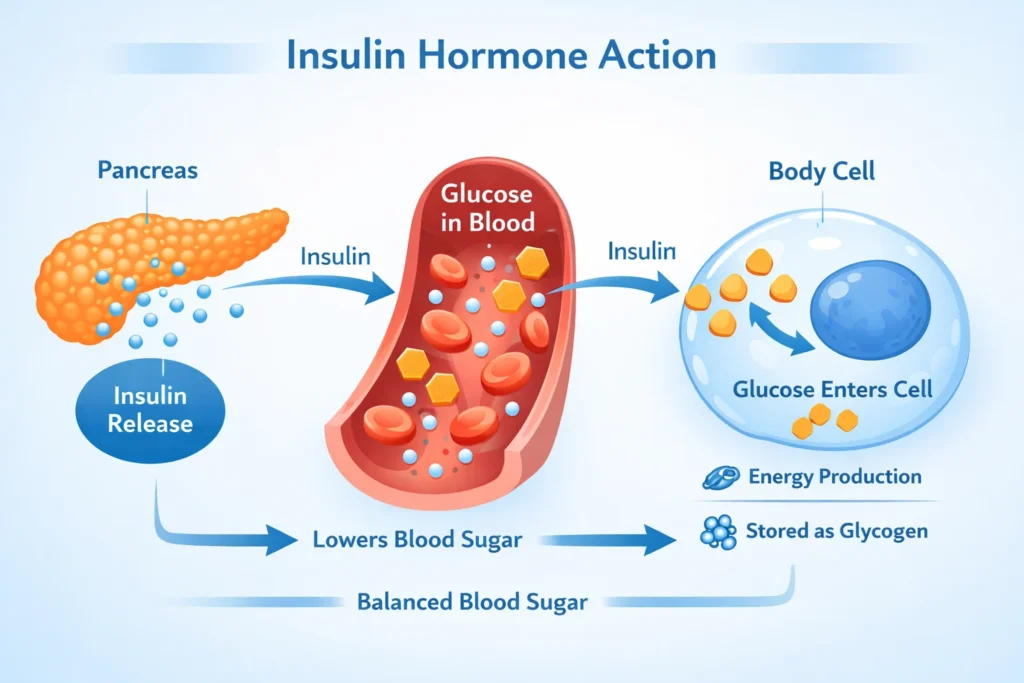
Insulin is a hormone produced by the pancreas that helps regulate blood sugar (glucose) levels by allowing glucose from food to enter cells in the body, where it is used for energy or stored for later use.
Every time you eat a meal—whether it’s rice, bread, fruit, or sweets—your body goes through a complex process to turn that food into energy. At the center of this process is a powerful hormone called insulin.
Even though it works silently in the background, insulin plays one of the most important roles in your survival. It decides whether the sugar from your food is used immediately for energy or stored for later use. When this system works properly, your body feels balanced and energized. But when insulin stops working correctly, it can lead to serious health conditions like diabetes.
Understanding what insulin does is not just medical knowledge—it’s everyday health awareness that can help you make better lifestyle choices.
What Is Insulin?
Insulin is a natural hormone made by the pancreas, a small organ located behind your stomach. It acts like a “key” that unlocks your body’s cells so glucose (sugar) can enter and be used for energy.
In simple terms:
- Food → broken down into glucose (sugar)
- Glucose enters bloodstream
- Insulin helps move glucose into cells
- Cells use glucose for energy or store it
Without insulin, glucose stays in the blood instead of entering cells.
Origin and Discovery of Insulin
Insulin was discovered in 1921 by Canadian scientists Frederick Banting and Charles Best. Before this discovery, diabetes was often fatal because there was no way to control blood sugar levels.
The discovery of insulin completely changed medical history and saved millions of lives. Today, insulin is used worldwide as a treatment for people with diabetes.
What Does Insulin Do in the Body?
Insulin has multiple essential roles in maintaining balance in your body:
1. Controls Blood Sugar Levels
Insulin helps keep blood sugar within a safe range. After eating, blood sugar rises, and insulin helps bring it back down.
2. Helps Cells Get Energy
Cells cannot directly use glucose without insulin. Insulin allows glucose to enter muscle, fat, and liver cells.
3. Stores Extra Energy
If there is excess glucose, insulin helps store it as:
- Glycogen (in liver and muscles)
- Fat (for long-term energy storage)
4. Prevents High Blood Sugar
Without insulin, glucose builds up in the bloodstream, causing hyperglycemia (high blood sugar).
5. Supports Fat and Protein Storage
Insulin also helps in storing fats and building proteins, supporting growth and body repair.
How Insulin Works: Step-by-Step Process
Here’s a simple breakdown of how insulin functions after you eat:
| Step | Process | What Happens |
|---|---|---|
| 1 | You eat food | Food is digested into glucose |
| 2 | Blood sugar rises | Glucose enters bloodstream |
| 3 | Pancreas reacts | Releases insulin |
| 4 | Insulin acts like a key | Opens cells for glucose entry |
| 5 | Energy production | Cells use glucose for energy |
| 6 | Storage | Extra glucose stored as fat or glycogen |
Why Insulin Is Important for Health
Insulin is essential because it keeps your body balanced. Without it:
- Blood sugar stays too high
- Cells starve for energy
- Organs get damaged over time
Healthy insulin function leads to:
- Stable energy levels
- Proper weight management
- Balanced metabolism
- Reduced risk of diabetes
What Happens When Insulin Doesn’t Work Properly?
When insulin production or function is disrupted, it leads to diabetes.
Type 1 Diabetes
- Body produces little or no insulin
- Requires insulin injections
Type 2 Diabetes
- Body becomes resistant to insulin
- Glucose cannot enter cells properly
Symptoms of insulin problems:
- Frequent urination
- Excessive thirst
- Fatigue
- Unexplained weight changes
Insulin vs Glucose: What’s the Difference?
| Term | Meaning | Role |
|---|---|---|
| Insulin | Hormone | Helps glucose enter cells |
| Glucose | Sugar | Primary energy source |
👉 Glucose is the fuel
👉 Insulin is the key that lets the fuel enter cells
Insulin and Blood Sugar Relationship
Insulin and blood sugar work like a control system:
- After eating → blood sugar rises → insulin increases
- Between meals → blood sugar drops → insulin decreases
This balance keeps the body stable and functioning properly.
Common Real-Life Examples of Insulin Action
Example 1: After Eating Rice or Bread
Your blood sugar rises → insulin is released → energy is stored or used.
Example 2: During Exercise
Your body uses stored glucose → insulin levels adjust accordingly.
Example 3: Skipping Meals
Blood sugar drops → insulin decreases to prevent further drop.
Insulin in Medical Use (Artificial Insulin)
People with diabetes often use insulin as a medication.
Types of insulin:
- Rapid-acting insulin
- Short-acting insulin
- Long-acting insulin
- Mixed insulin
Doctors prescribe insulin based on individual needs.
Insulin Resistance Explained Simply
Insulin resistance happens when body cells stop responding properly to insulin.
Causes include:
- Unhealthy diet
- Lack of physical activity
- Excess body weight
- Stress
Result:
The pancreas produces more insulin, but glucose still struggles to enter cells.
Lifestyle Tips for Healthy Insulin Function
To support insulin health naturally:
- Eat balanced meals
- Reduce sugary foods
- Exercise regularly
- Maintain healthy weight
- Stay hydrated
- Get enough sleep
Insulin and Weight Gain: Is There a Connection?
Yes, insulin can influence weight because it helps store excess energy as fat. However, insulin itself does not directly cause weight gain—it depends on diet, activity, and metabolism.
Positive vs Negative Effects of Insulin
| Aspect | Positive Effect | Negative Effect (if imbalanced) |
|---|---|---|
| Blood sugar | Keeps stable | Causes high/low imbalance |
| Energy | Provides fuel | Fatigue if disrupted |
| Storage | Saves energy | Excess fat storage |
Alternative Terms and Related Concepts
While “insulin” is a specific hormone, related terms include:
- Blood sugar regulator
- Glucose hormone
- Metabolic hormone
- Pancreatic hormone
These are not exact synonyms but describe its role.
Polite / Professional Ways to Refer to Insulin
Instead of casual phrasing, you might say:
- “Blood glucose-regulating hormone”
- “Metabolic regulatory hormone”
- “Pancreatic insulin hormone”
FAQs
What does insulin do in simple words?
Insulin helps move sugar from your blood into your cells so your body can use it for energy.
Is insulin a hormone or enzyme?
Insulin is a hormone, not an enzyme.
What happens if insulin is low?
If insulin is low, blood sugar rises and can lead to diabetes symptoms.
Can you live without insulin?
No, insulin is essential for survival because your body needs it to control blood sugar.
Does insulin increase weight?
Not directly, but too much insulin activity can sometimes contribute to fat storage.
What organ produces insulin?
The pancreas produces insulin in the body.
What is insulin resistance?
Insulin resistance is when body cells stop responding properly to insulin, making it harder for sugar to enter cells.
How can I improve insulin function naturally?
You can improve insulin function by eating healthy foods, exercising regularly, staying active, and maintaining a balanced lifestyle.
Conclusion:
Insulin is one of the most important hormones in the human body. It controls blood sugar levels, helps cells get energy, and stores excess nutrients for later use. Without insulin, the body cannot function properly.
Understanding what insulin does helps you appreciate how your body processes food and maintains energy balance. Whether you are learning for health awareness or personal knowledge, insulin is a key part of your metabolic system that deserves attention and care.
Discover More Related Articles:
- What does similar mean in math: Complete Beginner’s Guide In 2026
- A Bed Bug Look Like: Size, Shape & Color In 2026

Madison Taylor is an experienced content writer who focuses on researching and explaining word meanings, slang, and texting terms. She writes for meanvoro.com, creating clear and accurate to help readers understand language easily.