
Definition
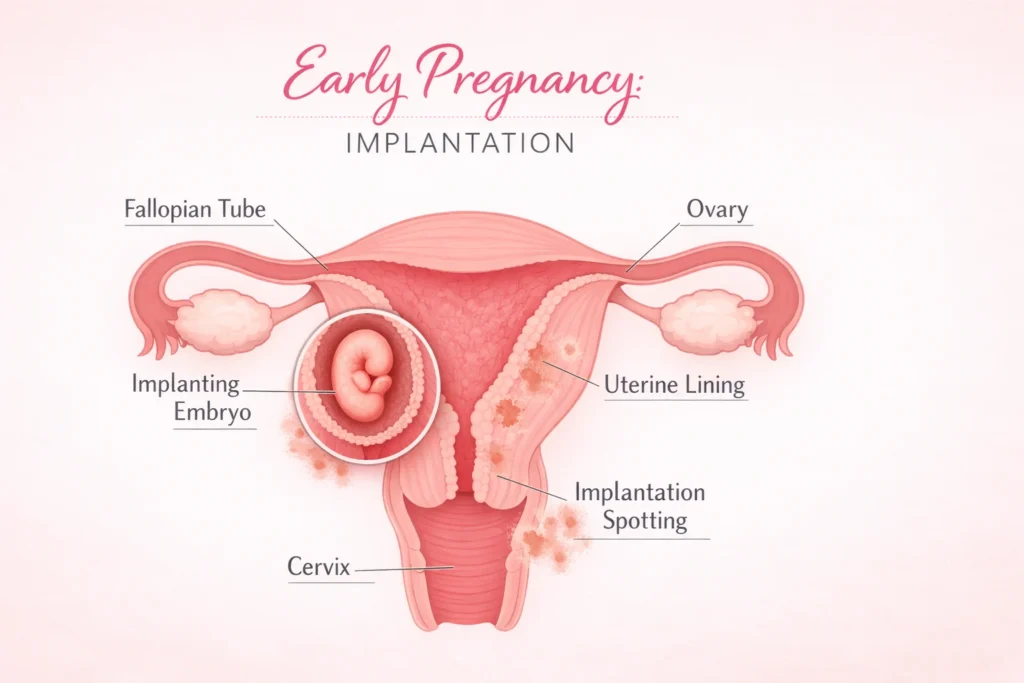
Implantation bleeding is light vaginal spotting that occurs when a fertilized egg attaches to the lining of the uterus, usually 6–12 days after ovulation. It is typically very light pink or brown in color, lasts a few hours to a couple of days, and is much lighter than a normal menstrual period.
Noticing unexpected spotting can be confusing, especially when you’re trying to understand your body or wondering about early pregnancy signs. One of the most commonly searched concerns is what does implantation bleeding look like, because it often appears around the time a period is expected and can easily be mistaken for it.
Many people feel anxious when they see light bleeding and immediately assume the worst—or the best—without knowing the difference between normal menstrual flow and early pregnancy spotting. The truth is, implantation bleeding is usually very mild, short, and different from a regular period, but the details matter a lot.
This guide breaks everything down in a simple, friendly, and clear way so you can understand exactly what’s happening and what to look
What Is Implantation Bleeding?
Implantation bleeding happens in the very early stages of pregnancy when a fertilized egg attaches itself to the uterine lining. This process can cause small blood vessels to break, resulting in light spotting.
Key points:
- It is an early sign of pregnancy for some people (not everyone experiences it)
- It occurs before a missed period
- It is usually very light and short-lived
Why it happens (simple explanation)
When the embryo attaches to the uterus wall, it “implants” itself. This natural process can slightly disturb the lining, causing minimal bleeding.
Origin and Why the Term Became Popular
The term implantation bleeding comes from medical descriptions of early pregnancy processes. It became widely popular in online health searches and forums as people began tracking early pregnancy symptoms more closely.
Today, it is one of the most searched early pregnancy-related topics because:
- People want early signs before a missed period
- It can be confusing and mistaken for spotting or light periods
- Pregnancy awareness and tracking apps have increased interest
Social media and health websites have also made the term more familiar, especially among those trying to conceive.
What Does Implantation Bleeding Look Like?
Understanding what implantation bleeding looks like is the most important part. It has a few key visual and physical differences from a normal period.
1. Color
Implantation bleeding is usually:
- Light pink
- Brownish (like old blood)
- Occasionally very faint red
It is rarely bright red like a normal period.
2. Flow
- Very light spotting
- Not enough to fill pads or tampons
- Often only seen when wiping
It does not have the heavy flow typical of menstruation.
3. Duration
- Lasts a few hours to 1–2 days
- Rarely continues longer than 3 days
4. Texture
- Usually thin
- No large clots
- More watery or light discharge-like
5. Timing
- Happens 6–12 days after ovulation
- Often just before an expected period
Comparison Table: Implantation Bleeding vs Period vs Spotting
| Feature | Implantation Bleeding | Menstrual Period | General Spotting |
|---|---|---|---|
| Color | Light pink or brown | Bright to dark red | Varies |
| Flow | Very light | Moderate to heavy | Very light |
| Duration | Hours to 2 days | 3–7 days | Unpredictable |
| Clots | None | Sometimes present | Rare |
| Timing | Before missed period | Monthly cycle | Any time |
Common Symptoms Alongside Implantation Bleeding
Some people may also notice other early pregnancy signs around the same time:
- Mild cramping (very light, not painful)
- Breast tenderness
- Fatigue
- Slight mood changes
- Increased cervical mucus
However, these symptoms are not exclusive to pregnancy and can overlap with PMS.
How to Identify Implantation Bleeding
It can be tricky to tell the difference, but here are helpful clues:
It is more likely implantation bleeding if:
- The bleeding is very light
- It is pink or brown
- It stops quickly
- It happens earlier than your period
It is less likely implantation bleeding if:
- The flow becomes heavy
- Blood is bright red and continuous
- It lasts several days like a normal cycle
Real-Life Examples (Simple Scenarios)
Example 1: Light spotting only when wiping
“I noticed a few pinkish-brown spots when I went to the bathroom, but nothing on my pad. It stopped after one day.”
👉 This is often consistent with implantation bleeding.
Example 2: Mistaken for early period
“I thought my period was starting because of light spotting, but it never turned into a normal flow.”
👉 Could be implantation bleeding or hormonal spotting.
Example 3: Normal period confusion
“It started light but became heavy with cramps after a day.”
👉 More likely a normal menstrual cycle.
Comparison with Related Terms
Implantation Bleeding vs Early Pregnancy Spotting
- Implantation bleeding happens specifically when the embryo attaches
- Early pregnancy spotting can happen for other reasons (hormonal changes, cervical sensitivity)
Implantation Bleeding vs Ovulation Spotting
- Ovulation spotting occurs mid-cycle
- Implantation bleeding occurs after ovulation, closer to a missed period
Are There Alternate Meanings?
The term implantation bleeding is strictly medical and related to early pregnancy. It does not have slang, cultural, or alternate meanings in everyday language.
When to Take a Pregnancy Test
If you suspect implantation bleeding, timing matters:
- Best time: 1–3 days after a missed period
- Early tests: Some sensitive tests may work a few days before a missed period, but accuracy varies
Tip:
Testing too early can lead to a false negative.
Misconceptions and Myths
Myth 1: Everyone has implantation bleeding
❌ False — many pregnancies occur without any bleeding.
Myth 2: It is a heavy flow
❌ False — it is always light spotting.
Myth 3: It confirms pregnancy
❌ Not always — only a test can confirm pregnancy.
Helpful Tips for Understanding Your Cycle
- Track your cycle regularly
- Note changes in color, flow, and timing
- Use a calendar or health app
- Don’t rely only on spotting as a pregnancy indicator
FAQs:
1. What does implantation bleeding look like at first?
It usually starts as very light pink or brown spotting that appears suddenly and lightly.
2. How long does implantation bleeding last?
It typically lasts a few hours up to 1–2 days.
3. Can implantation bleeding be bright red?
Rarely. If it is bright red and heavy, it is more likely a period.
4. Is implantation bleeding painful?
Usually not. Some people may feel very mild cramping.
5. Does everyone experience implantation bleeding?
No, many people do not experience it at all during early pregnancy.
6. Can it happen before a missed period?
Yes, it usually occurs 6–12 days after ovulation, before the expected period.
7. How can I tell if it’s spotting or implantation bleeding?
Timing, color, and flow help—implantation bleeding is lighter and shorter.
8. Should I worry if I see light bleeding?
Not necessarily, but if you are unsure or it continues, a medical test or advice can help clarify.
Conclusion:
Understanding what does implantation bleeding look like can help reduce confusion and anxiety around early pregnancy signs. The most important things to remember are:
- It is very light spotting, not a full flow
- It is usually pink or brown in color
- It lasts a short time (hours to 1–2 days)
- It happens before a missed period
- Not everyone experiences it
While it can be an early sign of pregnancy, it is not a confirmation. The only reliable way to know is through a pregnancy test at the right time.
Listening to your body, tracking your cycle, and understanding these differences can make everything much clearer and less stressful.
Discover More Related Articles:
- “NT” Mean in Gaming: GO, and Other Multiplayer Games for 2026
- Forced Air Mean in a House: A Homeowner’s Beginner Guide for 2026

Ryan Thompson is an experienced content writer specializing in slang terms, texting abbreviations, and word meanings. He writes for meanvoro.com, where he creates accurate and easy-to-understand language content for readers.