Definition:
Anxiety is a natural emotional and physical response to stress or perceived danger that often feels like worry, nervousness, or fear. It can affect the body, thoughts, and emotions all at once, sometimes even when there is no immediate threat.
Have you ever felt your heart race before a test, your stomach twist before speaking in front of others, or your thoughts spiral for no clear reason? If yes, you’re already familiar with what anxiety can feel like.
The search for “what does anxiety feel like” has become extremely common because more people are openly talking about mental health today. Anxiety isn’t just “being nervous”—it’s a full-body experience that can be mild, overwhelming, or somewhere in between.
It can show up quietly as overthinking or loudly as a racing heartbeat and shortness of breath. And importantly, it doesn’t always have a clear cause.
Let’s break it down in a simple, real-world way so you can truly understand it.
Origin, Popularity, and Real-World Usage of the Term “Anxiety”
The word anxiety comes from the Latin word anxietas, meaning “worry” or “trouble of mind.” Historically, it was used in medical and philosophical discussions to describe inner unease.
Today, the term is widely used in:
- Everyday conversations (“I feel anxious about exams”)
- Mental health discussions
- Social media awareness posts
- Clinical psychology and psychiatry
Why it’s so popular now:
- Increased awareness of mental health
- Stressful modern lifestyles
- Academic and work pressure
- Social media comparison culture
- More open conversations about emotions
Anxiety is no longer seen as rare—it’s recognized as a common human experience.
What Does Anxiety Actually Feel Like?
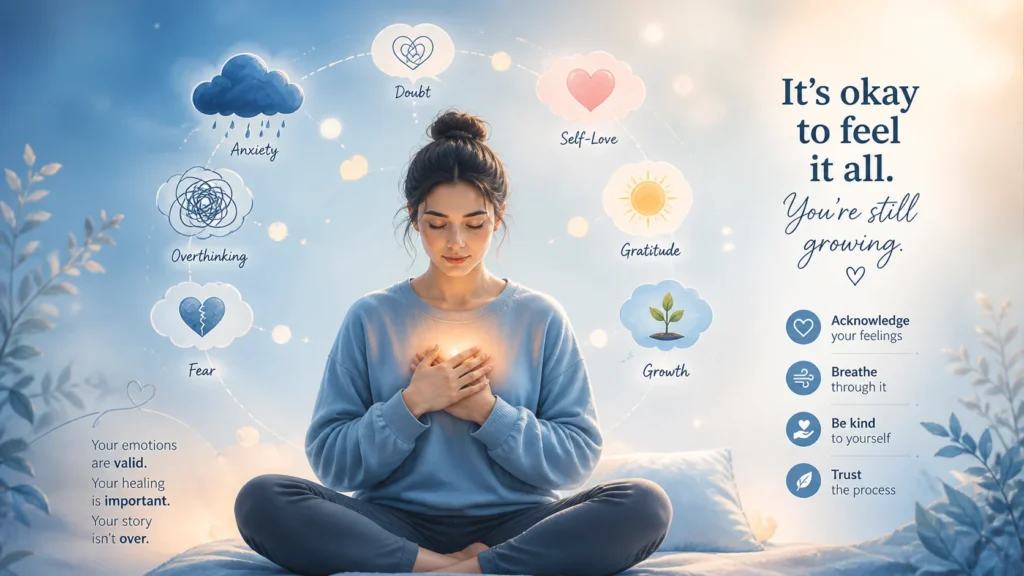
Anxiety is not just one feeling. It is a combination of physical sensations, emotional reactions, and thought patterns.
1. Physical sensations
Anxiety often shows up in the body first:
- Rapid heartbeat ❤️
- Sweating or cold hands
- Tight chest or difficulty breathing
- Stomach discomfort or “butterflies”
- Muscle tension
- Restlessness or shaking
It can feel like your body is “on alert,” even when nothing is happening.
2. Emotional experience
Emotionally, anxiety can feel like:
- Constant worry or fear
- Feeling overwhelmed
- Irritability or frustration
- Sense of unease or dread
- Feeling “on edge”
Sometimes people describe it as a feeling that “something bad is about to happen,” even if they don’t know what.
3. Thought patterns
Anxiety also affects thinking:
- Overthinking small situations
- Imagining worst-case scenarios
- Difficulty focusing
- Racing thoughts
- Self-doubt
It can feel like your mind is stuck in a loop that won’t slow down.
Real-Life Examples of Anxiety in Different Situations
Here are relatable examples of how anxiety may show up in daily life:
Example 1: Before an exam
- You study, but still feel unsure
- Your heart beats fast before entering the room
- You keep thinking “What if I forget everything?”
Example 2: Social situations
- You overthink what to say
- You feel your face getting warm
- You worry about being judged
Example 3: No obvious trigger
- You are sitting quietly
- Suddenly feel uneasy or restless
- Thoughts start racing without reason
Comparison With Related Terms
Anxiety is often confused with other emotional states. Here’s how it differs:
Anxiety vs Stress vs Fear vs Panic
| Term | Meaning | Duration | Trigger |
|---|---|---|---|
| Anxiety | Ongoing worry or unease, sometimes without clear cause | Can last long-term | May or may not be obvious |
| Stress | Response to external pressure | Usually temporary | Clear cause (work, school, etc.) |
| Fear | Reaction to immediate danger | Short-term | Real, present threat |
| Panic | Intense sudden fear or discomfort | Very short but intense | Often unexpected |
Anxiety is unique because it can exist even without a direct or immediate danger.
Common Symptoms of Anxiety
Below is a clear breakdown of anxiety symptoms:
Anxiety Experience Table
| Category | What It Feels Like | Real-Life Description |
|---|---|---|
| Physical | Fast heartbeat, sweating, nausea | “My body feels like it’s running a marathon” |
| Emotional | Nervousness, fear, dread | “I feel like something is wrong” |
| Cognitive | Overthinking, worry loops | “I can’t stop thinking about what could go wrong” |
| Behavioral | Avoiding situations | “I don’t want to go because I feel uncomfortable” |
Why Anxiety Happens (Common Triggers)
Anxiety can come from many sources, such as:
- Academic pressure or exams
- Family expectations
- Social situations
- Financial worries (in adults)
- Big life changes
- Lack of sleep or rest
- Overstimulation (noise, screens, etc.)
Sometimes, it appears without a clear reason, which can feel confusing.
How People Describe Anxiety in Real Conversations
People express anxiety in different tones depending on the situation:
Friendly tone:
- “I’m just feeling a bit anxious about tomorrow.”
Neutral tone:
- “I’ve been experiencing anxiety lately.”
Emotional tone:
- “My anxiety has been really overwhelming these days.”
Dismissive tone (less helpful):
- “You’re just overthinking it.”
Understanding tone matters because anxiety is a real experience, not “just imagination.”
Alternatives and Polite Ways to Say “I Have Anxiety”
If someone wants softer or more conversational expressions, here are alternatives:
- “I’m feeling overwhelmed right now”
- “I’m a bit on edge today”
- “I’m feeling nervous”
- “My mind is racing”
- “I’m not feeling very calm”
These phrases can help express emotions without stigma.
Is Anxiety Always a Problem?
Not always.
Mild anxiety can actually be helpful:
- Helps you prepare for challenges
- Increases focus before deadlines
- Keeps you alert in important situations
However, it may become difficult when:
- It happens too often
- It interferes with daily life
- It feels uncontrollable
Helpful Ways People Manage Anxiety
Different people cope in different ways. Some helpful approaches include:
- Deep breathing exercises
- Taking short breaks
- Talking to someone trusted
- Writing thoughts down
- Reducing caffeine or overstimulation
- Getting enough sleep
These are general wellness habits that help calm the mind and body.
FAQs
1. What does anxiety feel like in the body?
It often shows up physically as a racing heart, tight chest, sweating, shaking, or stomach discomfort. Some people also feel short of breath or restless.
2. Is anxiety the same as stress?
No. Stress usually happens because of a clear situation like exams or deadlines, while anxiety can appear even without an obvious cause and may last longer.
3. Can anxiety happen without a reason?
Yes. Anxiety can sometimes come on suddenly without a clear trigger, which can feel confusing or uncomfortable.
4. How long does anxiety last?
It depends on the person and situation. It can last a few minutes, several hours, or even longer in ongoing cases.
5. Is anxiety dangerous?
Mild anxiety is a normal part of life, but when it becomes intense, frequent, or hard to manage, it may need attention or support.
6. Why do I feel anxious for no reason?
This can happen due to stress buildup, lack of sleep, overthinking, hormonal changes, or general mental overload.
7. Can anxiety affect sleep?
Yes. Anxiety can make it difficult to fall asleep or stay asleep because of racing thoughts or restlessness.
8. How do I know if it’s anxiety or just nervousness?
Nervousness is usually short-term and linked to a specific situation, while anxiety can feel stronger, last longer, and sometimes happen without a clear reason.
Conclusion
Anxiety is a complex but very common human experience. It can affect the body, emotions, and thoughts all at once, often creating a feeling of unease or worry even without a clear reason.
Understanding what anxiety feels like is an important first step in managing it. By recognizing the physical symptoms, emotional signs, and thought patterns, it becomes easier to respond calmly and take better care of your mental well-being.
By recognizing what anxiety feels like, it becomes easier to manage and talk about it without stigma.
Discover More Related Articles:
- What does similar mean in math: Complete Beginner’s Guide In 2026
- A Bed Bug Look Like: Size, Shape & Color In 2026

Ryan Thompson is an experienced content writer specializing in slang terms, texting abbreviations, and word meanings. He writes for meanvoro.com, where he creates accurate and easy-to-understand language content for readers.