Definition
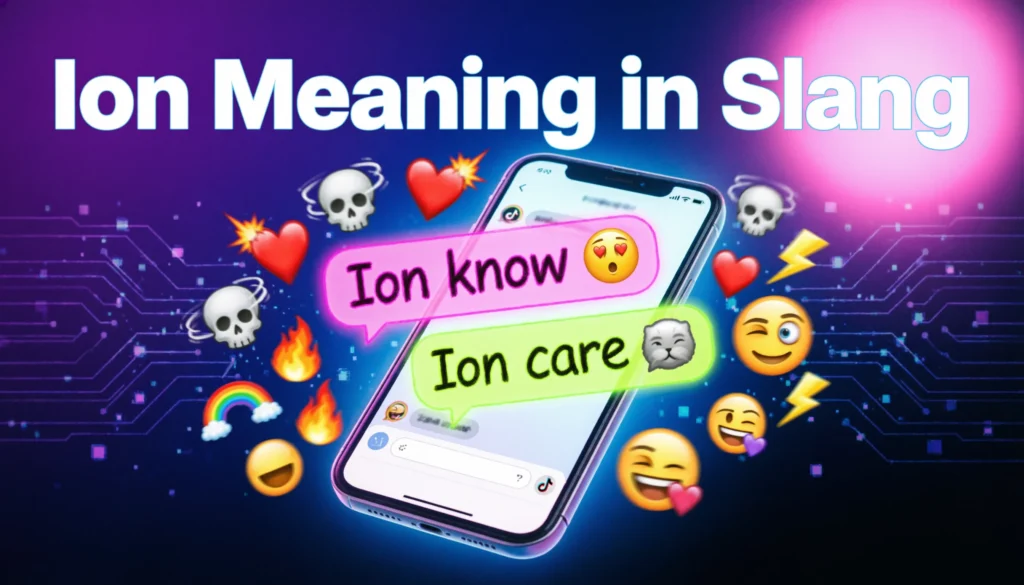
“Ion” in slang usually means “I don’t.” It is a shortened and informal pronunciation-based version of the phrase “I don’t,” commonly used in texting, social media, and casual online conversations.
Internet slang changes fast, and one word that has become extremely popular in texting and social media is “ion.” If you’ve ever seen messages like “ion know,” “ion care,” or “ion doing that,” you may have wondered what it actually means. While it might look confusing at first, the slang is actually very simple and commonly used in modern online conversations.
In texting and internet culture, “ion” usually means “I don’t.” It is a shortened, pronunciation-based version of the phrase that people type casually in chats, memes, TikTok captions, and social media posts. Instead of writing “I don’t know,” many users simply type “ion know.”
If you spend time on TikTok, Snapchat, Instagram, texting apps, or online gaming chats, you’ve probably seen someone type “ion know,” “ion care,” or “ion like that.” At first glance, it may look confusing, but it’s actually one of the most common modern internet slang expressions.
For example:
- “Ion know” = “I don’t know”
- “Ion care” = “I don’t care”
- “Ion want that” = “I don’t want that”
The slang became popular because people often type the way they speak in casual conversations, especially in fast texting culture.
Origin and Evolution of Ion Slang
The slang term “ion” developed from spoken pronunciation rather than traditional grammar rules. In casual speech, especially in fast conversations, many people pronounce “I don’t” quickly so it sounds similar to “ion.”
Over time, internet users started typing it exactly how it sounded.
How It Evolved:
| Standard Phrase | Casual Pronunciation | Slang Form |
|---|---|---|
| I don’t know | “Ion know” | Ion know |
| I don’t care | “Ion care” | Ion care |
| I don’t want to | “Ion wanna” | Ion wanna |
The term became especially popular through:
- Twitter/X posts
- TikTok captions
- Meme culture
- Hip-hop and internet culture
- Casual texting among Gen Z users
Today, “ion” is one of the most recognizable informal texting abbreviations online.
What Does Ion Mean in Text Messages?
In texting, ion almost always means “I don’t.”
It is used to:
- Save typing time
- Sound casual and relaxed
- Match spoken language
- Create a more conversational tone
Common Text Examples:
- Ion know what happened 😭
- Ion think that’s true
- Ion feel like going out today
- Ion even care anymore 💀
- Ion wanna argue
The slang creates a laid-back tone and is often associated with casual online communication.
How Ion Is Used on Social Media
The phrase became extremely common on platforms where short-form communication dominates.
Popular Platforms:
- TikTok
- Snapchat
- X (Twitter)
- Discord
- YouTube comments
People often use “ion” in:
- Funny captions
- Meme reactions
- Relatable posts
- Casual conversations
- Emotional rants
Example Social Media Captions:
- Ion trust people who dislike pizza 🍕
- Ion know why this is so funny 😭
- Ion got time for drama today
- Ion sleeping till this assignment is done
Emotional Tone of Ion in Conversations
The tone of “ion” depends heavily on context.
1. Casual Tone 😌
- Ion really mind
Shows relaxed conversation.
2. Dismissive Tone 😒
- Ion care anymore
Can sound uninterested or cold.
3. Funny Tone 😂
- Ion know who needs to hear this…
Often used in memes or jokes.
4. Tired or Emotional Tone 😩
- Ion got energy for this today
Used to express exhaustion or frustration.
Real-Life Examples of Ion Slang
Example Table
| Slang Sentence | Full Meaning | Tone |
|---|---|---|
| Ion know | I don’t know | Casual |
| Ion care | I don’t care | Dismissive |
| Ion like him | I don’t like him | Honest/Direct |
| Ion wanna go | I don’t want to go | Relaxed |
| Ion understand math 😭 | I don’t understand math | Frustrated |
These examples show how “ion” replaces “I don’t” naturally in modern texting.
Why Ion Became So Popular
The rise of “ion” reflects how internet communication continues becoming:
- Faster
- More conversational
- More personality-driven
- Less formal
Reasons for Popularity:
- Easier and quicker to type
- Sounds natural in speech
- Fits meme culture
- Common in Gen Z communication
- Creates a relaxed tone
Social media trends also helped spread the slang globally.
Ion vs Similar Slang Terms
Many internet slang terms express casual speech. Here’s how “ion” compares to other common abbreviations.
| Slang | Meaning | Difference |
|---|---|---|
| Ion | I don’t | Casual speech replacement |
| IDK | I don’t know | More direct abbreviation |
| IDC | I don’t care | Specific phrase only |
| NGL | Not gonna lie | Introduces honesty |
| FR | For real | Adds emphasis |
Main Difference:
- Ion = pronunciation-based slang
- IDK/IDC = abbreviation-based slang
Alternate Meanings of Ion
Although “ion” usually means “I don’t” in slang, it can have other meanings in different contexts.
Scientific Meaning:
In science, an ion is an electrically charged atom or molecule.
Example:
- Sodium ion
- Hydrogen ion
Technology Meaning:
In some tech or gaming discussions, “Ion” may refer to:
- Product names
- Software
- Gaming characters
However, in texting and internet slang, “ion” almost always means “I don’t.”
Is Ion Grammatically Correct?
No, “ion” is not grammatically correct in formal English.
It is considered:
- Internet slang
- Informal texting language
- Casual digital speech
Avoid Using Ion In:
- School essays
- Business emails
- Job applications
- Professional communication
Better Formal Alternatives:
| Slang | Professional Version |
|---|---|
| Ion know | I don’t know |
| Ion care | I do not care |
| Ion understand | I do not understand |
When You Should and Shouldn’t Use Ion
Appropriate Situations:
- Casual texting
- Social media posts
- Meme captions
- Chatting with friends
- Online gaming chats
Situations to Avoid:
- Academic writing
- Formal presentations
- Workplace communication
- Professional emails
- Official documents
Using slang in the wrong setting can make communication seem unprofessional.
Common Mistakes When Using Ion
Many users misuse the slang or misunderstand its meaning.
Common Mistakes:
- Thinking it means “I am”
- Using it in formal writing
- Overusing it excessively
- Using it without context
Correct Usage Tip:
Use “ion” naturally where you would normally say “I don’t.”
Correct:
- Ion know
Incorrect:
- Ion happy today
(The second example doesn’t replace “I don’t.”)
How Gen Z and Internet Culture Influenced Ion
Gen Z internet culture heavily favors:
- Fast communication
- Casual typing
- Shortened phrases
- Relatable humor
“Ion” fits perfectly into this style because it:
- Feels conversational
- Sounds authentic
- Matches spoken language
- Works well in memes
This trend is similar to slang like:
- finna
- fr
- ngl
- bet
- lowkey
Digital communication continues evolving through these shortened expressions.
FAQs
1. What does ion mean in slang?
Ion usually means “I don’t” in texting and internet slang.
2. Is ion a real word?
Yes, “ion” is a real scientific word, but in slang it informally means “I don’t.”
3. What does ion know mean?
It means “I don’t know.”
4. Is ion formal English?
No, it is informal slang used mainly online and in texting.
5. Why do people type ion instead of I don’t?
Because it is faster, more casual, and reflects spoken pronunciation.
6. Can ion sound rude?
Sometimes. Phrases like “ion care” may sound dismissive depending on tone.
7. Is ion popular on TikTok?
Yes, it is extremely common on TikTok, memes, and Gen Z social media culture.
8. Should I use ion in professional communication?
No, formal communication should use standard grammar instead.
Conclusion
Understanding ion meaning slang helps you better understand modern internet communication and texting culture. In most cases, “ion” simply means “I don’t.” It developed from casual pronunciation and became widely popular through social media, memes, and Gen Z conversations.
The slang is useful for relaxed and expressive communication, but it should remain in informal settings only. Whether you see “ion know,” “ion care,” or “ion wanna,” the phrase is all about making conversations quicker, more natural, and relatable online.
As digital language continues evolving, slang terms like “ion” show how internet culture constantly reshapes the way people communicate.
Discover More Related Articles:

Jessica Brown is a language-focused writer who creates well-researched articles on word meanings, abbreviations, and everyday expressions. She contributes to meanvoro.com, delivering simple, reliable, and reader-friendly content designed to make complex terms easy to understand.