Definition
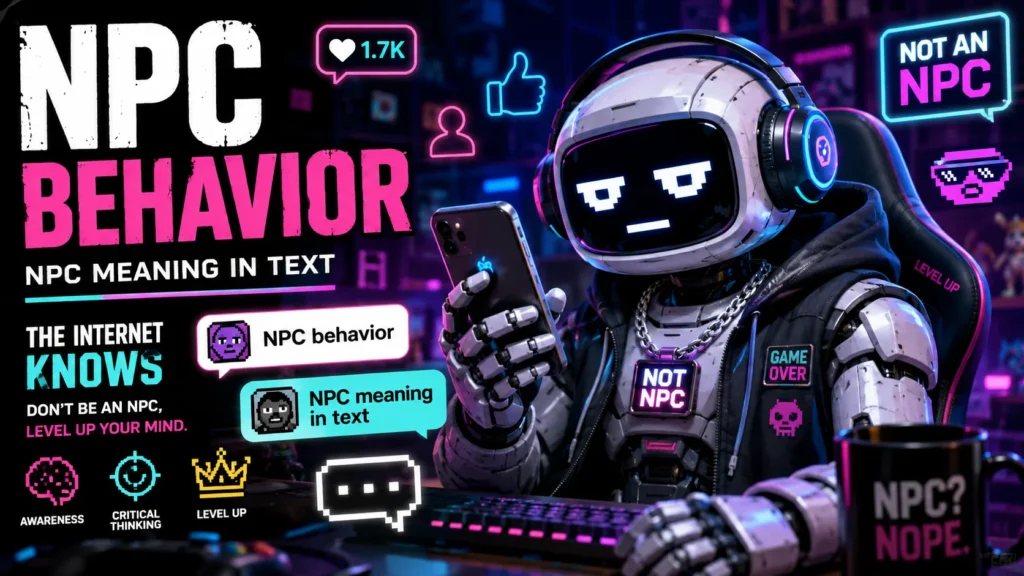
NPC stands for “Non-Playable Character.” In gaming, it refers to characters controlled by the game instead of real players.
If you spend time on TikTok, gaming forums, Instagram comments, or online memes, you’ve probably seen the term “NPC” used in conversations. Someone might comment, “Bro acts like an NPC 💀” or post a video with robotic behavior labeled as “NPC energy.”
So what does it actually mean?
In text and internet slang, NPC is often used to describe someone who acts repetitive, robotic, predictable, or lacking independent thinking.
Originally a gaming term, NPC has evolved into a popular internet expression used in memes, jokes, and social commentary.
Origin of NPC
The term NPC (Non-Playable Character) comes from video games.
In role-playing games (RPGs), NPCs are characters controlled by the game itself rather than by human players. These characters usually:
- Repeat the same dialogue
- Follow fixed routines
- React in limited ways
- Exist mainly to support the storyline
Classic NPC Examples:
- Shopkeepers in games
- Villagers repeating the same line
- Background characters walking around cities
- Mission-givers in RPG games
Example:
“Welcome traveler! Need supplies?”
The character repeats this line every time you interact.
Over time, internet users started comparing certain real-life behaviors to NPC behavior.
How NPC Meaning Changed Online
Online, the meaning of NPC expanded beyond gaming.
Now, calling someone an NPC usually means:
- They act predictable
- They follow trends blindly
- They repeat common opinions
- They seem robotic or emotionless
- They lack originality in behavior or conversation
The slang became especially popular through:
- TikTok livestream trends
- Meme culture
- Gaming communities
- Twitter/X discussions
- YouTube commentary videos
How NPC Is Used in Text and Social Media
In texting and internet slang, NPC is mostly used jokingly or sarcastically.
Common Usage Structure:
- “He’s such an NPC.”
- “NPC behavior 💀”
- “Why are they acting like NPCs?”
- “That conversation felt scripted like an NPC dialogue.”
The term often implies repetitive or robotic behavior.
Examples of NPC in Conversations
Example Table
| Situation | NPC Usage | Meaning |
|---|---|---|
| Someone repeats trends constantly | “Bro is an NPC 💀” | Predictable behavior |
| Person says generic phrases | “NPC dialogue” | Unoriginal conversation |
| Someone acts robotic | “Why are you moving like an NPC?” | Emotionless behavior |
| Meme joke | “Average NPC response 😂” | Basic or repetitive reaction |
| Gaming conversation | “That NPC gives quests” | Actual game character |
Different Tones of NPC Usage
The meaning and tone of NPC can change depending on context.
1. Humorous Tone 😂
Used jokingly among friends:
- “MFW my friend repeats TikTok trends like an NPC.”
2. Sarcastic Tone 😭
Used to criticize repetitive behavior:
- “Another copy-paste opinion from NPCs online.”
3. Gaming Tone 🎮
Used literally in games:
- “Talk to the NPC near the castle.”
4. Dismissive Tone 😬
Sometimes used negatively:
- “People just follow trends like NPCs.”
Because it can sound insulting, context matters.
NPC in Gaming vs Internet Slang
| Context | Meaning |
|---|---|
| Gaming | A computer-controlled character |
| Internet Slang | Someone acting robotic, repetitive, or unoriginal |
Gaming Example:
- “The NPC sells armor.”
Internet Example:
- “That influencer acts like an NPC.”
Why NPC Became So Popular
NPC became viral because internet culture loves relatable humor and short expressions.
Reasons for popularity:
- Meme-friendly term
- Easy to understand visually
- Connects gaming culture with real life
- Fits modern internet humor
- Popularized by TikTok livestreams
TikTok creators especially boosted the term by pretending to act like robotic game characters.
NPC Meme Culture Explained
NPC memes often exaggerate repetitive human behavior.
Common NPC meme traits include:
- Repeating the same phrases
- Following trends blindly
- Robotic speech patterns
- Emotionless facial expressions
- Acting on “autopilot”
Example Meme Captions:
- “NPC starter pack”
- “Average NPC response”
- “When the NPC finally becomes self-aware 💀”
These memes are usually intended as humor, though sometimes they can be critical.
Is Calling Someone an NPC Offensive?
It depends on the situation and tone.
It may feel harmless when:
- Used jokingly among friends
- Referring to funny repetitive habits
- Talking about gaming culture
It may feel rude when:
- Used to insult intelligence
- Used aggressively online
- Mocking someone’s opinions or personality
Because of this, it’s smart to use the term carefully.
Polite or Professional Alternatives to NPC
If you want to express the same idea without sounding rude, try these alternatives:
Professional Alternatives:
- Predictable
- Following trends
- Repetitive behavior
- Scripted response
- Unoriginal thinking
Casual Alternatives:
- “On autopilot”
- “Copying everyone else”
- “Very repetitive”
- “Basic response”
These sound less insulting in conversations.
Comparison: NPC vs Similar Slang Terms
| Term | Meaning | Difference |
|---|---|---|
| NPC | Robotic or predictable person | Based on gaming characters |
| Bot | Fake or automated account/person | Often internet automation |
| Sheep | Someone blindly following others | More political/social |
| Clone | Someone unoriginal | Focuses on copying |
| Basic | Common or generic behavior | Softer slang term |
Key Difference:
NPC specifically references game-like robotic behavior.
Alternate Meanings of NPC
Although “Non-Playable Character” is the most common meaning, NPC can have other meanings depending on context.
Other Possible Meanings:
- National Panhellenic Council
- National Productivity Council
- Nuclear Power Corporation
However, in texting and internet slang, NPC almost always means Non-Playable Character.
When You Should Avoid Using NPC
Avoid using NPC:
- In professional emails
- During serious discussions
- In academic writing
- When talking to someone who may feel insulted
It is best suited for:
- Casual chats
- Gaming conversations
- Memes and jokes
- Social media humor
The Psychology Behind NPC Slang
Part of NPC slang’s popularity comes from how people observe repetitive online behavior.
On social media, users often:
- Repeat viral opinions
- Follow trends rapidly
- Use identical phrases
- Mimic influencers
NPC became shorthand for this kind of internet behavior.
It reflects modern digital culture where people notice how algorithms and trends influence communication styles.
FAQs:
What does NPC mean in texting?
NPC means “Non-Playable Character,” referring to someone acting robotic, repetitive, or predictable.
What does NPC mean in gaming?
In gaming, NPC is a character controlled by the game instead of a real player.
Is calling someone an NPC rude?
Sometimes yes. It can sound insulting if used aggressively.
Why is NPC popular on TikTok?
TikTok creators made NPC behavior viral through robotic livestream trends and memes.
What does NPC behavior mean?
It means acting repetitive, scripted, emotionless, or lacking originality.
Can NPC be used positively?
Usually it is humorous or critical, but friends may use it jokingly.
Is NPC slang only for gamers?
No. It started in gaming but is now common internet slang.
What is the opposite of an NPC?
Someone independent, original, expressive, or unpredictable.
Conclusion
Understanding NPC meaning in text helps you better understand modern internet humor, meme culture, and gaming slang. Originally meaning “Non-Playable Character” in video games, the term now describes people who seem robotic, repetitive, or overly predictable online.
While NPC is often used humorously, it can sometimes sound dismissive or insulting depending on context. That’s why tone matters when using it in conversations.
As internet slang continues evolving, NPC remains one of the most recognizable gaming-inspired expressions in online communication today.
Discover More Related Articles:

Jessica Brown is a language-focused writer who creates well-researched articles on word meanings, abbreviations, and everyday expressions. She contributes to meanvoro.com, delivering simple, reliable, and reader-friendly content designed to make complex terms easy to understand.