
Definition
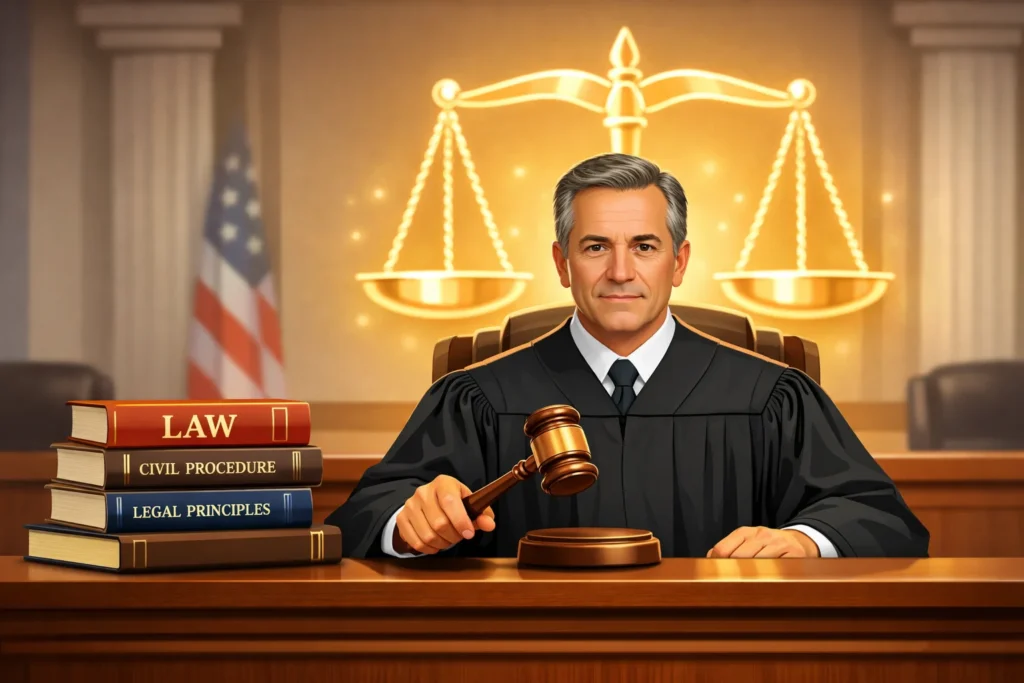
The judicial branch is the part of government responsible for interpreting laws, resolving legal disputes, and ensuring that laws are applied fairly and according to the constitution.
👉 In simple words:
The judicial branch makes sure justice is done and laws are followed correctly.
Every country needs rules to function properly, but rules alone are not enough. There must be a system that:
- Explains what the laws mean
- Decides if someone broke the law
- Protects people’s rights
- Ensures fairness in society
That is exactly what the judicial branch does.
It acts like the “referee” of the government system. Without it, laws could be misused, and people would not get fair justice.
What Is the Judicial Branch?
The judicial branch is one of the three main branches of government (along with the executive and legislative branches). It is responsible for:
- Interpreting laws
- Handling court cases
- Settling disputes
- Protecting constitutional rights
Key institutions include:
- Supreme Court
- Lower courts
- Judges and magistrates
Main Functions of the Judicial Branch
The judicial branch has several important responsibilities that keep a country’s legal system working smoothly.
1. Interpreting Laws
Courts decide what laws actually mean when there is confusion.
2. Applying Laws in Cases
Judges apply laws to real situations, such as criminal cases or disputes.
3. Protecting the Constitution
It ensures that no law or action violates the constitution.
4. Settling Disputes
Courts solve conflicts between:
- Individuals
- Businesses
- Government and citizens
5. Checking Government Power
It prevents abuse of power by other branches of government.
How the Judicial Branch Works in Real Life
Let’s understand how it works step-by-step:
- A legal case is filed
- Evidence is presented in court
- Lawyers argue both sides
- Judges review laws and facts
- A final decision (judgment) is made
Example:
If someone is accused of theft:
- The court checks evidence
- Both sides present arguments
- The judge decides guilt or innocence
Structure of the Judicial Branch
The judicial system is usually divided into levels:
| Level | Role |
|---|---|
| Supreme Court | Highest court, final decisions |
| Appellate Courts | Review decisions from lower courts |
| Trial Courts | First level where cases are heard |
Each level ensures fairness and proper legal review.
Powers of the Judicial Branch
The judicial branch has strong powers to maintain justice:
✔ Judicial Review
Courts can decide if laws are constitutional or not.
✔ Final Decision Power
Higher courts give final rulings in major cases.
✔ Interpretation Power
Courts explain unclear laws.
✔ Protection Power
They protect citizens’ rights from unfair treatment.
Judicial Branch vs Other Branches of Government
| Branch | Main Role |
|---|---|
| Legislative | Makes laws |
| Executive | Enforces laws |
| Judicial | Interprets laws |
Simple Explanation:
- Legislature creates rules
- Executive follows rules
- Judiciary checks rules and ensures fairness
Real-Life Examples of Judicial Branch Work
Example 1: Criminal Case
A person is accused of robbery → court decides punishment or innocence.
Example 2: Civil Case
Two companies disagree over a contract → court resolves dispute.
Example 3: Constitutional Case
A law is challenged → court decides if it is legal or not.
Why the Judicial Branch Matters
The judicial branch is essential because it:
- Ensures justice for everyone
- Protects human rights
- Maintains law and order
- Prevents misuse of power
- Builds trust in government
Without it, society would become unfair and chaotic.
Features of the Judicial Branch
- Independent from other branches
- Based on laws and constitution
- Works through courts
- Focuses on fairness and justice
- Provides final legal decisions
Easy Summary of the Judicial Branch
- It is the court system of government
- It interprets and applies laws
- It solves legal disputes
- It protects constitutional rights
- It ensures justice for everyone
FAQs
What does the judicial branch do in simple words?
It interprets laws and makes decisions in court cases.
What is the main job of the judicial branch?
To ensure justice by applying and explaining laws.
What are the 3 branches of government?
Legislative, executive, and judicial.
What is an example of the judicial branch?
A court deciding if someone is guilty or innocent.
Who is in the judicial branch?
Judges, magistrates, and courts.
What is judicial review?
The power to check if laws are constitutional.
Why is the judicial branch important?
It protects rights and ensures fairness in society.
Does the judicial branch make laws?
No, it only interprets and applies them.
Conclusion
The judicial branch plays a critical role in maintaining justice and fairness in any country. It does not create laws or enforce them directly instead, it interprets laws and ensures they are applied correctly.
The judicial branch is the part of government that interprets laws, settles disputes, and ensures justice is applied fairly. It works through courts and judges who decide legal cases based on the constitution and written laws.
In simple terms, it makes sure that:
- Laws are understood correctly
- People are treated fairly in court
- Rights are protected
- No one is above the law
Without the judicial branch, there would be no proper system to solve legal problems or check whether laws are fair. It plays a key role in keeping society balanced, lawful, and just.
Discover More Related Articles:
- What Does a Tick Bite Look Like: Signs, Symptoms & Pictures In 2026
- What Does a Cavity Look Like | Signs, Stages, Causes & Treatment In 2026

Madison Taylor is an experienced content writer who focuses on researching and explaining word meanings, slang, and texting terms. She writes for meanvoro.com, creating clear and accurate to help readers understand language easily.