
Definition
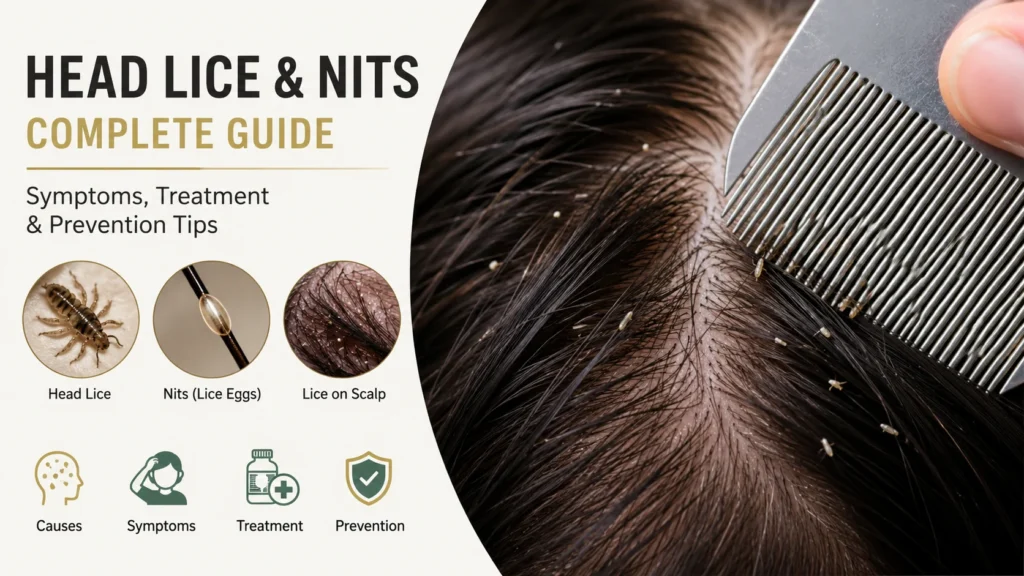
Lice are tiny parasitic insects that live on the scalp and feed on human blood. They usually look like small tan, gray, brown, or white bugs about the size of a sesame seed, while lice eggs (nits) appear as tiny oval-shaped dots attached firmly to hair strands near the scalp.
Few things cause panic faster than discovering something tiny moving in your hair or your child’s scalp. If you’ve ever wondered, “What does lice look like?”, you’re not alone. Every year, millions of people search for signs of head lice after experiencing itching, scalp irritation, or hearing about a lice outbreak at school.
The tricky part is that lice can easily be confused with:
- dandruff
- dry skin
- dirt
- hair product buildup
- small scabs
That’s why understanding exactly what lice look like is important for identifying and treating them quickly.
In this complete guide, you’ll learn:
- what head lice look like
- what lice eggs (nits) look like
- the difference between lice and dandruff
- where lice hide on the scalp
- early signs of lice infestation
- how to check for lice properly
- treatment and prevention tips
- frequently asked questions
By the end of this article, you’ll know how to recognize lice confidently and avoid common mistakes people make during inspection.
What Does Lice Look Like?
Head lice are very small insects that live in human hair and survive by feeding on blood from the scalp.
Adult lice appearance:
- tiny crawling insects
- about the size of a sesame seed
- tan, gray, brown, or reddish in color
- oval-shaped body
- six legs with claws for gripping hair
Unlike fleas, lice cannot jump or fly. They only crawl.
Quick Visual Description
Imagine a tiny moving sesame seed attached to hair strands—that’s usually what adult lice look like.
What Do Lice Eggs (Nits) Look Like?
Lice eggs, called nits, are often easier to spot than live lice.
Nits usually look like:
- tiny oval dots
- white, yellow, tan, or light brown
- firmly attached to hair shafts
- located close to the scalp
- similar in size to a knot in thread
Unlike dandruff, nits do not brush off easily.
Difference Between Live Lice and Nits
| Feature | Live Lice | Nits (Eggs) |
|---|---|---|
| Movement | Crawls quickly | Does not move |
| Color | Gray, tan, brown | White, yellow, tan |
| Size | Sesame seed-sized | Tiny oval dots |
| Location | Moving through hair | Attached to hair strands |
| Easy to Remove? | Hard to catch | Difficult to slide off |
What Color Are Lice?
Lice color can vary depending on:
- age
- feeding status
- lighting
- hair color
Common lice colors:
- gray
- tan
- brown
- reddish-brown after feeding
Young lice (nymphs) are often lighter and harder to see.
What Does Lice Look Like in Blonde Hair?
Lice can be harder to spot in lighter hair colors.
In blonde hair, lice may appear:
- light tan
- pale brown
- translucent gray
Nits often look:
- yellowish-white
- shiny
- glued to strands near the scalp
What Does Lice Look Like in Dark Hair?
In dark hair, lice are usually easier to notice because of contrast.
They may appear:
- dark gray
- brown
- reddish-brown
Nits may look like:
- tiny white dots
- light-colored specks attached to hair
What Does Head Lice Look Like on the Scalp?
Lice usually stay close to the scalp because they need warmth and blood to survive.
Common areas where lice hide:
- behind the ears
- near the neck
- around the hairline
- crown of the head
You might notice:
- moving bugs
- white eggs stuck to hair
- scratch marks
- redness or irritation
Signs and Symptoms of Lice
Sometimes lice are easier to identify through symptoms rather than appearance.
Common lice symptoms:
- itchy scalp
- tickling sensation in hair
- redness from scratching
- difficulty sleeping
- sores on the scalp
- feeling something moving in hair
Not everyone experiences itching immediately.
What Does Early Stage Lice Look Like?
Early lice infestations can be difficult to notice.
Early signs include:
- a few tiny nits near the scalp
- occasional itching
- one or two crawling bugs
- irritation behind ears
Catching lice early helps prevent spreading.
What Does Baby Lice Look Like?
Baby lice are called nymphs.
Nymph appearance:
- very tiny
- lighter in color
- almost transparent sometimes
- move quickly through hair
They grow into adult lice within about 1–2 weeks.
Lice vs Dandruff: What’s the Difference?
Many people mistake dandruff for lice eggs.
| Feature | Lice Eggs | Dandruff |
|---|---|---|
| Attached to Hair? | Yes | No |
| Easy to Remove? | Difficult | Easy |
| Shape | Oval | Flaky |
| Movement | None | None |
| Color | White/tan/yellow | White |
Main Difference:
Dandruff flakes fall off easily, while nits stay tightly glued to hair strands.
Lice vs Dry Scalp
Dry scalp may also look similar to lice infestation.
Dry scalp symptoms:
- flaky skin
- itchiness
- white loose flakes
Lice symptoms:
- moving insects
- attached eggs
- intense itching
- scalp irritation
How to Check for Lice Properly
Checking carefully is important because lice move fast.
Step-by-Step Lice Check
1. Use bright lighting
Natural sunlight works best.
2. Separate the hair
Use a fine-tooth comb.
3. Look near the scalp
Especially behind ears and neck.
4. Watch for movement
Live lice crawl quickly.
5. Check for eggs
Look for tiny oval dots attached to strands.
Where Do Lice Usually Come From?
Lice spread mainly through head-to-head contact.
Common ways lice spread:
- sharing hats
- sharing brushes
- close contact at school
- sleepovers
- sports activities
Lice are common among school-aged children.
Can Lice Jump or Fly?
No. Lice cannot:
- jump
- fly
- hop
They only crawl from one head to another.
This is a very common myth.
How Long Can Lice Live?
| Type | Lifespan |
|---|---|
| Adult lice | Around 30 days |
| Nits | Hatch in 7–10 days |
| Off the scalp | Usually less than 2 days |
Without blood from the scalp, lice cannot survive long.
Are Lice Dangerous?
Lice are usually not dangerous, but they can cause:
- severe itching
- irritation
- sleep problems
- skin infections from scratching
Lice do not typically spread serious diseases through head infestations.
How to Treat Lice
Treatment usually involves:
- medicated lice shampoos
- fine-tooth lice combs
- washing bedding and clothing
- repeated scalp checks
Common treatment steps:
- Apply lice treatment
- Comb out lice and nits
- Wash items in hot water
- Repeat treatment if necessary
How to Prevent Lice
Prevention tips:
- avoid sharing combs or hats
- tie long hair during school
- check hair regularly
- avoid head-to-head contact
- clean brushes often
Early detection helps stop spreading.
Common Myths About Lice
Myth 1: Only dirty hair gets lice
False. Lice can live in clean or dirty hair.
Myth 2: Lice can jump
False. Lice only crawl.
Myth 3: Pets spread head lice
False. Human head lice live only on humans.
Myth 4: Lice are always visible immediately
False. Early infestations can be hard to spot.
When to See a Doctor
You should consider medical advice if:
- treatments are not working
- scalp becomes infected
- severe itching continues
- lice keep returning
A doctor can recommend stronger treatments if needed.
FAQs
What do lice look like to the human eye?
Lice look like tiny tan, gray, or brown crawling insects about the size of a sesame seed.
What color are lice eggs?
Lice eggs are usually white, yellow, tan, or light brown.
Can lice look like dandruff?
Yes. Nits are often mistaken for dandruff, but they stick tightly to hair strands.
Where are lice usually found?
Lice commonly hide behind the ears, near the neck, and close to the scalp.
Do lice move fast?
Yes. Live lice crawl quickly through hair.
Can you feel lice crawling?
Some people feel a tickling or crawling sensation on the scalp.
What does early lice infestation look like?
Early lice may appear as a few nits near the scalp with mild itching.
Are lice visible in all hair colors?
Yes, but they may be harder to spot in blonde or very light hair.
Conclusion
Understanding what lice look like is the first step toward identifying and treating an infestation quickly. Adult lice are tiny crawling insects, while lice eggs (nits) appear as small oval dots attached tightly to hair strands near the scalp.
Because lice can easily be confused with dandruff or dry skin, careful inspection is important. Checking areas like behind the ears and around the neck can help spot lice earlier.
The good news is that lice are treatable, common, and usually not dangerous. With proper treatment, cleaning, and prevention, most infestations can be handled successfully at home.
If you notice persistent itching or visible nits that won’t brush away, performing a detailed lice check can help you take action quickly.
Discover More Related Articles:

Ryan Thompson is an experienced content writer specializing in slang terms, texting abbreviations, and word meanings. He writes for meanvoro.com, where he creates accurate and easy-to-understand language content for readers.