
Definition
C. diff poop refers to the stool produced during an infection caused by Clostridioides difficile (C. diff), a bacterium that affects the colon.
It typically appears as frequent, watery diarrhea with a strong, foul odor, and may sometimes contain mucus or traces of blood.
If you’ve ever searched “what does C diff poop look like,” you’re likely trying to understand whether certain symptoms are normal—or a sign of something more serious. That’s a smart instinct. Digestive changes can say a lot about your health, and C. diff infection is one condition where stool appearance becomes an important clue.
Unlike occasional diarrhea from food or stress, C. diff-related stool has some distinct characteristics. Recognizing these early can help you seek treatment faster and avoid complications.
In this guide, we’ll break everything down in a simple, clear, and practical way—from visual signs and symptoms to comparisons, examples, and FAQs.
What Is C. Diff?
C. diff (short for Clostridioides difficile) is a type of bacteria that can overgrow in the gut, usually after antibiotic use. It disrupts the normal balance of healthy bacteria in your intestines.
Common triggers:
- Recent antibiotic use
- Hospital stays or healthcare exposure
- Weak immune system
- Older age (but it can affect younger people too)
What Does C Diff Poop Look Like?
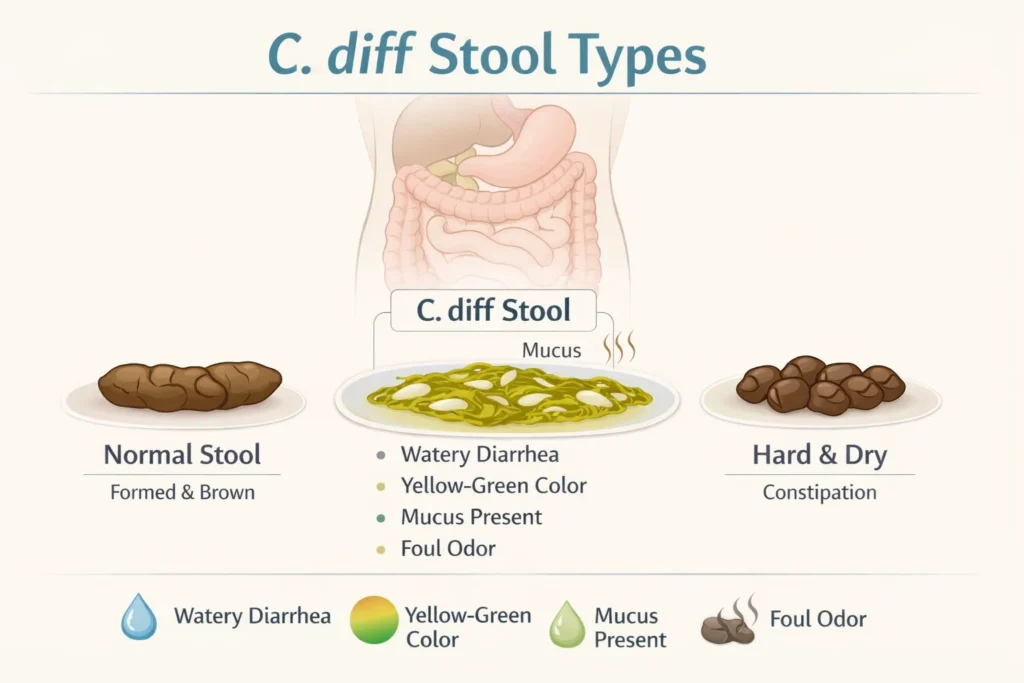
C. diff stool has several defining features. While not every case looks exactly the same, there are common patterns to watch for.
Key Characteristics:
- Watery consistency
Stool is loose and liquid, not formed at all. - Frequent bowel movements
Often 3 or more times a day, sometimes 10+ in severe cases. - Strong, foul odor
Much more intense and unpleasant than typical diarrhea. - Yellowish or greenish tint
Though it can also appear brown. - Mucus present
A slimy substance may be visible. - Possible blood (in severe cases)
Indicates inflammation or damage in the colon.
Stool Appearance Breakdown (Table)
| FeatureWhat It Looks LikeWhat It Means | ||
|---|---|---|
| Consistency | Very watery, liquid | Colon inflammation |
| Color | Yellow, green, or light brown | Rapid digestion or infection |
| Smell | Extremely foul, strong | Bacterial overgrowth |
| Frequency | 3–10+ times daily | Active infection |
| Mucus | Slimy strands or coating | Irritated intestinal lining |
| Blood (rare cases) | Red streaks or darker stool | Severe inflammation |
How Is It Different From Normal Diarrhea?
Not all diarrhea is C. diff. Here’s how it compares:
C. Diff vs Regular Diarrhea
| Feature | C. Diff Diarrhea | Regular Diarrhea |
|---|---|---|
| Cause | Bacterial infection | Food, virus, stress |
| Smell | Extremely foul | Mild to moderate |
| Duration | Persistent, worsening | Usually short-term |
| Frequency | Very frequent (multiple times/day) | Moderate |
| Additional Symptoms | Fever, cramps, fatigue | Usually mild discomfort |
Real-Life Symptom Examples
Understanding context can help you recognize patterns more easily.
Example 1 (Neutral Tone 🙂)
“I’ve had watery diarrhea about 5 times today, and it smells way worse than usual. My stomach feels crampy too.”
👉 Could indicate early signs of infection, especially if recent antibiotics were used.
Example 2 (Concerned Tone 😟)
“I can’t stop going to the bathroom—at least 10 times today—and there’s mucus in my stool.”
👉 This is more serious and needs medical attention.
Example 3 (Severe Warning ⚠️)
“My stool looks watery with some blood, and I have a fever.”
👉 This is urgent—seek medical care immediately.
Why Does C Diff Change Stool Appearance?
C. diff releases toxins that:
- Damage the lining of the colon
- Cause inflammation
- Prevent water absorption
This leads to watery stool, mucus, and sometimes bleeding.
Origin and Medical Background
C. diff was first identified as a cause of antibiotic-related diarrhea in the late 1970s. Since then, it has become one of the most common healthcare-associated infections worldwide.
Why it’s more common now:
- Increased antibiotic use
- Aging populations
- Hospital transmission
Despite its clinical origin, awareness has grown online, making search queries like “what does C diff poop look like” increasingly popular.
When Should You Be Concerned?
You should take symptoms seriously if you notice:
- Diarrhea lasting more than 2–3 days
- Fever along with stool changes
- Severe abdominal pain
- Signs of dehydration
- Blood in stool
👉 Don’t try to self-diagnose—consult a healthcare professional.
Related Terms & Comparisons
C. Diff vs Food Poisoning
| Feature | C. Diff | Food Poisoning |
|---|---|---|
| Cause | Bacterial imbalance | Contaminated food |
| Onset | Gradual | Sudden |
| Duration | Persistent | Short-term |
| Stool smell | Extremely foul | Unpleasant but less intense |
C. Diff vs IBS (Irritable Bowel Syndrome)
| Feature | C. Diff | IBS |
|---|---|---|
| Infection | Yes | No |
| Fever | Possible | No |
| Stool type | Watery, severe diarrhea | Variable |
| Urgency | High | Moderate |
Are There Alternate Meanings of “C Diff”?
Yes, but very limited.
- In medical contexts, “C. diff” almost always refers to the bacterial infection.
- It is not commonly used as slang or in casual conversation.
Professional & Polite Ways to Describe Symptoms
If you need to explain your symptoms to a doctor or in a formal setting, here are better phrases:
- “Frequent watery stools”
- “Loose bowel movements with strong odor”
- “Presence of mucus in stool”
- “Persistent diarrhea following antibiotics”
Practical Tips If You Suspect C. Diff
- Do not ignore symptoms
- Avoid self-medication with random antibiotics
- Stay hydrated
- Seek medical testing (stool test)
- Practice good hygiene (handwashing)
FAQs
1. What color is C diff stool?
Usually yellow, green, or light brown, but it can vary.
2. Does C diff always cause diarrhea?
Most cases involve diarrhea, but severity can vary.
3. Can C diff stool be solid?
Rarely. It’s typically watery due to colon inflammation.
4. How bad does C diff smell?
Very strong and foul—noticeably worse than normal stool.
5. Is mucus in stool always C diff?
No, but combined with frequent diarrhea, it’s a warning sign.
6. Can C diff go away on its own?
Mild cases might improve, but most require treatment.
7. Is C diff contagious?
Yes, especially in healthcare settings or poor hygiene conditions.
8. When should I see a doctor?
If symptoms last more than 2 days, worsen, or include fever or blood.
Conclusion
Understanding what C. diff poop looks like can help you recognize early warning signs of a potentially serious infection. The key features watery consistency, frequent bowel movements, strong odor, and possible mucus set it apart from typical digestive issues.
While it may feel uncomfortable to talk about, paying attention to these symptoms is important for your health. If anything seems unusual or persistent, getting medical advice early can make a big difference.
Discover More Related Articles:
- What does similar mean in math: Complete Beginner’s Guide In 2026
- A Bed Bug Look Like: Size, Shape & Color In 2026

Jessica Brown is a language-focused writer who creates well-researched articles on word meanings, abbreviations, and everyday expressions. She contributes to meanvoro.com, delivering simple, reliable, and reader-friendly content designed to make complex terms easy to understand.