
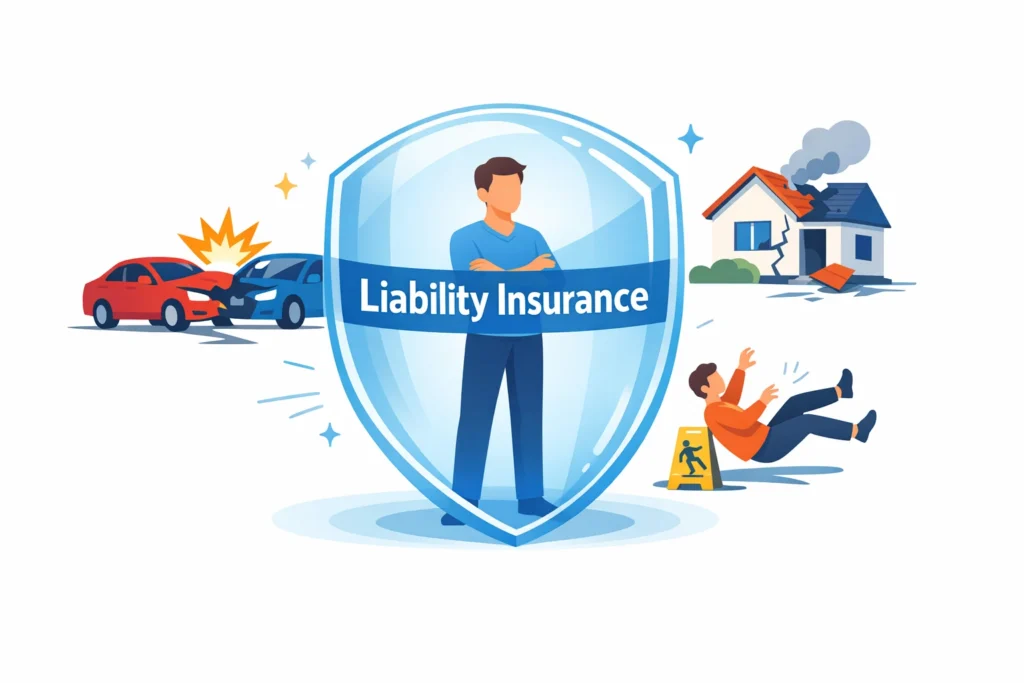
Definition
Liability insurance covers the costs you may be legally responsible for if you cause injury to someone else, damage their property, or are accused of negligence.
Imagine accidentally causing a car accident, a customer slipping in your shop, or even your dog biting a neighbor. These situations can lead to serious financial consequences—medical bills, legal fees, and compensation claims. That’s where liability insurance steps in.
If you’ve ever asked yourself, “What does liability insurance cover?”, you’re not alone. It’s one of the most important—and often misunderstood—types of insurance. Whether you’re an individual, a homeowner, or a business owner, understanding liability coverage can protect you from unexpected financial stress.
This guide breaks everything down in a clear, friendly way—so you can confidently understand what’s covered, what’s not, and why it matters.
What Is Liability Insurance?
Liability insurance is a type of coverage designed to protect you financially if you’re found responsible (legally liable) for causing harm to another person or their property.
In simple terms:
It helps pay for:
- Injuries to other people 🤕
- Damage to someone else’s property 🏠
- Legal fees if you’re sued ⚖️
Origin and Popularity of Liability Insurance
Liability insurance has its roots in the late 19th century, when businesses began seeking protection from increasing legal claims during industrial growth. As economies expanded and legal systems became more structured, the risk of lawsuits grew significantly.
Why it became popular:
- Rise in personal injury lawsuits
- Increased business risks
- Legal systems favoring compensation
- Mandatory requirements (e.g., car insurance in many countries)
Today, liability insurance is:
- Essential for drivers (auto liability)
- Common for homeowners and renters
- Critical for businesses of all sizes
What Does Liability Insurance Cover?
Liability insurance coverage can vary depending on the type of policy, but most plans include the following key areas:
1. Bodily Injury Coverage
Covers medical expenses, rehabilitation, and compensation if someone is injured due to your actions.
Example:
You accidentally hit a pedestrian while driving. Your insurance helps pay for their medical bills.
2. Property Damage Coverage
Pays for repairs or replacement if you damage someone else’s property.
Example:
You crash into someone’s fence or car—your policy covers the repair costs.
3. Legal Defense Costs
Covers lawyer fees, court costs, and legal representation—even if you’re not at fault.
Example:
Someone sues you claiming negligence. Your insurer provides a legal defense.
4. Settlements and Judgments
Pays settlements or court-ordered compensation if you’re found liable.
5. Personal Liability (Home Insurance)
Included in many home or renters policies, covering accidents at home.
Example:
A guest slips on your wet floor and gets injured.
6. Advertising Injury (Business Liability)
Covers claims related to defamation, copyright infringement, or false advertising.
Types of Liability Insurance
Different situations require different types of liability coverage:
Personal Liability Insurance
- Included in home or renters insurance
- Covers everyday accidents
Auto Liability Insurance
- Mandatory in many countries
- Covers injuries and property damage in accidents
General Liability Insurance (Business)
- Covers customer injuries, property damage, and legal claims
Professional Liability Insurance
- Also called Errors & Omissions (E&O)
- Covers mistakes or negligence in professional services
Product Liability Insurance
- Protects businesses if their product causes harm
Example Scenarios
Here’s how liability insurance works in everyday life:
Friendly Tone 😊
You’re hosting a party, and a friend slips on spilled juice. Your home liability insurance covers their medical bills.
Neutral Tone 😐
A driver causes a minor accident. Their auto liability insurance pays for the other vehicle’s repair costs.
Negative/Dismissive Tone 😬
A business ignores safety measures, and a customer gets injured. The resulting lawsuit leads to a costly claim—but liability insurance helps cover the damage.
Example Coverage Table
| Scenario | Covered? | Type of Coverage | Notes |
|---|---|---|---|
| Guest injured at your home | ✅ Yes | Personal Liability | Part of home insurance |
| You damage someone’s car | ✅ Yes | Auto Liability | Required in most places |
| Your phone gets stolen | ❌ No | Not covered | That’s property insurance |
| Professional mistake at work | ✅ Yes | Professional Liability | For service-based professions |
| Intentional damage | ❌ No | Excluded | Insurance doesn’t cover deliberate acts |
What Liability Insurance Does NOT Cover
It’s just as important to understand exclusions:
Common exclusions:
- Intentional harm or damage
- Criminal acts
- Damage to your own property
- Contractual liabilities (in some cases)
- Employee injuries (covered by workers’ compensation instead)
Comparison With Related Insurance Types
| Insurance Type | What It Covers | Key Difference |
|---|---|---|
| Liability Insurance | Others’ injuries & property damage | Focuses on third-party claims |
| Health Insurance | Your medical expenses | Covers your own health |
| Property Insurance | Your belongings | Protects your assets |
| Collision Insurance | Your vehicle damage | Even if you’re at fault |
| Comprehensive | Non-collision damage (theft, fire, etc.) | Broader than liability |
Alternate Meanings of “Liability”
While “liability insurance” has a specific meaning, the word liability itself can mean:
- A legal responsibility
- A financial obligation
- Someone or something seen as a disadvantage
Example:
“His lack of experience was a liability to the team.”
Professional Alternatives & Related Terms
In formal or business settings, you may hear:
- Risk coverage
- Legal protection insurance
- Third-party insurance
- Indemnity coverage
These terms are often used interchangeably depending on the context.
Practical Tips for Choosing Liability Insurance
- ✔️ Choose adequate coverage limits (don’t go too low)
- ✔️ Understand exclusions clearly
- ✔️ Bundle policies to save money
- ✔️ Review your policy annually
- ✔️ Consider umbrella insurance for extra protection
FAQs
1. What does liability insurance typically cover?
It covers third-party injuries, property damage, and legal costs if you’re held responsible.
2. Is liability insurance mandatory?
It depends. Auto liability insurance is required in many countries, but other types are optional.
3. Does liability insurance cover my own injuries?
No, it only covers injuries or damages to other people—not yourself.
4. What is the difference between liability and full coverage?
Liability covers damage you cause to others, while full coverage also includes protection for your own vehicle or property.
5. Does homeowners insurance include liability?
Yes, most homeowners insurance policies include personal liability coverage.
6. What are policy limits?
Policy limits are the maximum amount your insurance company will pay for a covered claim.
7. What happens if damages exceed my coverage?
If damages go beyond your policy limit, you will need to pay the remaining amount out of pocket.
8. Do small businesses need liability insurance?
Yes, small businesses also face legal risks, so liability insurance is important for financial protection.
Conclusion
Liability insurance isn’t just another policy it’s a financial safety net that protects you from life’s unpredictable moments. Whether it’s a simple accident or a serious legal claim, having the right coverage can save you from significant financial loss.
Understanding what liability insurance covers empowers you to make smarter, safer decisions protecting both your finances and your peace of mind.
Discover More Related Articles:
- What does similar mean in math: Complete Beginner’s Guide In 2026
- A Bed Bug Look Like: Size, Shape & Color In 2026

Ryan Thompson is an experienced content writer specializing in slang terms, texting abbreviations, and word meanings. He writes for meanvoro.com, where he creates accurate and easy-to-understand language content for readers.