
Definition
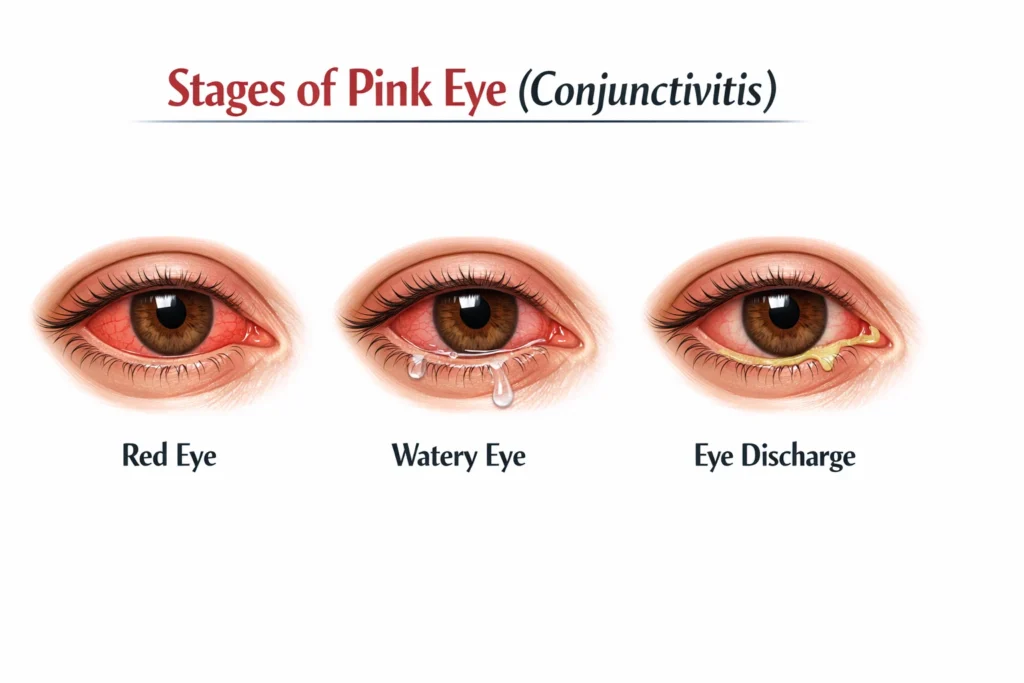
Pink eye, medically known as Conjunctivitis, typically looks like redness in the white part of the eye, accompanied by irritation, tearing, discharge, and sometimes swelling of the eyelids.
If you’ve ever woken up with a red, itchy eye or noticed someone with watery, irritated eyes, you might have wondered: Is that pink eye? This common eye condition can look alarming, but recognizing it early can help you respond appropriately and prevent it from spreading.
Whether you’re a student, a parent, or just someone trying to understand your symptoms, this guide will walk you through exactly what pink eye looks like, how it feels, and how to tell it apart from other eye issues.
What Does Pink Eye Look Like?
Pink eye isn’t just “a red eye.” It comes with a combination of visible signs and sensations. Here’s what you’ll typically notice:
👁️ Common Visual Signs
- Red or pink color in the white of the eye (sclera)
- Swollen eyelids
- Watery or teary eyes
- Sticky discharge (yellow, green, or white)
- Crust forming on eyelashes (especially after sleep)
- Sensitivity to light
- A gritty or sandy feeling
🧴 Types of Discharge
| Type of Pink Eye | Discharge Appearance | Key Indicator |
|---|---|---|
| Viral | Clear, watery | Often starts in one eye, spreads to the other |
| Bacterial | Thick, yellow/green | Causes eyelids to stick together |
| Allergic | Watery, stringy | Comes with itching and sneezing |
Types of Pink Eye and How They Look Different
Not all pink eye is the same. The appearance can vary depending on the cause:
1. Viral Pink Eye
Caused by viruses (like the common cold).
Looks like:
- Bright red or pink eye
- Watery discharge
- Mild swelling
- Often starts in one eye, spreads to the other
Feels like:
- Burning or irritation 😣
2. Bacterial Pink Eye
Caused by bacteria.
Looks like:
- Red eye with thick discharge
- Yellow or green pus
- Crusty eyelids, especially in the morning
Feels like:
- Sticky, uncomfortable eye
3. Allergic Pink Eye
Linked to allergens like pollen or dust.
Looks like:
- Redness in both eyes
- Puffy eyelids
- Watery eyes
Feels like:
- Intense itching 😖
4. Chemical or Irritant Pink Eye
Triggered by smoke, chlorine, or pollution.
Looks like:
- Red, irritated eyes
- Minimal discharge
Feels like:
- Burning sensation
What Causes Pink Eye?
Pink eye happens when the conjunctiva (the thin, transparent layer covering the eye) becomes inflamed.
Main Causes:
- Viruses (most common)
- Bacteria
- Allergens (pollen, pet dander)
- Irritants (smoke, chemicals, dust)
How Pink Eye Is Used in Real Life
Unlike slang terms, “pink eye” is a medical condition, but it’s often used casually in conversation.
Tone & Usage Examples
- Neutral tone:
“I think I have pink eye—my eye is red and watery.” - Concerned tone:
“Don’t share towels, she might have pink eye!” - Casual tone (with emoji):
“Ugh, woke up with pink eye 😭 not a great start to the day.”
Comparison: Pink Eye vs Other Eye Conditions
It’s easy to confuse pink eye with other eye issues. Here’s a quick comparison:
| Condition | Appearance | Key Difference |
|---|---|---|
| Conjunctivitis | Red, watery, discharge | Can be contagious |
| Dry Eye Syndrome | Slight redness, dryness | No discharge |
| Stye | Bump on eyelid | Localized swelling |
| Blepharitis | Red eyelids, flaky skin | Chronic condition |
| Uveitis | Deep redness, pain | More serious, needs urgent care |
Alternate Meanings of “Pink Eye”
While “pink eye” almost always refers to conjunctivitis, it may occasionally be used jokingly or metaphorically, but those uses are rare and informal.
Professional or Polite Alternatives
In formal or medical settings, instead of saying “pink eye,” people often say:
- Conjunctivitis
- Eye infection
- Eye inflammation
Example:
- Informal: “I have pink eye.”
- Professional: “I’ve been diagnosed with conjunctivitis.”
When Should You Be Concerned?
Pink eye is usually mild, but some signs mean you should seek medical help:
- Severe pain in the eye
- Vision problems
- Sensitivity to light that worsens
- Symptoms lasting more than a week
- Thick discharge that doesn’t improve
FAQs:
1. What is the first sign of pink eye?
The first sign is usually redness in one eye, followed by irritation or watering.
2. Does pink eye always look red?
Yes, redness is the main symptom, but severity can vary from light pink to deep red.
3. Can pink eye affect both eyes?
Yes. It often starts in one eye and spreads to the other.
4. What color is discharge in pink eye?
- Viral: clear
- Bacterial: yellow/green
- Allergic: watery
5. How do I know if it’s pink eye or just irritation?
Pink eye usually includes persistent redness + discharge, while irritation is temporary.
6. Is pink eye contagious?
Viral and bacterial types are contagious. Allergic pink eye is not.
7. How long does pink eye last?
- Viral: 7–14 days
- Bacterial: 5–10 days (with treatment)
- Allergic: until allergen is removed
8. Can pink eye go away on its own?
Yes, especially viral pink eye, but hygiene and care are important.
Practical Tips: What to Do If You Have Pink Eye
- Wash hands frequently 🧼
- Avoid touching your eyes
- Don’t share towels or makeup
- Use clean tissues
- Follow doctor’s advice if prescribed medication
Conclusion:
Pink eye, or conjunctivitis, is easy to recognize once you know what to look for. The most obvious sign is redness, but it’s usually paired with symptoms like discharge, irritation, and swelling.
Understanding the different types of pink eye helps you respond correctly—whether it’s simply resting your eyes or seeking medical care. While it’s often mild, taking proper hygiene precautions can prevent it from spreading to others.
If your symptoms seem severe or don’t improve, it’s always a smart move to consult a healthcare professional.
Discover More Related Articles:

Ryan Thompson is an experienced content writer specializing in slang terms, texting abbreviations, and word meanings. He writes for meanvoro.com, where he creates accurate and easy-to-understand language content for readers.