Definition
High RDW (Red Cell Distribution Width) in a blood test means there is a greater variation in the size of your red blood cells than normal. This condition often points to underlying issues such as anemia, nutrient deficiencies (like iron, B12, or folate), or chronic health conditions.
You’ve just checked your blood test results, and there it is: “RDW – High.”
If that made you pause or Google it immediately you’re not alone.
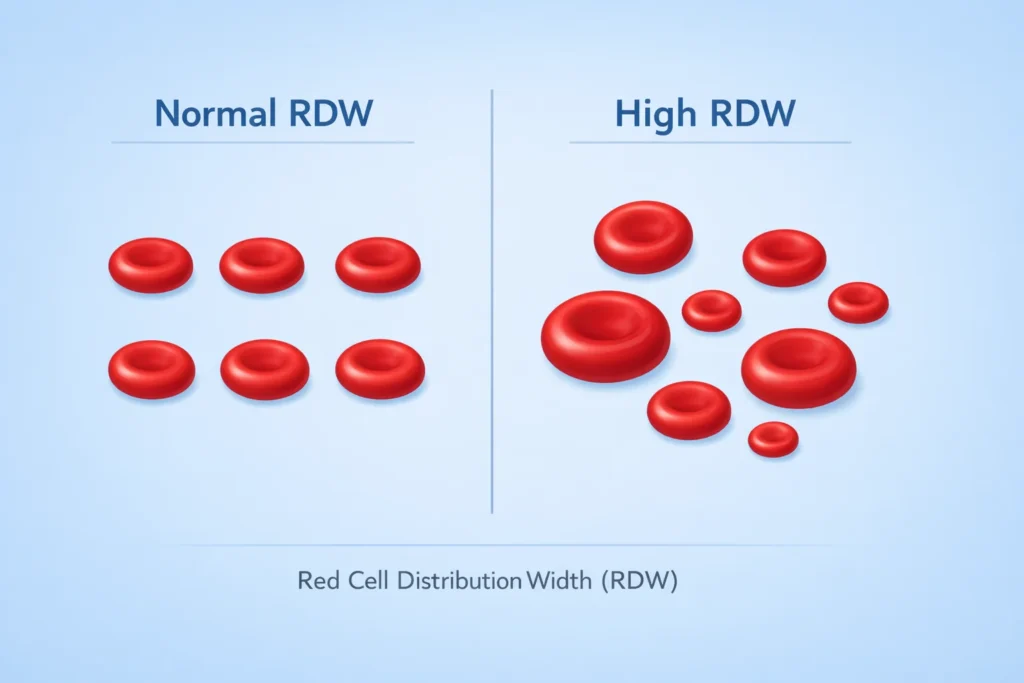
RDW is one of those medical terms that sounds technical but is actually pretty straightforward once you break it down. Think of it as a measurement of how uniform (or not) your red blood cells are. When everything is balanced, your cells are mostly the same size. But when RDW is high, it means there’s a mix of small and large cells floating around in your bloodstream.
And that matters more than you might think.
Let’s unpack what high RDW really means, why it happens, and what you should do next without the confusing medical jargon.
What Is RDW in a Blood Test?
RDW stands for Red Cell Distribution Width. It’s part of a routine blood test called a Complete Blood Count (CBC).
What RDW Measures:
- Variation in red blood cell (RBC) size
- Consistency of blood cell production
- Possible signs of underlying health issues
Normal RDW Range:
- Typically 11.5% to 14.5% (can vary slightly by lab)
If your RDW is above this range, it’s considered high RDW.
What Does High RDW Mean?
A high RDW indicates that your red blood cells vary significantly in size a condition known as anisocytosis.
In simple terms:
- Normal RDW → Cells are mostly the same size ✔️
- High RDW → Cells are mixed sizes ❗
Why this happens:
Your body may be:
- Producing new red blood cells rapidly
- Struggling with nutrient deficiencies
- Responding to illness or chronic conditions
Common Causes of High RDW
High RDW is not a disease by itself it’s a clue. Here are the most common reasons behind it:
1. Iron Deficiency Anemia
- One of the most common causes
- Cells become smaller (microcytic), but new cells may differ in size
2. Vitamin B12 or Folate Deficiency
- Leads to larger red blood cells (macrocytic)
- Causes uneven cell sizes → high RDW
3. Mixed Anemia
- Combination of deficiencies (e.g., iron + B12)
- Creates a wider variation in cell sizes
4. Chronic Diseases
- Conditions like kidney disease or inflammation can affect RBC production
5. Blood Loss or Recovery
- After bleeding or treatment, the body produces new cells rapidly
- Results in size variation
6. Liver Disease
- Alters how red blood cells are formed and maintained
RDW and Other Blood Test Values
RDW alone doesn’t tell the full story. Doctors always look at it alongside other markers, especially MCV (Mean Corpuscular Volume).
RDW + MCV Interpretation Table
| RDW LevelMCV LevelPossible Meaning | ||
|---|---|---|
| High RDW | Low MCV | Iron deficiency anemia |
| High RDW | High MCV | Vitamin B12 or folate deficiency |
| High RDW | Normal MCV | Early deficiency or mixed conditions |
| Normal RDW | Low MCV | Chronic anemia |
| Normal RDW | High MCV | Liver disease or alcohol use |
👉 This combination helps doctors pinpoint the exact cause more accurately.
Real-World Usage: When and Why RDW Is Checked
RDW is most commonly used in:
- Routine health checkups
- Diagnosing anemia
- Monitoring chronic illnesses
- Evaluating fatigue, weakness, or dizziness
Example Scenario:
- You feel constantly tired 😴
- Your doctor orders a CBC test
- Results show: High RDW + Low Hemoglobin
- Likely diagnosis: Iron deficiency anemia
What Symptoms Are Linked to High RDW?
High RDW itself doesn’t cause symptoms but the underlying condition might.
Common symptoms include:
- Fatigue or low energy
- Pale skin
- Shortness of breath
- Dizziness
- Weakness
Is High RDW Dangerous?
Not necessarily.
High RDW is a signal, not a diagnosis. Its significance depends on:
- How high the value is
- Other blood test results
- Your symptoms and medical history
When to take it seriously:
- RDW is significantly elevated
- You have ongoing symptoms
- Other blood markers are abnormal
Comparison: RDW vs Other Blood Test Terms
Understanding RDW becomes easier when you compare it to similar terms.
| Term | Full Form | What It Measures |
|---|---|---|
| RDW | Red Cell Distribution Width | Variation in RBC size |
| MCV | Mean Corpuscular Volume | Average RBC size |
| RBC | Red Blood Cell Count | Number of RBCs |
| Hemoglobin | — | Oxygen-carrying protein |
👉 RDW = variation
👉 MCV = average size
Together, they tell a much clearer story.
Are There Alternate Meanings of RDW?
In medical contexts, RDW almost always refers to Red Cell Distribution Width.
However, in rare non-medical contexts, RDW could stand for:
- Regional Development Work (business/academic usage)
- Research Data Warehouse (tech field)
But in a blood test, it always refers to red blood cell size variation.
Polite & Professional Ways to Discuss High RDW
If you’re discussing your results with a doctor or someone else, here are some natural ways to phrase it:
- “My RDW levels came back slightly elevated what could that indicate?”
- “Can you help me understand what high RDW means in my case?”
- “Is my RDW level something I should be concerned about?”
How to Lower High RDW
Treatment depends entirely on the cause.
Common approaches:
- Iron supplements (for iron deficiency)
- Vitamin B12 or folate supplements
- Diet improvements
- Treating underlying medical conditions
Foods that may help:
- Leafy greens 🥬
- Red meat 🍖
- Eggs 🥚
- Lentils & beans
- Fortified cereals
Example Scenarios
Friendly Context 😊
“Your RDW is a bit high, which usually just means your red blood cells aren’t all the same size. It’s pretty common and often linked to something like iron deficiency.”
Neutral/Clinical Context 🏥
“Elevated RDW indicates anisocytosis and may suggest nutritional deficiencies or hematologic abnormalities.”
Slightly Concerned Tone ⚠️
“A high RDW can point to underlying issues, so it’s best to follow up with further testing.”
FAQ:
1. Is high RDW always a sign of anemia?
No. While it often indicates anemia, it can also be linked to other conditions or early deficiencies.
2. Can high RDW be temporary?
Yes. It may fluctuate due to diet, recovery from illness, or recent blood loss.
3. What is considered a dangerously high RDW?
There’s no fixed “danger level.” Context with other results matters more than the number alone.
4. Should I worry if my RDW is slightly high?
Mild elevation is common and not always serious but it’s worth discussing with your doctor.
5. How is high RDW treated?
Treatment targets the underlying cause, such as nutrient deficiencies or chronic conditions.
6. Can diet affect RDW levels?
Yes. Poor nutrition especially low iron, B12, or folate can increase RDW.
7. What tests are done with RDW?
RDW is part of a CBC test and is often analyzed alongside MCV, hemoglobin, and RBC count.
8. Can dehydration affect RDW?
Not directly, but it can slightly alter blood test readings overall.
Conclusion:
High RDW on a blood test might seem confusing at first, but it’s really just a helpful indicator of how varied your red blood cell sizes are. On its own, it doesn’t diagnose a condition it simply points doctors in the right direction.
In most cases, a high RDW is linked to common and treatable issues like iron deficiency, vitamin B12 deficiency, or other forms of anemia. That’s why it’s always important to look at RDW alongside other values like MCV, hemoglobin, and RBC count for a complete picture.
Discover More Related Articles:

Ryan Thompson is an experienced content writer specializing in slang terms, texting abbreviations, and word meanings. He writes for meanvoro.com, where he creates accurate and easy-to-understand language content for readers.