
Definition
Truant (school context):
A truant is a student who intentionally stays away from school or classes without permission or a valid reason.
If you’ve ever heard a teacher say, “Don’t be truant,” or seen the word in a school report, you might have paused and wondered what it actually means. Is it just skipping class? Is it something more serious? Or is it simply another word for being absent?
In school settings, the term truant is more than just “missing class.” It carries a specific meaning connected to attendance rules, student responsibility, and sometimes even disciplinary action. Understanding it clearly helps students, parents, and educators communicate better and avoid confusion.
In this guide, we’ll break down everything about the word truant its meaning, usage, examples, comparisons, and even polite alternatives you can use in everyday conversation.
In simple terms, truancy means unapproved or unauthorized absence from school, especially when a student chooses not to attend without parental or school approval.
Origin and Meaning of the Word “Truant”
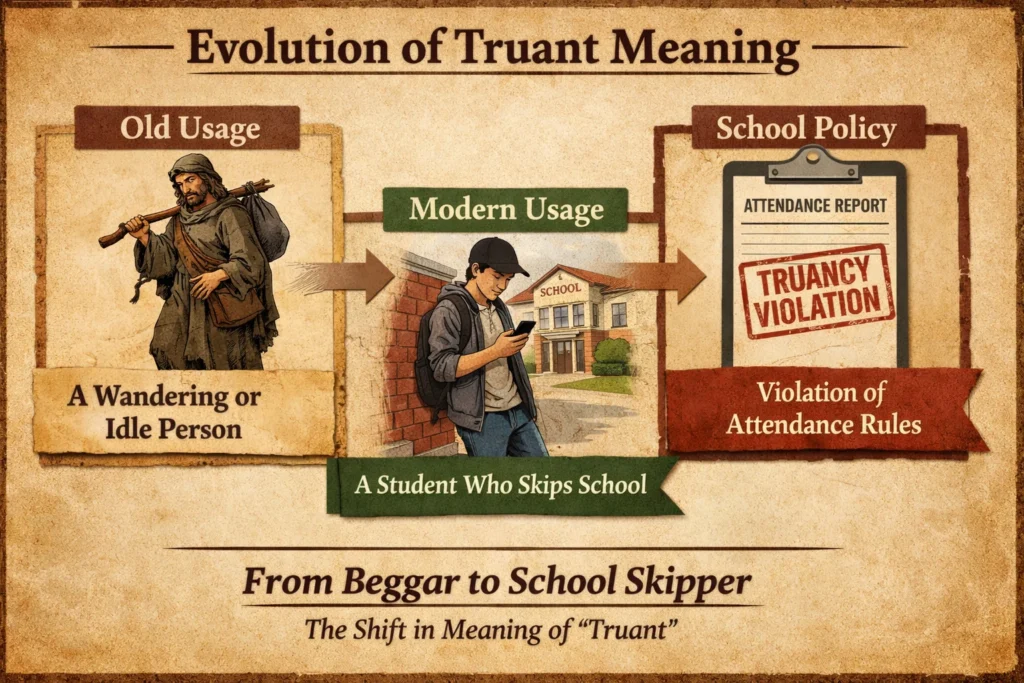
The word truant has been used in the English language for centuries. It originates from the Old French word truand, which referred to a beggar or wanderer. Over time, its meaning shifted in English to describe someone who avoids responsibilities—especially school attendance.
Today, “truant” is commonly used in educational systems across many countries, especially in school policies and attendance reports.
How the meaning evolved:
- Old usage: A wandering or idle person
- Modern usage: A student who skips school without permission
- School policy usage: A violation of attendance rules
This evolution shows how the word moved from general behavior to a very specific academic context.
Why the Term “Truant” Is Important in Schools

Schools don’t use the word lightly. Being marked as truant can have consequences because regular attendance is considered essential for learning and development.
Schools track truancy because:
- It affects academic performance
- It disrupts learning continuity
- It may indicate personal or social issues
- It is sometimes linked to discipline concerns
In many school systems, repeated truancy may trigger meetings with parents, counselors, or administrators.
Types of Truancy in School
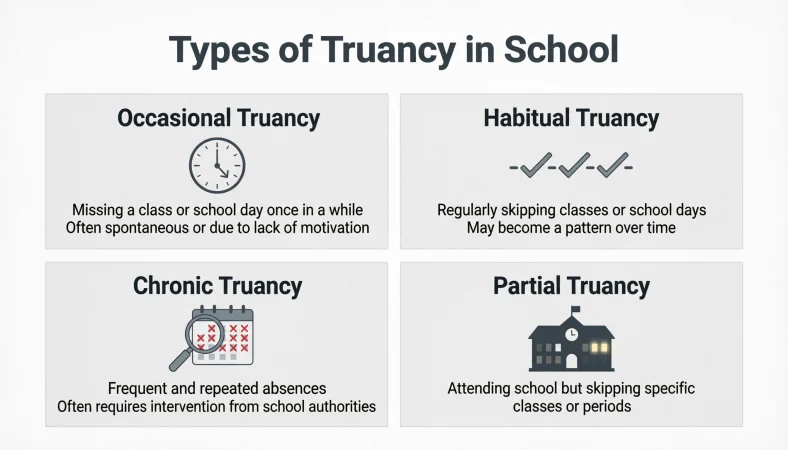
Not all truancy looks the same. It can range from a one-time skip to a long-term pattern.
1. Occasional Truancy
- Missing a class or school day once in a while
- Often spontaneous or due to lack of motivation
2. Habitual Truancy
- Regularly skipping classes or school days
- May become a pattern over time
3. Chronic Truancy
- Frequent and repeated absences
- Often requires intervention from school authorities
4. Partial Truancy
- Attending school but skipping specific classes or periods
Common Reasons Students Become Truant
Understanding why truancy happens helps explain the behavior without immediately judging it.
Some common causes include:
- Lack of interest in studies 📚
- Peer pressure from friends
- Family issues or instability
- Bullying or fear at school
- Mental health struggles (stress, anxiety)
- Poor school engagement or teaching methods
- Desire for freedom or rebellion
While truancy is not encouraged, it’s often a sign that something deeper is happening in a student’s life.
Examples of “Truant” in Sentences
Here are some real-world examples to help you understand how the word is used:
Friendly tone:
- “He felt tired of school and became truant for a few days.”
- “The teacher reminded students not to become truant during exams.”
Neutral tone:
- “She was marked truant after missing three classes without permission.”
- “Truant behavior can affect academic performance.”
Strict/disciplinary tone:
- “Repeated truant behavior may result in disciplinary action.”
- “The student was reported for being truant multiple times.”
Truancy vs Related Terms
Many people confuse truancy with other attendance-related terms. Here’s a clear breakdown:
Comparison Table
| Term | Meaning | Key Difference |
|---|---|---|
| Truant | Student who skips school without permission | Intentional absence |
| Absenteeism | General lack of attendance | Can be excused or unexcused |
| Excused Absence | Missing school with permission | Valid reason provided |
| Skipping School | Informal term for missing classes | Slang, less formal |
| Chronic Absenteeism | Long-term frequent absences | Broader than truancy |
Real-World Impact of Being Truant
Being truant isn’t just about missing a class—it can have long-term effects on a student’s academic and personal growth.
Possible consequences include:
- Falling behind in studies 📉
- Lower grades or academic performance
- Loss of teacher trust
- Parental involvement or school meetings
- Detention or disciplinary warnings
- In severe cases, legal consequences (in some regions)
Schools emphasize attendance because consistent learning builds strong academic foundations.
Polite or Professional Alternatives to “Truant”
Sometimes, using the word “truant” can sound too strict or negative. Here are softer alternatives:
Instead of saying:
- “He is truant.”
You can say:
- “He has been absent without permission.”
- “He missed school without authorization.”
- “He has unexcused absences.”
- “He was not present in class.”
These alternatives are more professional and less judgmental, especially in communication with parents or students.
Usage of “Truant” in Modern School Systems
Today, schools use attendance tracking systems to identify truancy early. The term is commonly used in:
- Attendance reports 📊
- Parent-teacher meetings
- School disciplinary records
- Education policies
- Counseling sessions
Some schools also use automated systems that flag students when they exceed a certain number of absences.
Is “Truant” Always Negative?
Generally, yes—but context matters.
Negative context:
- Skipping school without permission
- Breaking attendance rules
- Ignoring educational responsibilities
Neutral/understanding context:
Sometimes educators use it to identify students who may need help rather than punishment.
So while “truant” often has a negative tone, it can also be a signal for support and intervention.
Example Scenarios
| Situation | Description | Is it truancy? |
|---|---|---|
| Student skips class to hang out with friends | No permission given | Yes |
| Student stays home due to illness with note | Excused by school | No |
| Student misses school repeatedly without reason | Pattern of absence | Yes |
| Student leaves school early without approval | Unauthorized absence | Yes |
How Schools Address Truancy
Schools use different strategies to reduce truancy and support students:
- Parent notifications 📩
- Counseling sessions
- Attendance improvement plans
- Mentorship programs
- Behavioral interventions
The goal is usually not punishment but helping students return to regular attendance.
Tips for Avoiding Truancy
If you want to maintain good attendance, here are simple tips:
- Set a consistent sleep schedule
- Stay motivated with goals 🎯
- Talk to teachers if you’re struggling
- Avoid negative peer pressure
- Ask for help when overwhelmed
- Keep track of attendance records
Small habits can make a big difference in staying consistent.
FAQs
1. What does truant mean in school?
It means a student is missing school or classes without permission.
2. Is truant the same as skipping school?
Yes, but “truant” is the formal school term, while “skipping school” is informal slang.
3. What causes truancy in students?
Common causes include lack of interest, peer pressure, family issues, or mental health challenges.
4. Is being truant illegal?
In some regions, repeated truancy can lead to legal consequences for students or parents.
5. What is a truant officer?
A truant officer is a person who investigates and addresses school absenteeism issues.
6. Can a student be truant for one day?
Yes, even one unexcused absence can be considered truancy depending on school policy.
7. How do schools track truancy?
They use attendance registers, digital systems, and teacher reports.
8. What is the opposite of truant?
The opposite would be a student with regular attendance or perfect attendance.
Conclusion
The word truant simply refers to a student who misses school without permission. While it may sound strict, it is mainly used to maintain attendance standards and support student learning.
Understanding this term helps students and parents:
- Recognize attendance expectations
- Avoid unnecessary absences
- Improve academic discipline
- Communicate better with schools
At its core, truancy is not just about absence it’s about responsibility, consistency, and learning engagement.
Discover More Related Articles:
- Unhinged Meaning | Pop Culture & Memes In 2026
- AWOL Meaning | Why Someone Suddenly Disappears Online In 2026

Jessica Brown is a language-focused writer who creates well-researched articles on word meanings, abbreviations, and everyday expressions. She contributes to meanvoro.com, delivering simple, reliable, and reader-friendly content designed to make complex terms easy to understand.