Definition
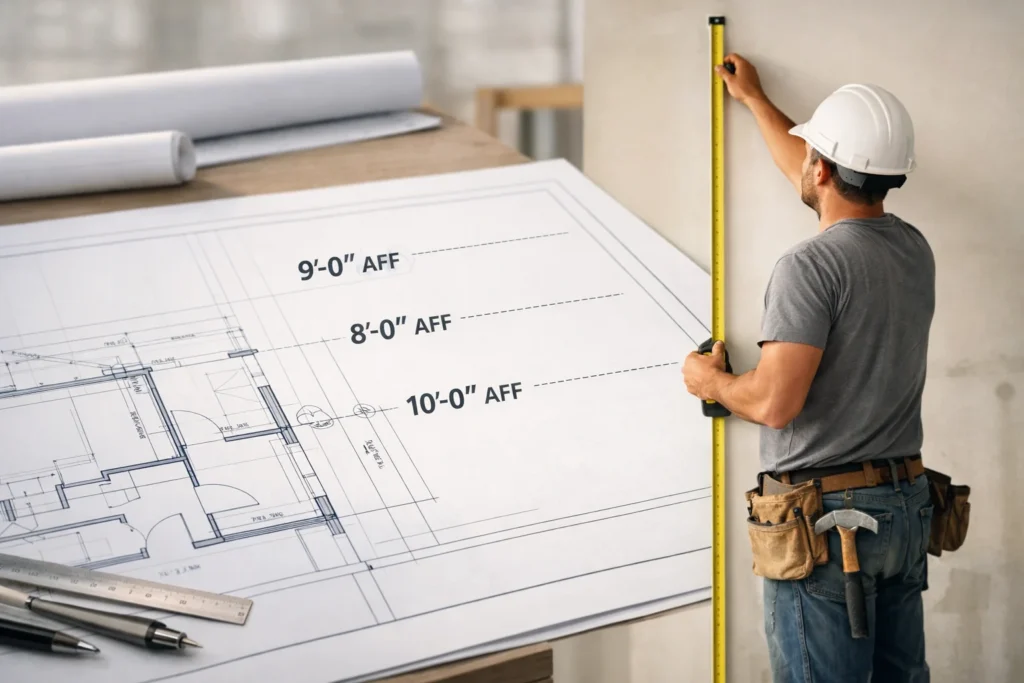
AFF in construction stands for “Above Finished Floor.” It is a standard measurement term used on architectural drawings and plans to indicate the height of an object, fixture, or feature relative to the completed floor surface.
f a drawing shows something like “Switch at 48 AFF,” it simply means the switch should be placed 48 inches above the finished floor level. While that may look confusing at first, construction plans are full of abbreviations like AFF, FFL, and AGL that act like a shorthand language.
At first glance, these terms can make a blueprint feel complicated or hard to read. However, once you understand what they stand for, interpreting drawings becomes much easier and more accurate.
Among these terms, AFF (Above Finished Floor) is one of the most commonly used and important. It tells builders, contractors, and designers the exact height at which an item should be installed—helping avoid errors and ensuring everything is positioned correctly.
In this guide, we’ll break down what AFF means, how it’s used in real construction plans, and how it compares with other similar abbreviations so you can read drawings with confidence.
What Does “Above Finished Floor” Actually Mean?
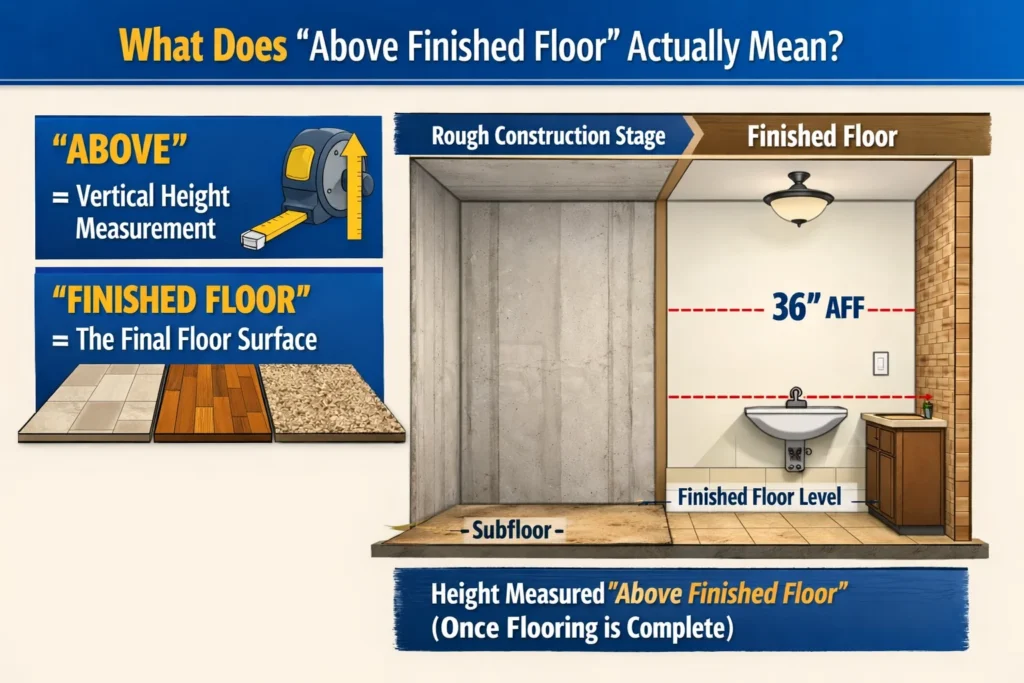
In simple terms:
- “Above” = Vertical height measurement
- “Finished Floor” = The final floor surface (after tiles, wood, carpet, etc. are installed)
So, AFF tells you how high something should be once the floor is fully completed—not during the rough construction stage.
Key Point:
AFF measurements always reference the final floor height, not the structural slab or subfloor.
Origin and Industry Usage of AFF
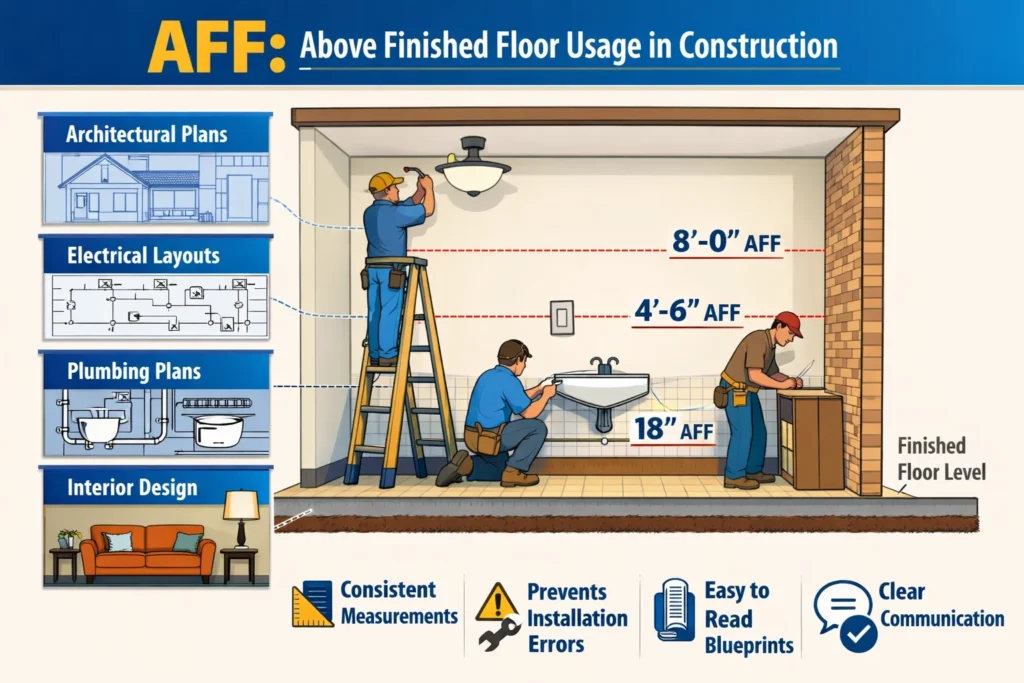
The term AFF comes from architectural and engineering drafting practices. As construction projects became more detailed and standardized, professionals needed a consistent way to communicate vertical measurements.
Why AFF Became Popular:
- Ensures consistency across trades (electricians, plumbers, carpenters)
- Prevents installation errors due to flooring thickness changes
- Makes blueprints easier to read and interpret
- Reduces confusion between structural and finished levels
Today, AFF is used worldwide in:
- Architectural drawings
- Electrical layouts
- Plumbing plans
- Interior design specifications
- Construction documentation
Where Is AFF Used in Construction?
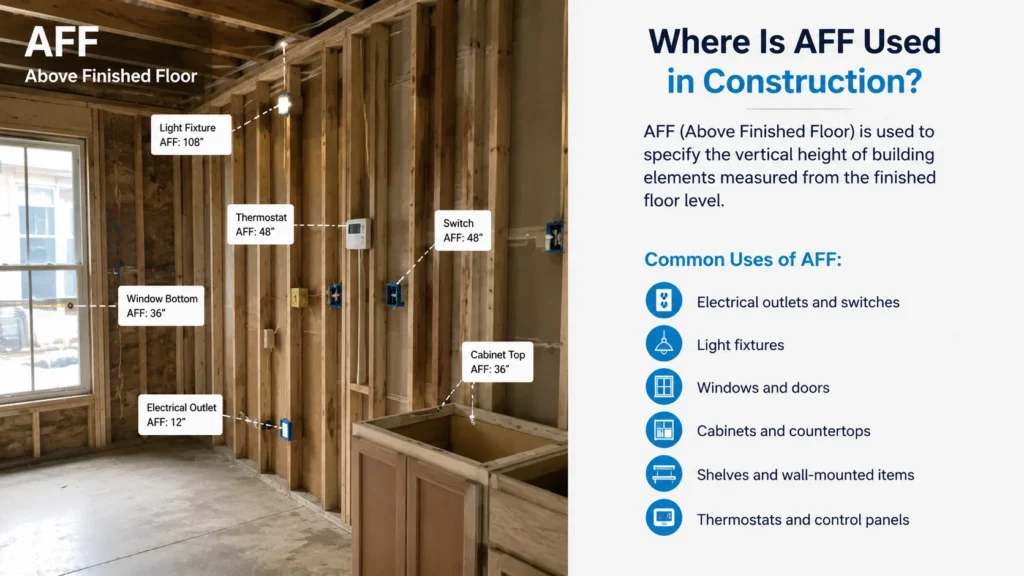
AFF appears in multiple areas of a building project. It’s especially common when specifying the placement of fixtures and fittings.
Common Uses of AFF:
- Electrical outlets and switches
- Light fixtures
- Windows and doors
- Cabinets and countertops
- Shelves and wall-mounted items
- Thermostats and control panels
Practical Examples of AFF in Real-Life Construction
Let’s break it down with simple, real-world examples:
Example 1: Electrical Switch
- Plan says: “Switch at 48” AFF”
- Meaning: Install the switch 48 inches above the finished floor
Example 2: Wall Outlet
- Plan says: “Outlet at 12” AFF”
- Meaning: Place the outlet 12 inches above the floor surface
AFF Example Table
| Item | Typical AFF Height | Description |
|---|---|---|
| Light switch | 42–48 inches | Comfortable reach for most users |
| Electrical outlet | 12–18 inches | Standard wall outlet placement |
| Kitchen countertop | 36 inches | Standard working height |
| Bathroom mirror | 60 inches (center) | Eye-level positioning |
| Thermostat | 48–60 inches | Easy access and accurate reading |
Why AFF Is Important in Construction
Ignoring AFF can lead to serious issues during and after construction.
Benefits of Using AFF:
- ✅ Accuracy – Ensures correct placement of fixtures
- ✅ Consistency – Keeps all trades aligned
- ✅ User comfort – Improves usability of switches, outlets, etc.
- ✅ Compliance – Meets building codes and standards
- ✅ Avoids rework – Prevents costly adjustments later
Real-Life Impact:
Imagine installing all outlets based on the raw floor level, then adding thick tiles later—your outlets end up too low. That’s exactly what AFF prevents.
AFF vs Other Similar Construction Terms
AFF is often confused with other abbreviations. Here’s how it compares:
Difference AFF vs FFL
| Term | Meaning | Key Difference |
|---|---|---|
| AFF | Above Finished Floor | Measures height above final floor |
| FFL | Finished Floor Level | Refers to the floor itself |
👉 AFF is a measurement reference, while FFL is a level reference.
Comparing AFF vs AGL
| Term | Meaning | Use Case |
|---|---|---|
| AFF | Above Finished Floor | Interior measurements |
| AGL | Above Ground Level | Exterior/site measurements |
👉 AGL is used outdoors, while AFF is used inside buildings.
Using AFF vs TOS (Top of Slab)
| Term | Meaning |
|---|---|
| AFF | Based on final floor finish |
| TOS | Based on structural slab level |
👉 AFF includes flooring thickness; TOS does not.
Tone and Context: How AFF Is Used in Communication
Unlike slang abbreviations, AFF is purely technical. However, its usage can vary slightly depending on context.
Neutral/Professional Usage:
- “Install outlets at 15” AFF.”
- “Mirror centerline at 60” AFF.”
Instructional Tone:
- “Ensure all switches are mounted at 48 inches AFF for compliance.”
Urgent/Correction Tone:
- “This outlet is not at the specified AFF—please adjust immediately.”
Common Mistakes When Using AFF
Even professionals can slip up. Here are the most common errors:
❌ Measuring from the wrong level
Using slab instead of finished floor
❌ Ignoring floor thickness
Tiles, carpet, or wood can change final height
❌ Misreading drawings
Confusing AFF with other abbreviations
❌ Inconsistent measurements
Different trades using different references
Tips for Using AFF Correctly
- Always confirm floor finish thickness
- Double-check drawing notes and legends
- Use consistent measuring tools
- Communicate clearly with all team members
- When in doubt, ask before installing
Alternate Meanings of AFF
While AFF is mainly used in construction, it can have other meanings depending on context:
| Context | Meaning |
|---|---|
| Text slang | “As F***” (intensifier, informal) |
| Military | Armed Forces Federation |
| Finance | Available For Funding |
👉 In construction, however, AFF always means Above Finished Floor.
Professional Alternatives or Related Terms
In formal documentation, AFF is already standard. However, sometimes it may be written as:
- “Height above finished floor”
- “Elevation from finished floor level”
- “Vertical dimension from FFL”
These are just more descriptive versions of the same concept.
FAQs:
1. What does AFF stand for in construction?
AFF stands for Above Finished Floor, indicating the height of an object relative to the completed floor surface.
2. Is AFF measured from concrete or tile?
AFF is measured from the final finished surface, such as tile, wood, or carpet—not the concrete slab.
3. Why is AFF important in building plans?
It ensures accurate placement of fixtures and prevents installation errors after flooring is completed.
4. What is a standard outlet height AFF?
Typically, outlets are installed 12–18 inches AFF, depending on design and local codes.
5. What does 48 AFF mean?
It means 48 inches above the finished floor.
6. Is AFF used worldwide?
Yes, AFF is widely used in architectural and construction drawings globally.
7. What is the difference between AFF and FFL?
AFF measures height above the floor, while FFL refers to the floor level itself.
8. Can AFF change during construction?
Yes, if floor materials change (e.g., thicker tiles), AFF measurements may need adjustment.
Conclusion:
Understanding AFF (Above Finished Floor) is one of those small details that makes a big difference in construction. It ensures that every fixture, outlet, an feature is installed at the correct height based on the final floor surface, not the rough structure underneath.
To keep things simple:
- AFF = height from the completed floor level
- It helps maintain accuracy, consistency, and usability
- It prevents costly mistakes caused by floor thickness changes
- It keeps all teams (electricians, plumbers, designers) on the same page
Whether you’re reading blueprints or working on-site, always double-check AFF measurements before installing anything. A few inches off can impact both functionality and aesthetics.
Discover More Related Articles:
- JOI Mean in Porn | Understanding the Adult Content Slang Term In 2026
- The Root Tele Mean in Television | Understanding the Word’s Origin In 2026
- Closed Circle Mean in Math |The Symbol Most Students Misunderstand In 2026

Madison Taylor is an experienced content writer who focuses on researching and explaining word meanings, slang, and texting terms. She writes for meanvoro.com, creating clear and accurate to help readers understand language easily.