
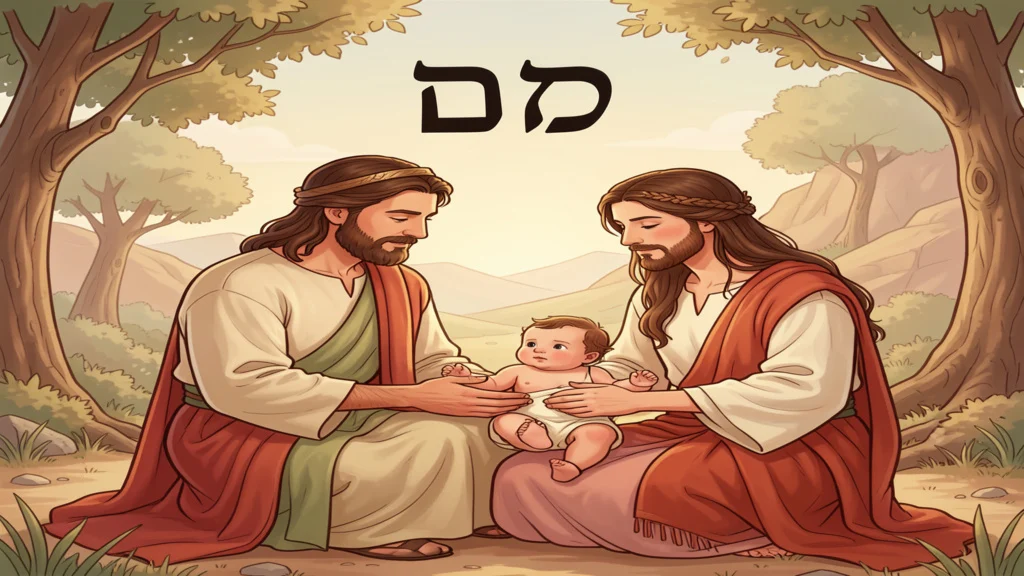
Seth (Hebrew: שֵׁת, Shet) is a biblical name meaning “appointed” or “placed”.
In Hebrew tradition, Seth is recognized as the third son of Adam and Eve, born after Abel’s death, and is seen as the ancestor of Noah and humanity.
In short: Seth symbolizes continuation, appointment, and divine purpose.
If you’ve ever wondered about biblical names or are exploring Hebrew meanings, Seth is a name that appears frequently in religious texts, genealogy, and even modern contexts. Understanding what Seth means in Hebrew can give you insight into history, language, and culture.
This guide explains the meaning, origin, significance, and common usage of Seth in a clear, friendly, and professional way.
Why the Name Seth Is Significant
Seth is an important name for several reasons:
- Appears in the Book of Genesis as a key figure in human genealogy
- Symbolizes the continuation of life and divine plan after Abel’s death
- Used in religious, historical, and cultural references throughout Judaism, Christianity, and Islam
- Still popular today in various cultures for its spiritual and meaningful origin
Origin and Etymology of Seth
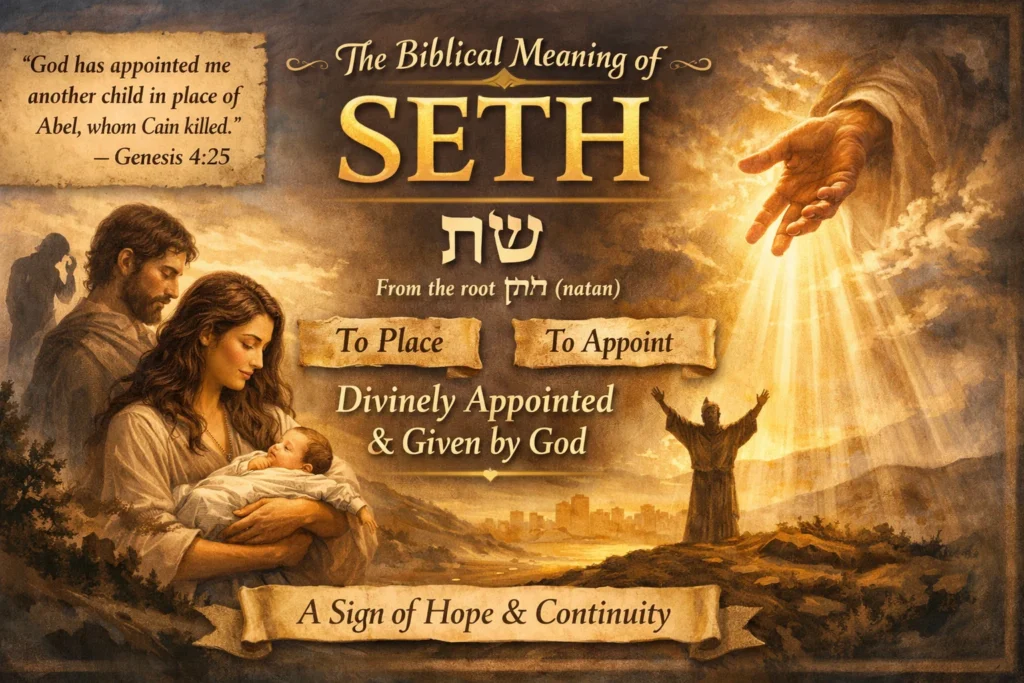
The name Seth comes from the Hebrew שֵׁת (Shet), derived from the root נָתַן (natan), meaning “to place” or “to appoint.”
- In Genesis 4:25, Eve names her son Seth saying:
“God has appointed me another child in place of Abel, whom Cain killed.” - The meaning emphasizes divine appointment and purpose, reflecting hope and continuity.
Biblical and Historical Context
Seth holds a prominent role in biblical genealogy:
- Adam and Eve’s third son
- Ancestor of Noah and all humanity after the flood
- Represents restoration and continuation of life
Seth’s story highlights the theme of hope after loss and the importance of divine guidance in human history.
Meaning and Symbolism of Seth
The name Seth carries multiple layers of meaning:
- Appointed – Chosen or placed by God
- Substitute or Replacement – Born to continue the family line after Abel
- Legacy – Ancestor of key biblical figures and humanity
- Divine Purpose – Represents God’s plan and continuity
Modern Usage of the Name Seth
Today, Seth is used as a given name worldwide, often with appreciation for its biblical significance.
- Common in English-speaking countries
- Retains spiritual meaning in Jewish and Christian communities
- Popular for babies, fictional characters, and historical references
Example:
- Seth Rollins – Professional wrestler
- Seth Cohen – Fictional character in the TV series “The O.C.”
Even in modern times, Seth symbolizes hope, continuity, and appointed purpose.
Example
| Aspect | Explanation | Example/Reference |
|---|---|---|
| Hebrew Name | שֵׁת (Shet) | Genesis 4:25 |
| Meaning | Appointed, placed | Eve names Seth after Abel |
| Biblical Role | Third son of Adam and Eve | Ancestor of Noah |
| Symbolism | Continuity, divine purpose | Represents hope after loss |
| Modern Use | Personal name | Babies, characters, public figures |
Variations and Similar Names
| Name | Language/Culture | Meaning |
|---|---|---|
| Seth | Hebrew/English | Appointed, placed |
| Sheth | Alternative spelling | Same meaning |
| Set | Egyptian origin | Different origin, similar sound |
| Seti | Egyptian | Name of pharaohs, unrelated meaning |
Polite or Formal Alternatives
When discussing Seth in academic, religious, or historical contexts:
- Seth, the third son of Adam and Eve – full reference in writing
- Biblical Seth – formal reference in theology or studies
- Seth Shet – Hebrew transliteration for linguistic studies
Example:
- Informal: “My son’s name is Seth.”
- Formal: “Seth, the third son of Adam and Eve, represents divine appointment in Genesis.”
Alternate Meanings or Misunderstandings
Seth is sometimes confused with:
- Set – Egyptian god of chaos and storms (different origin)
- Seti – Name of ancient Egyptian pharaohs
- Seth in pop culture – Characters unrelated to Hebrew origin
It’s important to note that in Hebrew, Seth always carries the meaning “appointed” or “placed by God.”
FAQs
Meaning of Seth in Hebrew?
Seth means “appointed” or “placed” and is the third son of Adam and Eve.
Why was Seth named Seth?
He was named to signify that God appointed him as a replacement after Abel’s death.
Is Seth a biblical name?
Yes, Seth appears in the Book of Genesis and is a key figure in biblical genealogy.
Who are Seth’s descendants?
Seth is the ancestor of Noah and all humanity after the flood according to Genesis.
Does Seth have a spiritual meaning?
Yes, it symbolizes hope, divine appointment, and continuity of life.
Is Seth still used today?
Yes, Seth is a popular personal name in many cultures and retains spiritual significance.
Are Seth and Set the same?
No, Set is an Egyptian god and unrelated to Hebrew Seth.
What is the Hebrew spelling of Seth?
It is spelled שֵׁת (Shet) in Hebrew.
Practical Tips for Understanding and Using Seth
- Recognize the biblical context when discussing the name
- Understand its Hebrew origin and meaning to avoid confusion with similar sounding names
- Appreciate its symbolism of hope and continuity in religious or historical references
- Use proper transliteration (Shet) for linguistic or academic purposes
Conclusion
Seth in Hebrew is a name rich in meaning and history. It symbolizes divine appointment, continuity, and hope, originating from the story of Adam and Eve and passed down through biblical genealogy.
Whether you are studying the Bible, learning Hebrew, or choosing a meaningful name, Seth represents a powerful connection to history, spirituality, and purpose. Understanding its meaning helps appreciate both its ancient significance and its modern relevance.
Discover More Related Articles:

Jessica Brown is a language-focused writer who creates well-researched articles on word meanings, abbreviations, and everyday expressions. She contributes to meanvoro.com, delivering simple, reliable, and reader-friendly content designed to make complex terms easy to understand.