In Japanese, “Sasuke” (佐助) is a male given name that traditionally means “one who helps”, “assistant,” or “supporter.” The meaning depends on the kanji used, but it commonly carries the idea of aid, loyalty, and strength.
The name Sasuke is widely recognized around the world, especially through Japanese entertainment and anime. However, its significance extends far beyond modern pop culture. Rooted in Japanese history and tradition, Sasuke is a classic given name that carries strong cultural and symbolic value.
As with many Japanese names, the meaning of Sasuke depends on the kanji used to write it. Different kanji combinations can give the name unique interpretations, often reflecting qualities such as courage, loyalty, assistance, and responsibility. These deeper meanings have helped the name remain respected and recognizable across generations.
In this article, we’ll examine the meaning of Sasuke in Japanese, its historical background, common kanji variations, cultural associations, and the reasons it continues to attract attention both in Japan and around the world.
Literal Meaning of “Sasuke” in Japanese

The name Sasuke is most commonly written using the kanji:
佐助 (Sasuke)
- 佐 (sa) – help, assist, support
- 助 (suke) – help, rescue, aid
Combined Meaning:
👉 “One who helps”, “assistant”, or “supporter”
💡 In Japanese names, meanings come from kanji not pronunciation alone. Different kanji combinations can slightly change the nuance.
Origin of the Name “Sasuke”
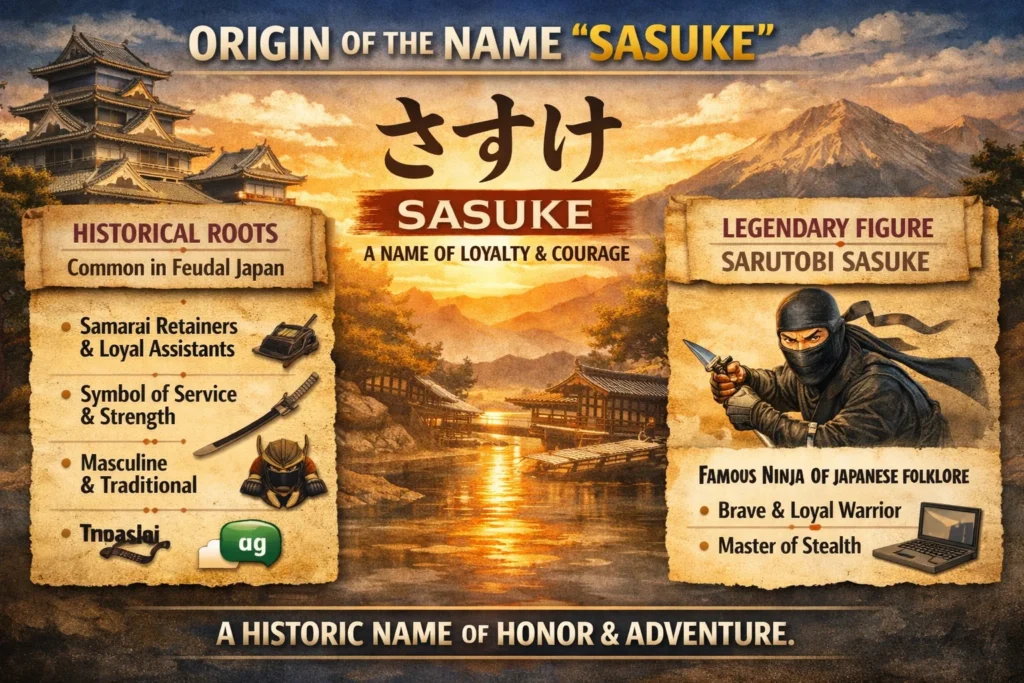
Historical Roots
The name Sasuke has been used in Japan for centuries and was especially common during feudal Japan.
- Often given to samurai retainers or loyal assistants
- Associated with service, loyalty, and strength
- Historically masculine and traditional
One of the most famous historical figures linked to the name is Sarutobi Sasuke, a legendary ninja figure in Japanese folklore known for bravery and loyalty.
Cultural Significance of “Sasuke”

In Japanese culture, names are chosen carefully and often reflect:
- Desired character traits
- Family values
- Strength, honor, or loyalty
Because Sasuke means helper or supporter, it symbolizes:
- Reliability
- Quiet strength
- Loyalty to others
- Courage behind the scenes
This makes it a respected and meaningful name, even outside modern entertainment.
How “Sasuke” Is Used in Modern Japanese
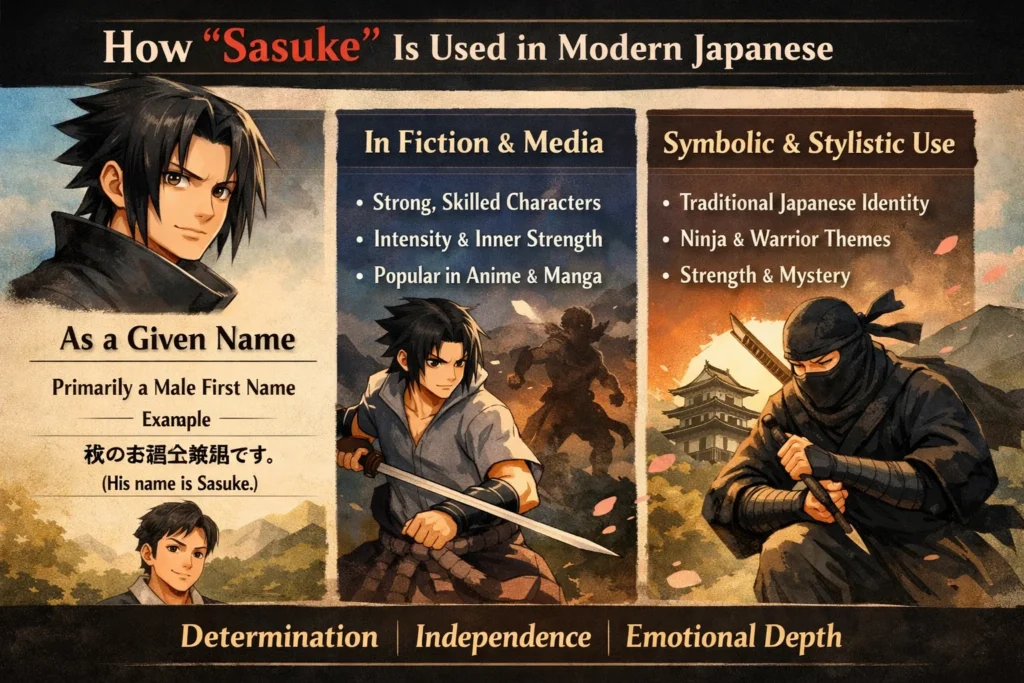
1. As a Given Name
“Sasuke” is primarily used as a male first name.
Example:
- 彼の名前は佐助です。
(His name is Sasuke.)
Tone: Neutral, respectful.
2. In Fiction and Media
The name gained international popularity through anime, manga, and films.
- Often given to strong, complex, or skilled characters
- Conveys intensity, seriousness, and inner strength
Because of this, many people associate “Sasuke” with:
- Determination
- Independence
- Emotional depth
3. Symbolic or Stylistic Use
Sometimes used stylistically to suggest:
- Traditional Japanese identity
- Ninja or warrior themes
- Strength and mystery
Kanji Variations of “Sasuke”
While 佐助 is the most common, other kanji combinations exist.
| Kanji | Meaning | Nuance |
|---|---|---|
| 佐助 | Help + Aid | Most traditional |
| 左助 | Left + Aid | Rare, symbolic |
| 佐介 | Help + Mediate | Softer tone |
| 佐輔 | Help + Support | Formal, classical |
📝 Note: Parents choose kanji carefully to reflect the values they want associated with the name.
Tone and Impression of the Name “Sasuke”
The name Sasuke generally gives off these impressions:
Positive Tone
- Strong
- Loyal
- Dependable
- Traditional
Serious or Intense Tone
- Often perceived as bold or dramatic due to media influence
- Less playful than modern trendy names
Comparison With Similar Japanese Names
Here’s how Sasuke compares to other traditional male Japanese names:
| Name | Meaning | Tone |
|---|---|---|
| Sasuke | One who helps | Strong, loyal |
| Takeshi | Warrior | Masculine, tough |
| Haruto | Sun + soar | Modern, positive |
| Kenji | Strong + second son | Traditional |
| Shinji | True + second | Serious |
Is “Sasuke” a Common Name in Japan?
- Historically: Yes, especially in older generations
- Modern Japan: Less common, but still recognized
- Internationally: Very well known due to pop culture
It’s now more popular outside Japan among fans of Japanese culture.
Alternate Meanings or Interpretations
“Sasuke” does not have slang meanings in Japanese. It is:
- Not a casual word
- Not an adjective
- Not a nickname by default
Its meaning stays tied to names, history, and identity.
Polite or Professional Name Usage
In Japanese culture, names are used with honorifics:
- Sasuke-san – polite
- Sasuke-kun – casual, for boys
- Sasuke-sama – very respectful
Using just “Sasuke” without honorifics can sound informal unless you’re close.
FAQs
- What does Sasuke mean in Japanese?
It means one who helps or assistant, depending on the kanji. - Is Sasuke a real Japanese name?
Yes, it’s a traditional male given name. - Is Sasuke used only in anime?
No, it existed long before anime and has historical roots. - What kanji is Sasuke usually written with?
Most commonly 佐助. - Is Sasuke a popular name in Japan today?
Less common now, but still well known. - Does Sasuke have a negative meaning?
No, it has a positive and respectful meaning. - Is Sasuke masculine or unisex?
Traditionally masculine. - Can Sasuke be used as a surname?
No, it’s almost always a given name.
Conclusion
In Japanese, “Sasuke” is a meaningful and traditional male name that represents helpfulness, loyalty, and inner strength. Rooted in historical usage and enriched by cultural symbolism, it reflects values that are deeply respected in Japanese society.
While modern audiences may recognize the name through popular media, its true meaning goes back centuries long before fiction brought it to the global stage.
Understanding what Sasuke means offers insight not only into the Japanese language but also into how names reflect character, duty, and identity. Whether encountered in history, storytelling, or real life, Sasuke remains a name associated with strength and support.
Discover More Related Articles:
- ATP Mean in Text | Gen Z Text Slang & Internet Language In 2026
- What Does It Mean When You Dream About Someone In 2026
- TLDR Mean | Why It’s Popular Across the Internet In 2026

Ryan Thompson is an experienced content writer specializing in slang terms, texting abbreviations, and word meanings. He writes for meanvoro.com, where he creates accurate and easy-to-understand language content for readers.