Definition
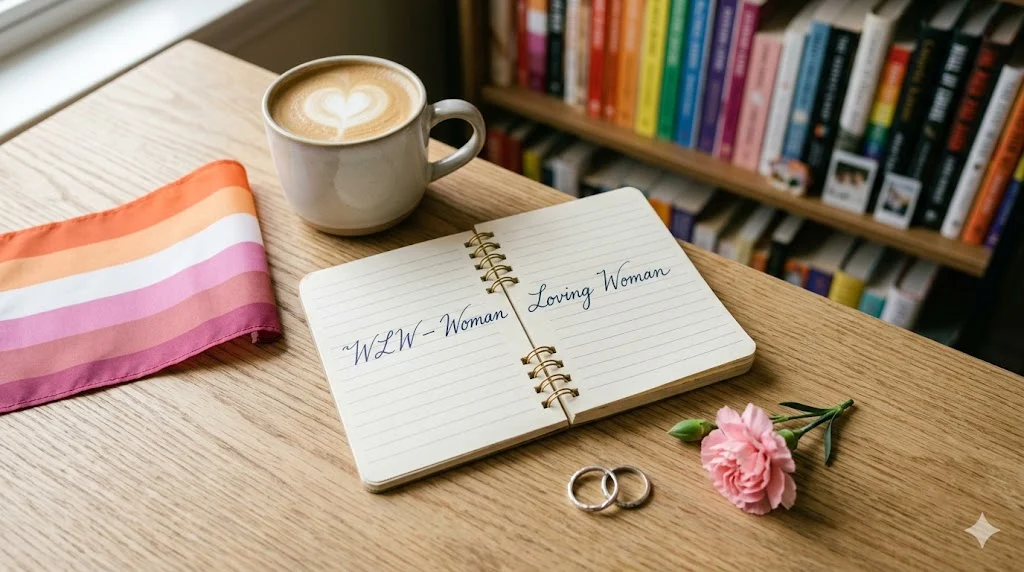
WLW stands for “Woman Loving Woman.”
In short: If you are a woman or non-binary person who loves women (romantically and/or sexually), you can identify as WLW.
Have you ever seen the abbreviation WLW pop up in a bio on Instagram, a hashtag on TikTok, or a book recommendation on Goodreads, and felt a little out of the loop? You’re not alone. In the fast-moving world of online identity and LGBTQ+ language, new acronyms appear constantly.
But here’s the good news: WLW is one of the most useful, inclusive, and affirming terms you’ll learn today.
Whether you’re part of the community, an ally, a writer, or just curious, understanding the wlw meaning helps you navigate queer spaces with respect and clarity. Let’s break it all down no judgment, just friendly, professional conversation.
It is an umbrella term used to describe any woman (cisgender or transgender) or non-binary person who is primarily attracted to women or feminine-aligned people. This includes, but is not limited to, lesbians, bisexual women, pansexual women, queer women, and some asexual or aromantic women who experience romantic attraction to women.
The beauty of this term is its inclusivity. It doesn’t ask you to pick a stricter label like “lesbian” (which excludes attraction to men) or “bisexual” (which may feel too specific about who else you like). WLW simply says: My love is for women.
The Origin and Rise of WLW: From Forums to Mainstream
You might be surprised to learn that WLW isn’t brand new. The phrase “woman loving woman” has roots in early internet communities specifically Usenet groups and LGBTQ+ forums in the late 1990s and early 2000s. Back then, people needed a searchable, discreet term to find community without triggering content filters or outing themselves.
However, the abbreviation WLW exploded in popularity around 2015–2020, driven largely by:
- Tumblr and Twitter queer communities – where users wanted a single hashtag to cover all femme-identified people who love women.
- TikTok – the #wlw hashtag has billions of views, covering everything from coming out stories to fashion advice to relationship humor.
- Book publishing – the rise of “WLW romance” as a genre category helped publishers market to broad sapphic audiences without excluding bi or pan readers.
Today, WLW is a standard, respectful term used in activist spaces, dating apps, media representation, and academic discussions of gender and sexuality.
How to Use WLW in Real Life: Context and Tone
Understanding the wlw meaning is one thing. Knowing how to use it naturally without sounding like a textbook is another. Let me show you.
WLW works beautifully as:
- An identity label: “I’m a WLW, but I usually just say queer for simplicity.”
- A community descriptor: “This subreddit is a safe space for WLW.”
- A genre marker: “I’m looking for WLW movies with happy endings.”
- An inclusive alternative: “The event is open to all WLW and allies.”
Examples by Tone
| Tone | Example |
|---|---|
| Friendly & casual | “Just a WLW trying to find another WLW to build a bookshelf with. 📚💕” |
| Neutral & informative | “The term WLW includes lesbians, bi, pan, and queer women. It’s intentionally inclusive.” |
| Affirming & proud | “Being a WLW isn’t my whole personality, but it’s a beautiful part of who I am.” |
| Dismissive or negative (rare) | Someone might misuse: “Oh, you’re one of those WLW who hates men?” (This is a stereotype. Most WLW don’t hate men; they just prefer women.) |
💡 Pro tip: Avoid using WLW as a noun for a single person in a clunky way. Say “She is a WLW” (fine) but better: “She identifies as WLW” or “She’s a woman loving woman.”
Comparison: WLW vs. Lesbian vs. Sapphic vs. Queer
This is where people get confused. Let’s clear it up with a simple table.
| Term | Meaning | Inclusivity | Example User |
|---|---|---|---|
| WLW (Woman Loving Woman) | Any woman or non-binary person attracted to women | Very broad. Includes bi, pan, lesbian, ace, etc. | A bisexual woman in a relationship with a woman |
| Lesbian | A woman or non-binary person attracted exclusively to women | Narrower. Excludes attraction to men. | A woman who has never and would never date a man |
| Sapphic | Artistic/historical term for WLW, often with a soft, romantic vibe | Broad like WLW, but more poetic | A poet describing her love for another woman |
| Queer | Anyone not straight and/or cisgender; very broad | Broadest – includes all LGBTQ+ identities | A genderfluid person attracted to multiple genders |
Real-World Example:
Imagine three people at a coffee shop:
- Alex is a lesbian. She only dates women.
- Jordan is bisexual. She dates men and women. She is still a WLW because she loves women too.
- Casey is non-binary and pansexual. They date people of all genders but feel a strong community with WLW spaces.
All three could attend a WLW book club, but only Alex would call herself a lesbian.
Alternate Meanings of WLW
Before you use WLW confidently, know that in very specific contexts, it could mean something else. Don’t worry 99% of the time online today, it means “Woman Loving Woman.” But here are the rare alternates:
- WLW – Weight Loss for Women – Some older fitness forums use this abbreviation. Context almost always clarifies (e.g., “My WLW journey” with diet tips vs. “My WLW journey” with pride flags).
- WLW – Wireless Local Loop – A telecommunications term. Unless you’re reading an engineering paper, ignore this.
- WLW – William L. Wilson – A rare personal or institutional initialism.
Quick tip: If you see #WLW on Instagram or TikTok, it’s the queer meaning 100% of the time.
Polite and Professional Alternatives to WLW
Sometimes you can’t use WLW. Maybe your audience is older, or you’re writing a formal document, or you simply want to be extra clear. Here are respectful alternatives:
| Instead of WLW | Use this | Why |
|---|---|---|
| “She’s a WLW.” | “She is attracted to women.” | Clear, no jargon |
| “WLW community” | “Women who love women” | Spells it out |
| “WLW content” | “Sapphic stories” or “F/F romance” | Genre-specific |
| “WLW space” | “Queer women’s space” | More recognized |
If you’re unsure whether someone knows the term WLW, just say the full phrase “woman loving woman” first, then use the abbreviation. It’s simple and respectful.
Why WLW Matters: Inclusivity Without Erasure
Here’s why the wlw meaning is genuinely important not just internet slang.
For decades, mainstream media and even some LGBTQ+ spaces forced women who loved women into one box: lesbian. But what about the bisexual woman married to a man? Is she not still a woman who loves women? Yes, she is. What about the pansexual non-binary person who feels kinship with lesbian history? They belong too.
WLW says: Your love for women is real and valid, no matter who else you might love or not love.
This term reduces bisexual erasure (the harmful idea that bi women are “just confused” or “actually straight/gay”). It also creates room for asexual WLW who experience romantic attraction without sexual desire.
In short: WLW is a big, warm tent. And there’s room for everyone who loves women.
Common Mistakes to Avoid When Using WLW
Even with good intentions, people slip up. Here’s what to watch for:
- ❌ Using WLW to mean “only lesbians.” That’s incorrect. WLW includes bisexual and pansexual women.
- ❌ Assuming all WLW are cisgender. Trans women who love women are absolutely WLW.
- ❌ Using WLW as a verb. (“She WLWs.” No. Say: “She is a WLW.”)
- ❌ Forcing the label on someone. Some women who love women prefer “lesbian” or just “gay.” Respect that.
Example Table: WLW in Different Social Media Contexts
| Platform | Common WLW Usage | Example Post |
|---|---|---|
| TikTok | #wlw hashtag for POV skits, relationship goals, coming out | “POV: you’re a WLW and your crush just said she loves cottagecore 🌸” |
| Bio descriptor or hashtag on queer art/photos | “WLW • she/her • soft butch • lover of bad reality TV” | |
| Twitter/X | Discussion of media representation or dating | “Can we get more WLW enemies-to-lovers plots that don’t end in tragedy?” |
| Subreddits like r/actuallesbians (actually WLW space) | “As a WLW, do you prefer femme or butch presentation?” | |
| Goodreads | WLW romance or WLW fiction genre tags | “This book is tagged #wlw but the romance is barely there. Disappointed.” |
FAQs:
Here are the real questions people type into Google every day about WLW.
1. Is WLW the same as lesbian?
No. WLW includes lesbians, bisexual women, pansexual women, and more. All lesbians are WLW, but not all WLW are lesbians.
2. Can a non-binary person be WLW?
Yes, many non-binary people who are aligned with womanhood or femininity use WLW. However, always respect how an individual identifies. Some non-binary people prefer “trixic” (non-binary loving women) instead.
3. What’s the male equivalent of WLW?
The direct equivalent is MLM – “Men Loving Men.” That includes gay, bisexual, and pansexual men. (Be careful: MLM also means multi-level marketing in business.)
4. Is WLW only for romance or also for sex?
Both. WLW can describe romantic attraction (who you fall in love with) and/or sexual attraction (who you desire physically).
5. Can a bisexual woman in a relationship with a man still call herself WLW?
Absolutely. WLW describes capacity for attraction, not current relationship status. A bi woman married to a man is still a woman who loves women.
6. Is WLW a slur?
No. WLW is a neutral, positive, or self-affirming term. It was created by and for the community. It has never been used as a slur.
7. How do I pronounce WLW?
Most people say each letter: “Double-U – El – Double-U.”
8. What’s the difference between WLW and sapphic?
Sapphic is older and more poetic (from Sappho of Lesbos). WLW is more modern, direct, and internet-friendly.
Conclusion:
In conclusion, WLW stands for “Women Loving Women” and is commonly used to describe romantic or emotional attraction between women. The term is widely used online, in social media communities, fandoms, and LGBTQ+ discussions because it is inclusive and broad.
WLW can refer to lesbians, bisexual women, pansexual women, or any women who are attracted to other women. The meaning usually depends on the context, but it is generally used in a positive and supportive way.
Understanding terms like WLW helps make online conversations and communities easier to understand while also promoting respectful and inclusive communication.
Discover More Related Articles:
- What Does Parasocial Mean | Streaming & Celebrity Culture In 2026
- Endeavor Meaning | Motivation & Success Quotes In 2026
Madison Taylor is an experienced content writer who focuses on researching and explaining word meanings, slang, and texting terms. She writes for meanvoro.com, creating clear and accurate to help readers understand language easily.