Definition
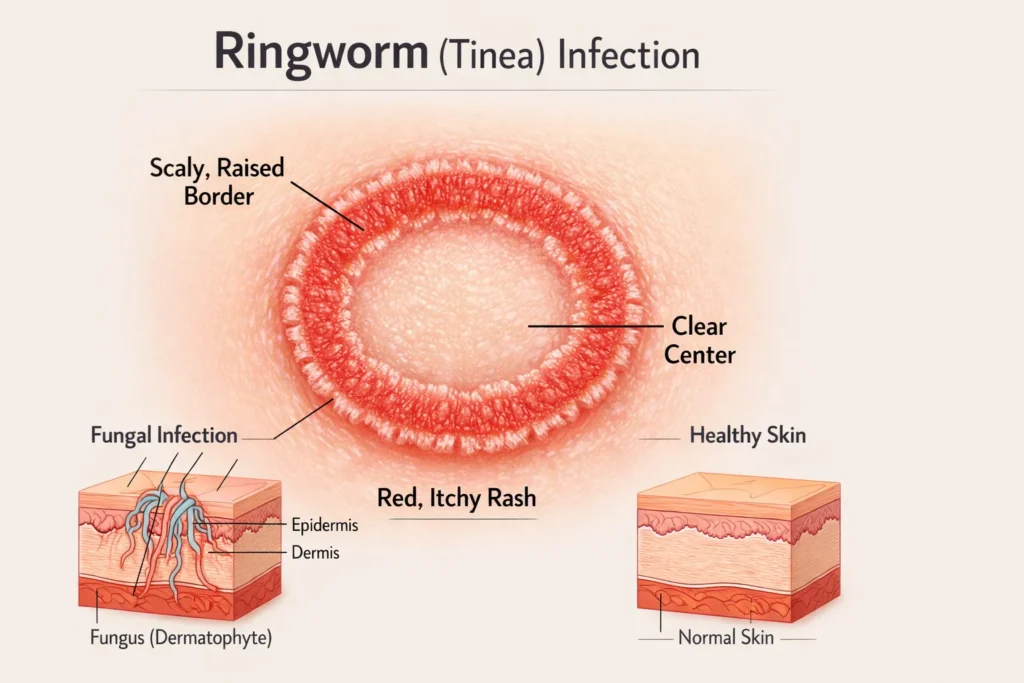
Ringworm is a contagious fungal infection of the skin that appears as a red, circular, ring-shaped rash with a clearer center and a raised, scaly edge. It can be itchy and may spread if not treated.
Skin changes can be alarming, especially when they appear as round, red, or itchy patches. One of the most commonly searched skin conditions is ringworm, and many people immediately panic when they notice unusual marks on their skin.
Despite its name, ringworm is not caused by a worm. It is a common fungal infection that affects the skin, scalp, nails, or feet. The reason it gets so much attention is because of its distinctive circular rash, which can look unusual and sometimes worrying.
In this guide, you’ll learn exactly what ringworm looks like, how it spreads, symptoms to watch for, and how it is treated in simple, clear language.
What Is Ringworm?
Ringworm is a common skin infection caused by fungi called dermatophytes. It is not caused by worms, despite the misleading name.
It can appear on different parts of the body, including:
- Skin (tinea corporis)
- Scalp (tinea capitis)
- Feet (athlete’s foot)
- Groin area (jock itch)
- Nails
The infection spreads through direct contact with infected people, animals, or contaminated surfaces.
What Does Ringworm Look Like?
Understanding what ringworm looks like is important for early detection and treatment.
1. Circular Rash (Ring Shape)
The most recognizable feature is:
- A round or oval-shaped rash
- Ring-like appearance
- Clear or lighter center
This is why it is called “ringworm.”
2. Red or Pink Color
Ringworm typically appears:
- Red on lighter skin
- Pink, brown, or gray on darker skin tones
The color may change as it spreads.
3. Raised, Scaly Edges
The outer edge of the rash may:
- Look slightly raised
- Appear rough or scaly
- Feel dry or flaky
4. Itching and Irritation
Most cases include:
- Itching (mild to severe)
- Burning or discomfort
- Skin sensitivity
5. Spreading Pattern
Ringworm often:
- Starts as a small patch
- Slowly expands outward
- Forms multiple rings in severe cases
Visual Appearance Table
| Feature | What It Looks Like |
|---|---|
| Shape | Circular or ring-shaped |
| Color | Red, pink, brown, or gray |
| Center | Clear or less affected area |
| Edges | Raised, scaly, rough |
| Sensation | Itchy or irritated |
| Growth | Expands outward over time |
Different Types of Ringworm Appearance
1. Ringworm on Skin (Body)
- Circular red patches
- Clear center
- Common on arms, legs, and torso
2. Ringworm on Scalp
- Scaly patches
- Hair loss in affected areas
- Itchy scalp
- May look like dandruff or bald spots
3. Ringworm on Feet (Athlete’s Foot)
- Cracked, peeling skin
- Redness between toes
- Burning sensation
4. Ringworm in Groin Area
- Red or brown rash
- Itching in inner thighs
- Often worsens with sweat
Comparison: Ringworm vs Other Skin Conditions
| Condition | Appearance | Difference from Ringworm |
|---|---|---|
| Eczema | Dry, inflamed patches | Not ring-shaped |
| Psoriasis | Thick, scaly patches | No clear center |
| Heat rash | Small red bumps | No circular pattern |
| Ringworm | Ring-shaped rash | Has clear center + expanding edges |
Why Does Ringworm Look Like a Ring?
Ringworm spreads outward from the center. As the fungus grows:
- The center starts healing or clearing
- The outer edges remain active and inflamed
This creates the classic “ring” appearance.
Causes of Ringworm
Ringworm is caused by fungi that thrive in warm, moist environments.
Common causes:
- Skin-to-skin contact
- Sharing towels or clothes
- Contact with infected animals (cats, dogs)
- Walking barefoot in public showers
- Sweaty or humid conditions
Is Ringworm Contagious?
Yes, ringworm is highly contagious.
It can spread through:
- Direct contact with infected skin
- Shared personal items
- Contaminated surfaces
- Pets carrying the fungus
Common Misunderstandings
Myth 1: Ringworm is caused by a worm
❌ False — it is a fungal infection.
Myth 2: It only affects dirty skin
❌ False — anyone can get it, even with good hygiene.
Myth 3: It disappears on its own quickly
❌ Sometimes false — it often needs treatment.
Early Signs of Ringworm
Before it becomes a full ring-shaped rash, you may notice:
- Small itchy patch
- Mild redness
- Dry or flaky skin
- Slight irritation
How Ringworm Spreads on the Body
Ringworm often starts small and grows outward:
- Small red spot appears
- Expands into a circle
- Center begins to clear
- Outer ring becomes raised and scaly
Treatment Options for Ringworm
1. Antifungal Creams
- Clotrimazole
- Miconazole
- Terbinafine
2. Oral Medication (Severe cases)
- Prescribed by a doctor
- Used for scalp or widespread infections
3. Hygiene Care
- Keep skin clean and dry
- Avoid scratching
- Wash clothes and towels regularly
How Long Does Ringworm Last?
- Mild cases: 1–2 weeks with treatment
- Severe cases: 3–4 weeks or longer
Without treatment, it can spread and last longer.
When to See a Doctor
Seek medical help if:
- Rash spreads quickly
- It becomes painful
- It affects scalp or nails
- Over-the-counter treatment doesn’t work
Prevention Tips
- Keep skin dry and clean
- Avoid sharing personal items
- Wear breathable clothing
- Wash hands regularly
- Treat infected pets early
FAQs:
1. What does ringworm look like at first?
It starts as a small red or pink patch that slowly expands.
2. Is ringworm always a perfect circle?
Not always, but it often forms a ring-like shape with a clear center.
3. Does ringworm itch?
Yes, it is usually itchy and sometimes uncomfortable.
4. Can ringworm be mistaken for eczema?
Yes, but eczema is not circular like ringworm.
5. How do I know if it’s ringworm or just a rash?
Ringworm usually has a ring shape with a scaly edge and spreads outward.
6. Can ringworm go away without treatment?
Sometimes mild cases improve, but treatment is recommended to prevent spreading.
7. Is ringworm dangerous?
No, but it is contagious and should be treated.
8. Can pets spread ringworm?
Yes, cats and dogs can carry and spread ringworm.
Conclusion:
Understanding what does ringworm look like helps you identify it early and treat it quickly. The most important signs include:
- Circular or ring-shaped rash
- Red, pink, or brown color
- Scaly, raised edges
- Clear center
- Itching and spreading over time
Although ringworm is common and treatable, it spreads easily, so early recognition is important. With proper antifungal treatment and good hygiene, most cases clear up quickly without complications.
Discover More Related Articles:
- What Does Magnesium Do for the Body: How It Supports Energy Production In 2026
- What Does Catnip Do to Cats: Effects, Benefits & Surprising Facts In 2026

Ryan Thompson is an experienced content writer specializing in slang terms, texting abbreviations, and word meanings. He writes for meanvoro.com, where he creates accurate and easy-to-understand language content for readers.