Definition
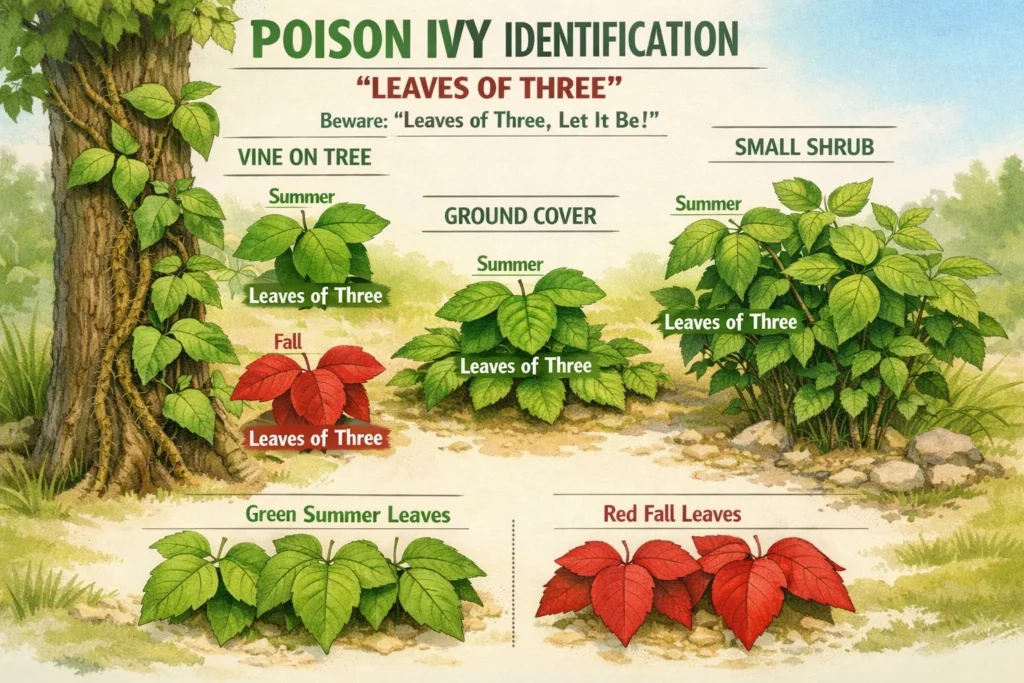
Poison ivy is a common North American plant that causes an itchy skin rash when touched. It typically has clusters of three pointed leaves, often described as “leaves of three, let it be,” and can appear as a vine or shrub depending on its growth stage.
Have you ever gone hiking, gardening, or simply walking through nature and later noticed an itchy, red rash on your skin? If so, there’s a good chance you may have come into contact with poison ivy without realizing it.
Understanding what poison ivy looks like is not just useful—it’s essential for preventing uncomfortable skin reactions. Many people mistake it for harmless plants, especially when it changes color or grows in different environments.
The tricky part? Poison ivy doesn’t always look the same. It can vary depending on the season, location, and growth stage. That’s why learning its appearance in detail can save you from weeks of irritation.
What Does Poison Ivy Look Like?
Poison ivy is famous for one key feature: clusters of three leaflets. However, there’s much more to identifying it safely.
Key Visual Characteristics
Here’s how to recognize poison ivy in the wild:
- Leaves in groups of three
- Middle leaflet has a slightly longer stem
- Leaf edges may be smooth, toothed, or slightly lobed
- Color changes with seasons:
- Spring: reddish or light green
- Summer: bright or dark green
- Fall: yellow, orange, or red
- Can grow as:
- Low ground plant
- Climbing vine
- Small shrub
Quick Identification Table
| Feature | Description |
|---|---|
| Leaf pattern | Always 3 leaflets |
| Color | Green, red, yellow, or orange depending on season |
| Growth form | Vine, shrub, or ground cover |
| Texture | Shiny or dull surface |
| Stems | May have reddish tint |
| Edges | Smooth or jagged |
Growth Forms of Poison Ivy
One reason people struggle with identifying poison ivy is because it doesn’t always look the same. It grows in three main forms:
1. Ground Cover
- Spreads low across soil
- Often found in forests or gardens
- Easy to mistake for small harmless plants
2. Climbing Vine
- Grows up trees, fences, or walls
- Can become thick and woody over time
- Often mistaken for normal ivy
3. Shrub Form
- Grows upright like a small bush
- Common in open fields or disturbed areas
Seasonal Changes: How Poison Ivy Looks Throughout the Year
Poison ivy changes appearance dramatically with the seasons, making identification tricky.
Spring
- Fresh reddish-green leaves
- Small and soft appearance
Summer
- Fully green and glossy leaves
- Most common time for exposure
Fall
- Bright red, orange, or yellow leaves
- Often mistaken for decorative plants
Winter
- Bare woody stems or vines
- Still capable of causing a rash even without leaves
Real-World Examples of Poison Ivy Identification
Let’s look at some practical situations:
Example 1: Hiking Trail
You see a vine climbing a tree with clusters of three shiny leaves. That’s a classic poison ivy vine.
Example 2: Backyard Garden
A small bush with reddish stems and grouped leaves appears near a fence. This could be poison ivy in shrub form.
Example 3: Forest Walk
Low-growing green plants with three leaflets spreading across the ground—this is a ground-cover form.
Common Misidentifications
Many plants look similar to poison ivy, especially at first glance.
Plants Often Confused With Poison Ivy
- Virginia creeper (has 5 leaflets instead of 3)
- Blackberry bushes (thorny stems, different leaf pattern)
- Boxelder seedlings (similar grouping but different shape)
- Young poison oak (similar but more lobed leaves)
Comparison: Poison Ivy vs Similar Plants
| Plant | Leaf Pattern | Key Difference |
|---|---|---|
| Poison Ivy | 3 leaflets | “Leaves of three” rule |
| Poison Oak | 3 leaflets | Rounded, oak-like leaves |
| Virginia Creeper | 5 leaflets | Always more than 3 leaves |
| Blackberry | Multiple leaflets | Has thorns on stems |
Why Poison Ivy Causes Skin Reactions
Poison ivy contains an oil called urushiol, which triggers allergic skin reactions in most people.
Common Reaction Symptoms:
- Red rash
- Itching
- Swelling
- Blisters (in some cases)
The reaction is not always immediate—it can appear hours or even days after contact.
Where Poison Ivy Is Commonly Found
You are most likely to encounter poison ivy in:
- Forests and wooded areas
- Parks and hiking trails
- Roadsides
- Gardens and backyards
- Fence lines and old buildings
It thrives in areas where sunlight and shade mix.
Safety Tips: How to Avoid Poison Ivy
Knowing what poison ivy looks like is your first defense, but here are extra precautions:
- Avoid touching plants with clusters of three leaves
- Wear long sleeves and pants in wooded areas
- Use gloves while gardening
- Wash skin immediately after outdoor exposure
- Clean shoes and clothing after hiking
Polite Ways to Describe Poison Ivy Awareness
If you’re warning someone, here are neutral and clear ways to say it:
- “Be careful, that plant might be poison ivy.”
- “It looks like it could be poison ivy—better avoid touching it.”
- “Let’s not go near that plant, just in case.”
Common Misunderstanding About Poison Ivy
A lot of people believe poison ivy is only dangerous when touched directly. However:
- It can stick to clothing, pets, and tools
- Indirect contact can still cause reactions
- Even dead plants can trigger a rash
FAQs
1. What does poison ivy look like in simple terms?
It has three leaflets grouped together and changes color depending on the season.
2. Can poison ivy grow on trees?
Yes, it often grows as a climbing vine on trees and fences.
3. Is poison ivy always green?
No, it can turn red, yellow, or orange in fall.
4. Can you get a rash from dead poison ivy?
Yes, the plant oil can still cause reactions even when it is dead.
5. What plant is most confused with poison ivy?
Virginia creeper is the most commonly confused plant.
6. Does poison ivy have flowers?
Yes, but they are small and not very noticeable.
7. How fast does poison ivy spread?
It can spread quickly through roots and seeds in suitable conditions.
8. Can animals carry poison ivy oil?
Yes, pets can carry the oil on their fur and transfer it to humans.
Conclusion:
Learning what poison ivy looks like is one of the most useful outdoor safety skills. The plant’s signature “leaves of three” pattern is the most reliable way to identify it, but remember—it can change appearance based on season and growth type.
To stay safe:
- Always observe plant patterns carefully
- Avoid touching unknown plants
- Learn common look-alikes
- Take precautions in wooded or grassy areas
With a little awareness, you can enjoy nature safely without the unpleasant surprise of a poison ivy rash.
Discover More Related Articles:
- What Does Skin Cancer Look Like: Types & Their Visible Symptoms In 2026
- Third Base Mean in a Relationship: Decoding Relationship Lingo In 2026

Madison Taylor is an experienced content writer who focuses on researching and explaining word meanings, slang, and texting terms. She writes for meanvoro.com, creating clear and accurate to help readers understand language easily.