
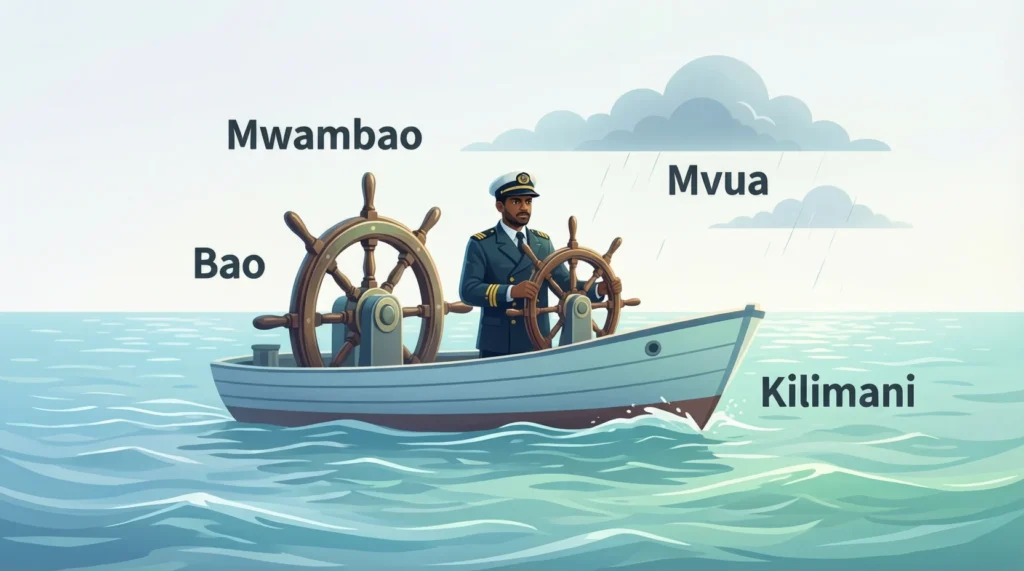
Timon in Swahili means rudder or steering mechanism, especially on a ship or boat.
It refers to the part used to control direction and navigation.
In simple terms, timon is the tool used to steer a vessel.
If you have come across the word timon in Swahili and wondered what it means, you are not alone. The word often appears in maritime contexts, translations, or formal Swahili writing, which can make it confusing for beginners.
Understanding what timon means in Swahili helps clarify its role in navigation, transportation, and technical language. While it is not an everyday conversational word, it is still an important term with a clear meaning.
This guide explains timon in simple, clear language, with real examples and usage tips.
Why Timon Is an Important Swahili Word
Although timon is not used in casual daily conversation, it is important in specific contexts such as:
• Maritime and nautical language
• Transportation and navigation
• Technical and educational texts
• Translations related to ships and boats
In coastal regions and formal Swahili writing, timon appears more frequently.
Origin and Background of Timon
The word timon in Swahili is a loanword, borrowed from European languages used in maritime navigation. Swahili has historically absorbed vocabulary from Arabic, Portuguese, and later European languages due to trade and seafaring culture.
While native Swahili also uses usukani to mean steering wheel or rudder, timon is often used in more technical or formal contexts, especially when referring to ships.
What Timon Literally Means
In Swahili usage, timon refers to:
• A ship’s rudder
• A steering control used for navigation
• Directional control of a vessel
It does not describe people, emotions, or everyday actions.
How Timon Is Used in Swahili Sentences
Timon is mainly used when talking about ships, boats, or navigation.
Examples:
• Meli iliharibu timon yake.
The ship damaged its rudder.
• Nahodha alishika timon kwa makini.
The captain held the rudder carefully.
• Timon inasaidia kuongoza meli baharini.
The rudder helps guide the ship at sea.
Example Table Common Uses of Timon
| Context | Swahili Sentence | English Meaning |
|---|---|---|
| Ship navigation | Timon ya meli imevunjika | The ship’s rudder is broken |
| Captain control | Alisimamia timon | He controlled the rudder |
| Technical explanation | Timon hudhibiti mwelekeo | The rudder controls direction |
Timon vs Usukani in Swahili
| Word | Meaning | Usage Difference |
|---|---|---|
| Timon | Rudder or helm | Formal or maritime usage |
| Usukani | Steering wheel or rudder | More common and everyday |
Tip: Usukani is more widely used in daily Swahili, while timon sounds more technical or nautical.
Is Timon Used in Daily Conversation
No, timon is not commonly used in everyday speech. Most speakers prefer usukani, especially when talking about cars or general steering.
Timon is mainly found in:
• Maritime discussions
• Educational materials
• Translated texts
• Formal descriptions
Alternate Meanings or Common Confusions
Timon does not mean:
• A person’s name in Swahili
• Leadership or control in a figurative sense
• The Lion King character
When people recognize the name Timon, it is usually from pop culture, not the Swahili language.
FAQs
What does timon mean in Swahili
Timon means rudder or steering mechanism, especially on a ship.
Is “Timon” a common Swahili word?
No, “Timon” is not commonly used in everyday Swahili. It mostly appears in maritime or technical contexts.
Is “Timon” the same as “Usukani”?
They are related, but “Usukani” is the term most people use in daily conversation.
Can “Timon” be used for cars?
No, “Timon” generally refers to ships or boats, not cars.
Where does the word timon come from
It is a borrowed word from European maritime vocabulary.
Do Swahili speakers use timon daily
No, most daily conversations use usukani instead.
Is timon formal or informal
It is considered formal or technical.
Should learners memorize timon early
It is useful to know, but not essential for beginners.
Practical Tips for Learning Timon
• Associate timon with ships and navigation
• Learn usukani alongside timon
• Focus on context when reading
• Do not confuse it with names or pop culture references
Understanding context makes the meaning clear.
Conclusion
So, what does timon mean in Swahili?
Timon means rudder or steering mechanism, mainly used in maritime and technical contexts. While it is not part of everyday conversation, it plays an important role in navigation related language.
By learning timon, you can:
• Understand formal Swahili texts
• Improve comprehension of maritime vocabulary
• Avoid confusion with similar terms
• Build stronger contextual understanding of Swahili
Knowing words like timon helps deepen your understanding of how Swahili adapts language for specific fields and real world use.
Discover More Related Articles:
- Biblical Meaning of Defiled: What It Really Means According to Scripture (2026)
- Perseverance Mean in the Bible: Lessons from Paul, Job, and Jesus for 2026

Jessica Brown is a language-focused writer who creates well-researched articles on word meanings, abbreviations, and everyday expressions. She contributes to meanvoro.com, delivering simple, reliable, and reader-friendly content designed to make complex terms easy to understand.