
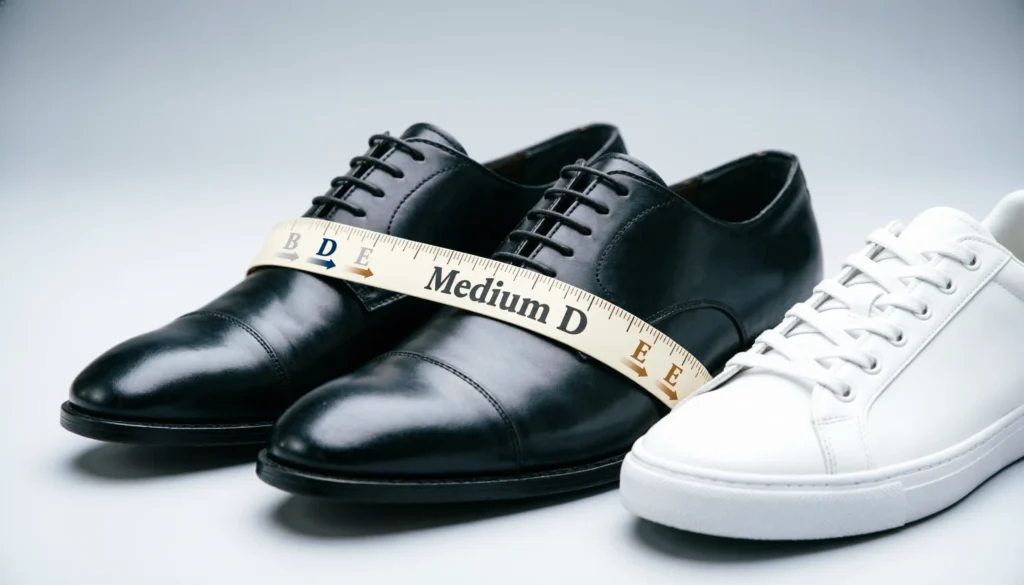
In shoes, “Medium D” refers to a standard width for men’s footwear, indicating an average or regular fit. The letter “D” denotes the width, while “medium” emphasizes that it is neither narrow nor wide, making it the most common width for men’s shoes.
When buying shoes whether online or in-store you’ll often come across width labels like “Medium D,” “B,” or “EE.” While most shoppers mainly focus on length, shoe width plays an equally important role in comfort, support, and overall fit.
Among these labels, “Medium D” is one of the most commonly used widths, especially in men’s footwear. Still, many people are unsure what it actually means, whether it represents a standard fit, and how it compares to other width options.
In this article, we’ll break down what Medium D means in shoes, where this sizing system comes from, how it differs for men and women, how it compares with other widths, and how you can choose the right fit for your feet.
What Does “Medium D” Mean?
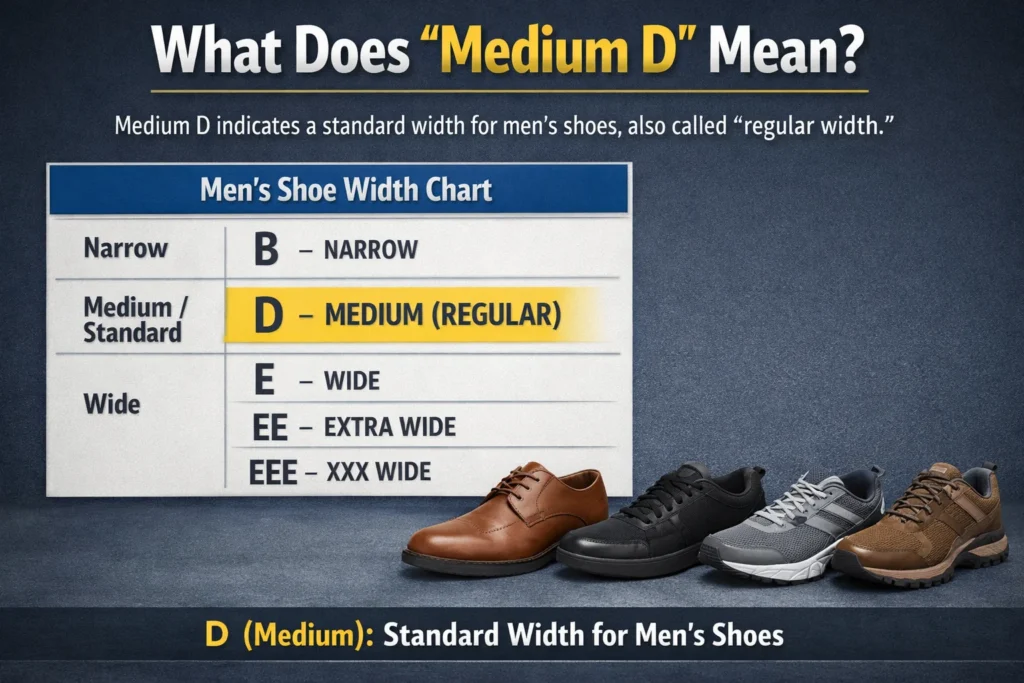
- Medium D indicates a standard width for men’s shoes, also called “regular width.”
- The letter D is a width designation in the U.S. shoe sizing system:
- Narrow widths: B (men), A or 2A (women)
- Medium/Standard widths: D (men), B (women)
- Wide widths: E, EE, EEE
Quick Example Table of Men’s Shoe Widths
| Width | Description | Fit Type |
|---|---|---|
| B | Narrow | Slim fit |
| D | Medium / Standard | Regular fit |
| E | Wide | Roomy fit |
| EE | Extra Wide | Extra roomy |
💡 Tip: Most men wear Medium D shoes unless they have particularly narrow or wide feet.
Origin and Standardization of Shoe Widths
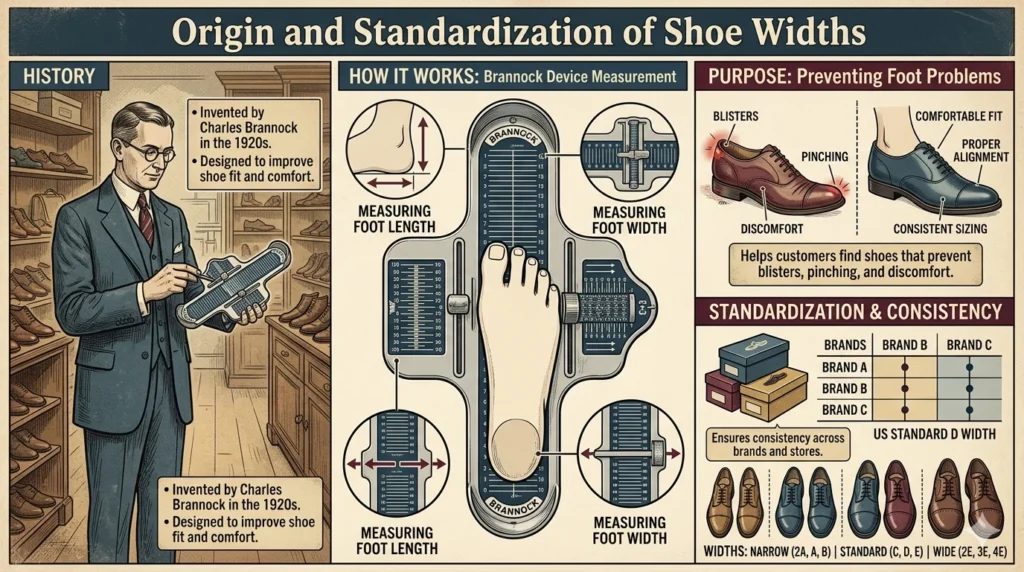
Shoe widths are standardized in the U.S. based on Brannock Device measurements, which measure both foot length and width.
- History:
- Invented by Charles Brannock in the 1920s
- Designed to improve shoe fit and comfort
- Purpose:
- Helps customers find shoes that prevent blisters, pinching, and discomfort
- Ensures consistency across brands and stores
What Does Medium Mean in Shoes?
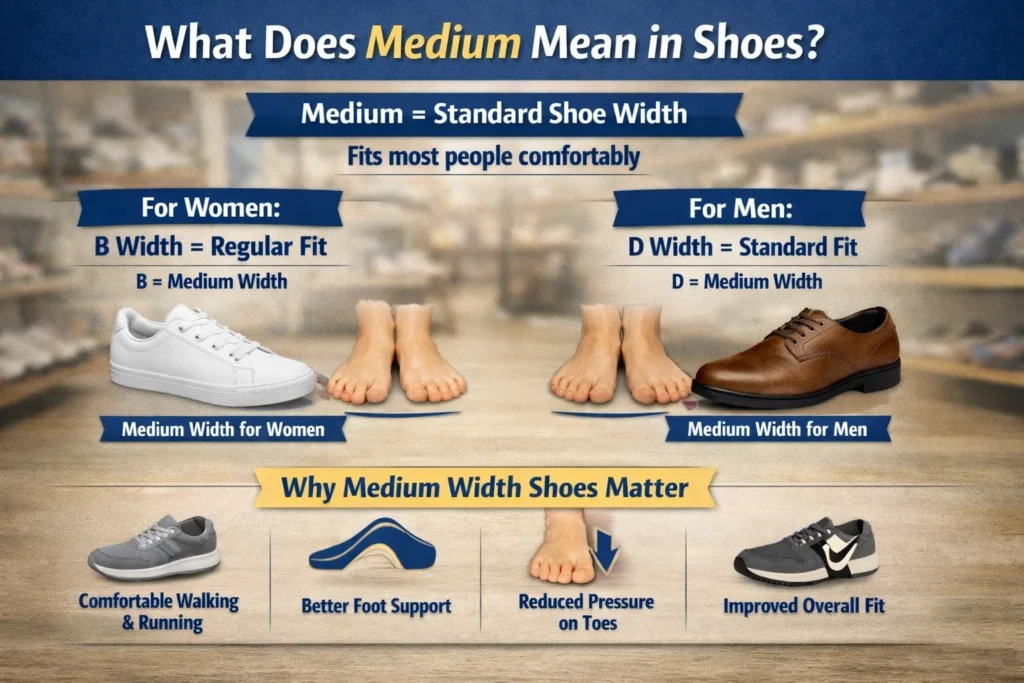
In shoes, “Medium” refers to the standard shoe width designed to fit most people comfortably. It means the shoe is neither too narrow nor too wide. Shoe brands often use “Medium” as the default width size for everyday footwear.
For men, medium width is usually labeled as D, while for women it is commonly labeled as B. If you buy shoes without selecting a special width, you are usually getting a medium-width shoe.
Why Medium Width Shoes Matter
Choosing the right shoe width is important for comfort and foot health. Medium shoes are made for people whose feet have average width proportions. They help provide:
- Comfortable walking and running
- Better foot support
- Reduced pressure on toes
- Improved overall fit
Medium Shoe Width for Men and Women
| Category | Medium Width Label |
|---|---|
| Men | D |
| Women | B |
Signs Medium Shoes Fit Correctly
A medium-width shoe usually fits well if:
- Your toes have enough room to move
- The shoe does not feel tight on the sides
- Your heel stays secure while walking
- You can wear the shoes for long periods comfortably
Difference Between Narrow, Medium, and Wide Shoes
| Width Type | Description |
|---|---|
| Narrow | Best for slim feet |
| Medium | Standard fit for average feet |
| Wide | Extra room for wider feet |
Are Medium Shoes Good for Everyone?
No. While medium is the most common width, people with very wide or narrow feet may need different sizes for better comfort and support.
How “Medium D” is Used in Shoe Shopping
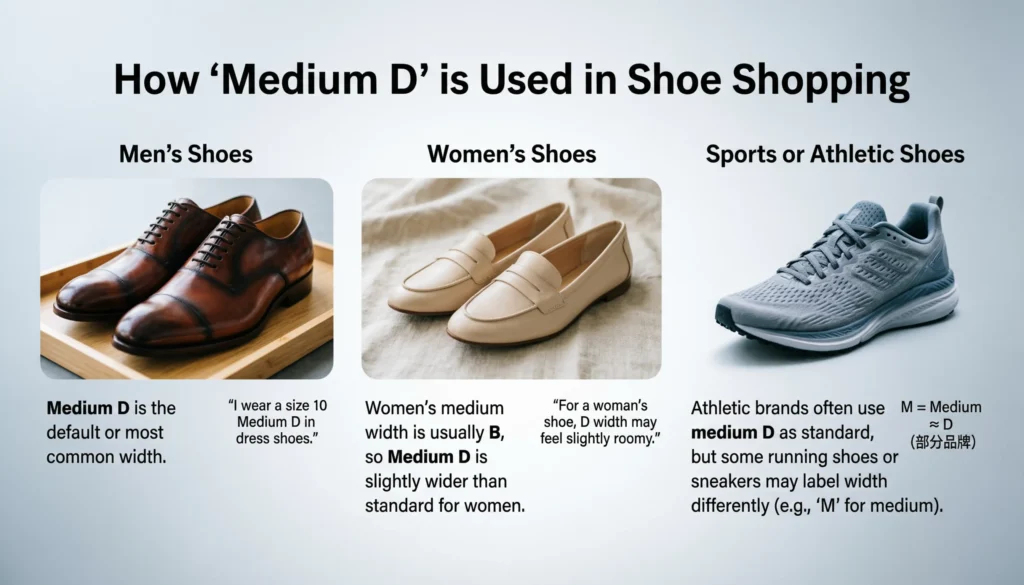
1. Men’s Shoes
- Medium D is the default or most common width.
- Example:
- “I wear a size 10 Medium D in dress shoes.”
2. Women’s Shoes
- Women’s medium width is usually B, so Medium D is slightly wider than standard for women.
- Example:
- “For a woman’s shoe, D width may feel slightly roomy.”
3. Sports or Athletic Shoes
- Athletic brands often use medium D as standard, but some running shoes or sneakers may label width differently (e.g., “M” for medium).
What Does Medium/D Shoe Width Mean?
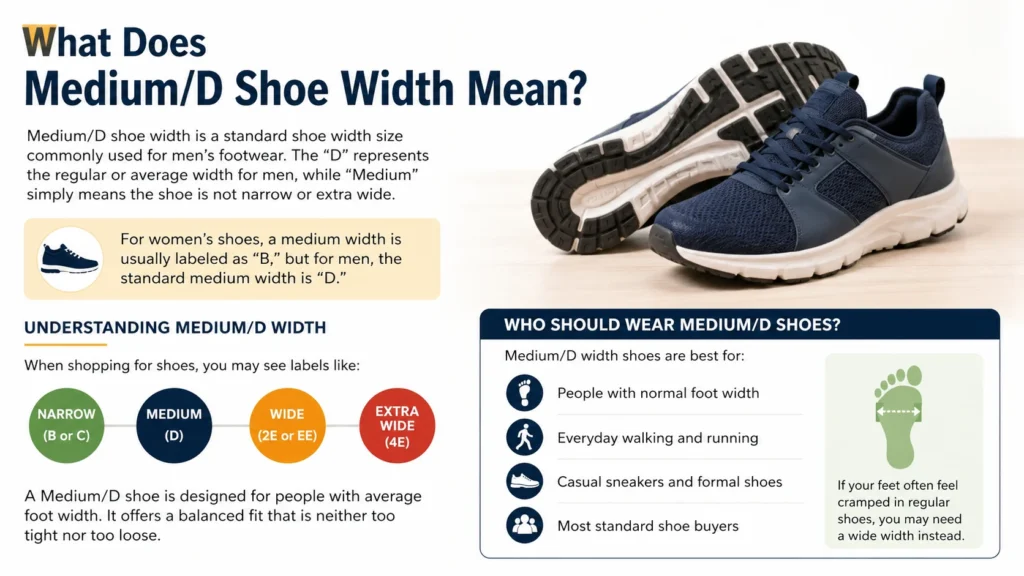
Medium/D shoe width is a standard shoe width size commonly used for men’s footwear. The “D” represents the regular or average width for men, while “Medium” simply means the shoe is not narrow or extra wide.
For women’s shoes, a medium width is usually labeled as “B,” but for men, the standard medium width is “D.”
Understanding Medium/D Width
When shopping for shoes, you may see labels like:
- Narrow (B or C)
- Medium (D)
- Wide (2E or EE)
- Extra Wide (4E)
A Medium/D shoe is designed for people with average foot width. It offers a balanced fit that is neither too tight nor too loose.
Who Should Wear Medium/D Shoes?
Medium/D width shoes are best for:
- People with normal foot width
- Everyday walking and running
- Casual sneakers and formal shoes
- Most standard shoe buyers
If your feet often feel cramped in regular shoes, you may need a wide width instead.
Medium/D Shoe Width for Men vs Women
| Gender | Medium Width Label |
|---|---|
| Men | D |
| Women | B |
This is why many shoe brands mention “Medium/D” in men’s footwear descriptions.
Why Shoe Width Matters
Choosing the correct shoe width helps with:
- Better comfort
- Improved foot support
- Reduced foot pain
- Preventing blisters and pressure points
Wearing shoes that are too narrow or too wide can make walking uncomfortable.
Common Shoe Width Labels
| Width Type | Label |
|---|---|
| Narrow | B/C |
| Medium | D |
| Wide | EE/2E |
| Extra Wide | 4E |
Signs You Need Medium D Shoes
- Your feet feel comfortable with slight wiggle room in toes
- No pinching on the sides or top of the foot
- Standard width shoes in B or C feel too tight
Example Table: Foot Shape vs. Width Recommendation
| Foot Type | Recommended Width |
|---|---|
| Narrow / slim | B (men) / A (women) |
| Average / medium | D (men) / B (women) |
| Wide | E / EE |
| Extra wide / high volume | EEE / 4E |
Comparison With Related Widths
- Medium D vs Narrow B: D provides more space across the foot, suitable for average feet.
- Medium D vs Wide E: D is less roomy, designed for standard width rather than wide or high-volume feet.
- Women’s Width vs Men’s Width: Women typically wear B as standard; D is wider and often considered “wide” in women’s sizing.
Tips for Choosing the Right Width
- Measure your feet using a Brannock Device or printable ruler.
- Try shoes on at the end of the day when feet are slightly swollen.
- Check brand sizing charts, as widths may vary slightly.
- Consider socks: thicker socks may require slightly wider shoes.
- Don’t assume same length fits all widths; width impacts overall comfort.
Medium B vs Medium D
Medium B and Medium D are bra cup sizes used in women’s bra sizing. The main difference between them is the cup volume and breast size they represent.
What is Medium B?
Medium B usually refers to a B cup size, which is considered a moderate or average breast size. It provides a balanced fit with less cup depth compared to larger cup sizes.
Features of Medium B:
- Smaller cup volume
- Lighter support needed
- Common in regular everyday bras
- Often considered a medium-small size
What is Medium D?
Medium D refers to a D cup size, which has a larger cup volume and more depth than a B cup. It is designed for fuller bust measurements and usually offers extra support.
Features of Medium D:
- Larger cup depth and volume
- More bust coverage
- Stronger support and wider straps often needed
- Suitable for fuller chest sizes
Key Difference Between Medium B and Medium D
The biggest difference is the cup size and fullness. A D cup is noticeably larger than a B cup, even if the band size stays the same.
| Feature | Medium B | Medium D |
|---|---|---|
| Cup Volume | Smaller | Larger |
| Bust Fullness | Moderate | Fuller |
| Support Needed | Light to Medium | Medium to High |
| Bra Coverage | Less | More |
Which One is Better?
Neither is better — it depends completely on individual body shape, comfort, and proper fitting. The right bra size should feel comfortable and provide proper support.
FAQs
- What does medium D mean in men’s shoes?
It’s the standard width, also called regular fit. - Is D width the same for women?
No, D is slightly wide for women; B is considered standard. - How do I know if I need medium D?
If your foot is average width and standard shoes aren’t tight or loose, Medium D is likely correct. - Can shoe width affect comfort?
Absolutely. Proper width prevents blisters, pinching, and foot fatigue. - Is Medium D the most common width?
Yes, especially for men. - What is the difference between D and E width?
D = standard, E = wide. E gives more space across the foot. - Do all brands use D for medium?
Most U.S. brands do, but some brands may label medium as “M” instead. - Can I wear Medium D if I have slightly wide feet?
You might prefer E or EE for comfort. Trying shoes on is best.
Conclusion
Medium D shoes are the standard width for men, designed for average feet. Understanding shoe widths ensures comfort, prevents foot problems, and helps you choose the right pair for your lifestyle.
When shopping for shoes, remember: length and width matter equally, and Medium D is a safe choice for most men. For women or those with unusually narrow or wide feet, always check the width chart or try shoes on to ensure the perfect fit.
With this knowledge, you’ll shop smarter, avoid uncomfortable shoes, and keep your feet happy all day long! 👟
Discover More Related Articles:
- ATP Mean in Text | Gen Z Text Slang & Internet Language In 2026
- What Does It Mean When You Dream About Someone In 2026
- TLDR Mean | Why It’s Popular Across the Internet In 2026

Jessica Brown is a language-focused writer who creates well-researched articles on word meanings, abbreviations, and everyday expressions. She contributes to meanvoro.com, delivering simple, reliable, and reader-friendly content designed to make complex terms easy to understand.