Definition
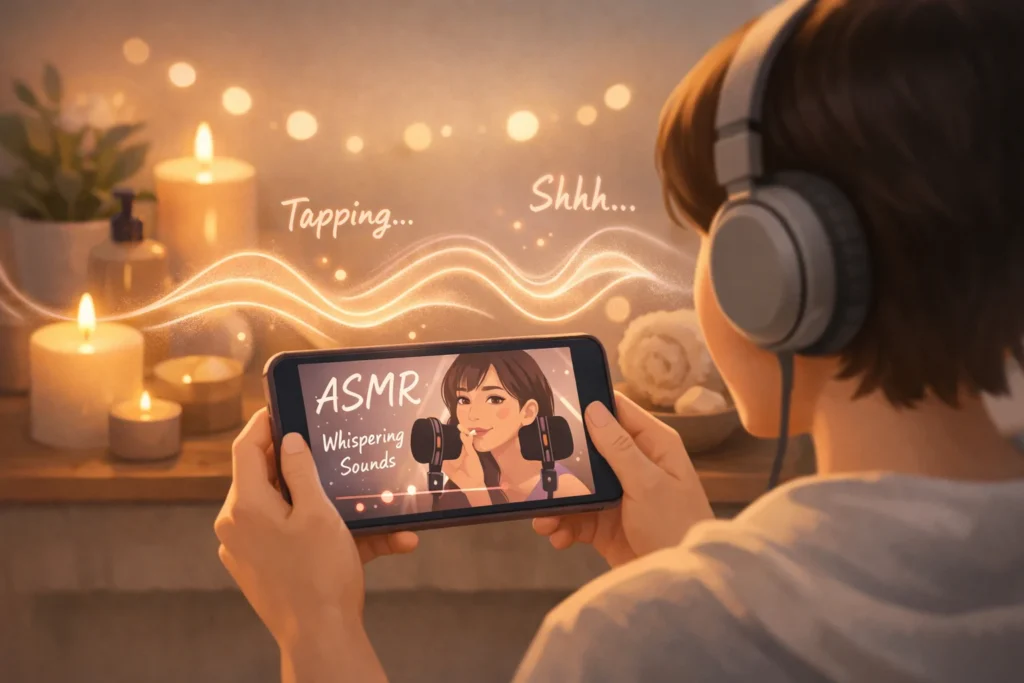
ASMR stands for “Autonomous Sensory Meridian Response.” It describes a relaxing, tingling sensation some people feel in response to specific sounds, visuals, or gentle actions like whispering, tapping, or slow movements.
ASMR is widely used in videos and online content to help people relax, reduce stress, and sometimes fall asleep.
If you’ve ever been scrolling on YouTube, TikTok, or Instagram and suddenly seen someone whispering softly, tapping objects, or brushing a microphone—then you’ve already come across ASMR.
Some people say it feels incredibly relaxing, while others don’t feel anything at all. That’s what makes ASMR so interesting—it’s a unique sensory experience that doesn’t affect everyone the same way.
In recent years, ASMR has become a huge internet trend, with millions of videos created specifically to trigger calming sensations.
But what does ASMR actually stand for, and why do people love it so much?
Let’s break it down in a simple and complete way.
What Does ASMR Stand For?
Featured Answer:
ASMR = Autonomous Sensory Meridian Response
Simple Meaning:
ASMR is a term used to describe a pleasant tingling sensation that starts usually on the scalp and moves down the neck and spine when a person experiences certain sounds or gentle stimuli.
Easy Explanation:
ASMR is a relaxing feeling triggered by soft sounds or calming visuals.
What Does ASMR Feel Like?
Not everyone experiences ASMR, but those who do often describe it as:
- A tingling sensation in the head or neck
- A feeling of deep relaxation 😌
- Calmness or stress relief
- Sleepiness or comfort
- Emotional warmth
Example:
Someone whispering softly or tapping a glass might make you feel relaxed or even sleepy.
Origin of ASMR
The term ASMR is relatively new.
Timeline:
- Before 2010: People experienced the sensation but had no name for it
- 2010: The term “Autonomous Sensory Meridian Response” was created online
- After 2010: ASMR videos started spreading on YouTube
- Today: Millions of ASMR creators exist worldwide
ASMR became especially popular on platforms like:
- YouTube
- TikTok
- Instagram Reels
Why Is ASMR So Popular?
ASMR became viral for several reasons:
1. Stress Relief
Many people use ASMR to relax after a long day.
2. Sleep Aid 😴
ASMR videos help some people fall asleep faster.
3. Curiosity
People are curious about the “tingling sensation.”
4. Internet Culture
Short-form content made ASMR easier to share and watch.
Common ASMR Triggers
ASMR is triggered by specific sounds or actions.
Popular ASMR triggers:
- Whispering voice
- Tapping sounds
- Brushing sounds
- Crinkling paper
- Soft speaking
- Page turning
- Keyboard typing
- Water dripping
- Hair brushing
Visual triggers:
- Slow hand movements
- Personal attention roleplays
- Gentle object handling
Types of ASMR Content
ASMR videos come in many styles.
1. Whisper ASMR
Soft whispering into a microphone.
2. Tapping ASMR
Tapping on glass, wood, or plastic objects.
3. Roleplay ASMR
Example:
- Haircut simulation
- Doctor check-up
- Spa treatment
4. Eating ASMR (Mukbang style)
Crunchy eating sounds like chips or noodles.
5. Nature ASMR
Rain sounds, wind, forest ambience.
Is ASMR Real or Just Psychological?
ASMR is real in the sense that many people experience it, but it is not fully understood scientifically.
What research suggests:
- ASMR may activate relaxation responses in the brain
- It can reduce stress and heart rate in some individuals
- Not everyone is sensitive to ASMR triggers
Important point:
ASMR is subjective—some people feel it strongly, others don’t feel anything.
Benefits of ASMR
ASMR is often used for relaxation and mental comfort.
Possible benefits:
- Reduces stress
- Helps with sleep
- Improves mood
- Creates calm focus
- May reduce anxiety in some people
Comparison: ASMR vs Similar Concepts
| Term | Meaning | Difference |
|---|---|---|
| ASMR | Relaxing sensory response | Tingling relaxation feeling |
| White Noise | Background sound | No tingling, just sound masking |
| Meditation | Mental relaxation practice | Focus-based, not sound-triggered |
| Hypnosis | Guided mental state | Controlled suggestion technique |
Who Experiences ASMR?
Not everyone feels ASMR.
People who often experience it:
- Teens and young adults
- People sensitive to sound
- Individuals who enjoy calming content
People who may not feel it:
- Some adults
- People less sensitive to sensory triggers
- Those who prefer active stimulation
Is ASMR Safe?
Yes, ASMR is generally completely safe.
Important points:
- It is non-medical content
- No physical harm
- No addictive chemical effect
- Safe for most viewers
However, like any content, it should be consumed in moderation.
Real-Life Example of ASMR
Example 1:
You’re watching a video where someone softly whispers and taps on a wooden box. You feel relaxed and sleepy.
Example 2:
You hear rain sounds while studying and feel calm and focused.
Example 3:
A haircut roleplay video makes you feel like you are actually in a salon.
Why ASMR Works Differently for Everyone
ASMR response depends on:
- Brain sensitivity
- Personality
- Past experiences
- Stress levels
- Environment
That’s why two people can watch the same ASMR video and feel completely different reactions.
ASMR in Modern Social Media
ASMR is now a major content category online.
Platforms where ASMR is huge:
- YouTube ASMR channels
- TikTok short ASMR clips
- Instagram Reels
- Twitch livestreams
Some creators even build full careers from ASMR content.
FAQs:
1. What is ASMR in simple words?
ASMR is a relaxing feeling triggered by soft sounds or visuals.
2. What does ASMR stand for exactly?
ASMR stands for Autonomous Sensory Meridian Response.
3. Is ASMR good for sleep?
Yes, many people use ASMR to help fall asleep.
4. Why do people whisper in ASMR videos?
Whispering creates calming sound triggers for relaxation.
5. Does everyone feel ASMR?
No, only some people experience the tingling sensation.
6. Is ASMR scientifically proven?
It is still being studied, but early research shows relaxation effects.
7. Can ASMR reduce anxiety?
It may help some people feel calmer and less stressed.
8. Is ASMR addictive?
No, it is not chemically addictive, but people may enjoy it regularly.
Conclusion:
ASMR stands for Autonomous Sensory Meridian Response, a unique sensory experience that creates a calming, tingling sensation in response to soft sounds and gentle stimuli.
It has become extremely popular online because it helps people:
- Relax
- Sleep better
- Reduce stress
- Enjoy calming content
However, not everyone experiences ASMR the same way, and that’s completely normal.
Understanding ASMR helps you recognize why these videos are so popular and whether they might work for you.
Discover More Related Articles:
- What Does Magnesium Do for the Body: How It Supports Energy Production In 2026
- What Does Catnip Do to Cats: Effects, Benefits & Surprising Facts In 2026

Madison Taylor is an experienced content writer who focuses on researching and explaining word meanings, slang, and texting terms. She writes for meanvoro.com, creating clear and accurate to help readers understand language easily.