Definition
Green poop usually means that food moved through the digestive system too quickly or that certain foods, supplements, or medications affected stool color. In many cases, green stool is harmless and temporary, especially after eating leafy greens, food coloring, or iron supplements.
However, persistent green poop accompanied by pain, diarrhea, fever, or dehydration may indicate an infection or digestive issue.
Seeing green poop in the toilet can definitely catch you off guard. Most people expect stool to be brown, so a sudden green color may feel alarming or even scary at first.
The good news is that green poop is often completely harmless and linked to everyday things like:
- Diet changes
- Food coloring
- Vitamins
- Fast digestion
Still, there are situations where green stool may signal an underlying health issue, especially if it lasts for several days or comes with other symptoms.
In this complete guide, you’ll learn:
- What green poop means
- Common causes
- What different shades may indicate
- When to see a doctor
- Helpful treatment and prevention tips
What Does Green Poop Mean?
Green poop simply means your stool contains more green pigments than usual.
Normally, stool becomes brown because bile changes color as it moves through the intestines. Bile starts as a greenish-yellow fluid produced by the liver to help digest fats.
When digestion happens too quickly, bile may not fully break down, causing poop to appear green.
Simple Explanation:
Green poop usually happens because of food, supplements, medications, or rapid digestion.
What Causes Green Poop?
There are many possible reasons for green stool. Some are completely harmless, while others may need medical attention.
Green Foods and Diet
One of the most common causes of green poop is eating green-colored foods.
Foods that may cause green stool:
- Spinach
- Kale
- Broccoli
- Green smoothies
- Matcha
- Seaweed
- Artificial green food coloring
Example:
If you recently ate a large salad or drank green juice, your stool may temporarily turn green.
Food Coloring and Artificial Dyes
Brightly colored snacks and drinks can also affect stool color.
Common culprits:
- Green frosting
- Candy
- Sports drinks
- Ice cream
- Cake decorations
Artificial dyes may pass through the digestive system without fully breaking down.
Diarrhea and Fast Digestion
When food moves too quickly through the intestines, bile doesn’t have enough time to turn brown.
This often happens during:
- Stomach infections
- Food poisoning
- Viral illness
- Digestive upset
Symptoms that may appear:
- Loose stool
- Stomach cramps
- Nausea
- Frequent bathroom trips
Iron Supplements
Iron pills can change stool color to:
- Dark green
- Greenish-black
- Black
This is a common side effect and usually not dangerous.
Antibiotics and Medications
Some medications can affect gut bacteria and digestion, leading to green stool.
Examples:
- Antibiotics
- Certain laxatives
- Some anti-inflammatory medicines
Changes in gut bacteria may temporarily alter stool color.
Infections and Digestive Conditions
Sometimes green poop may point to an infection or gastrointestinal condition.
Possible medical causes:
- Salmonella infection
- Stomach virus
- Irritable bowel syndrome (IBS)
- Crohn’s disease
- Celiac disease
These conditions often come with additional symptoms like:
- Fever
- Weight loss
- Severe cramps
- Ongoing diarrhea
What Different Shades of Green Poop Can Mean
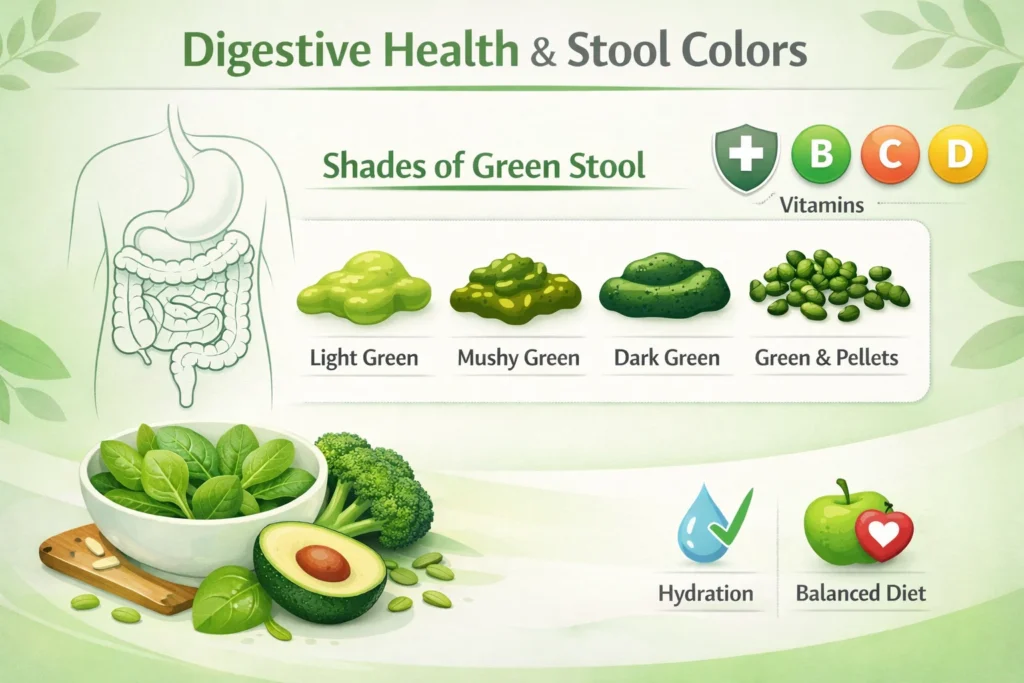
The exact shade of green may offer clues about the cause.
| Shade of GreenPossible Meaning | |
|---|---|
| Light green | Fast digestion or vegetables |
| Dark green | Leafy greens or iron |
| Bright green | Food coloring |
| Green with diarrhea | Infection or stomach bug |
| Greenish-black | Iron supplements |
Is Green Poop Dangerous?
In most cases, green poop is not dangerous.
It often goes away within a day or two after:
- Diet changes
- Recovery from illness
- Stopping certain foods or supplements
However, persistent green stool should not be ignored if it comes with other symptoms.
When Should You See a Doctor?
You should consider medical advice if green poop lasts more than a few days or comes with concerning symptoms.
Warning signs include:
- Severe stomach pain
- Blood in stool
- Fever
- Dehydration
- Vomiting
- Unexplained weight loss
- Chronic diarrhea
These symptoms may suggest infection or digestive disease.
Green Poop in Babies and Children
Green poop is actually very common in babies and young children.
In babies, green stool may happen because of:
- Breastfeeding changes
- Formula feeding
- Iron-fortified formula
- Mild stomach upset
Usually, it’s harmless unless accompanied by:
- Fever
- Refusal to eat
- Extreme fussiness
- Dehydration
Parents should contact a pediatrician if symptoms seem serious.
Green Poop During Pregnancy
Pregnant women may notice green stool due to:
- Prenatal vitamins with iron
- Dietary changes
- Hormonal shifts
- Increased leafy greens intake
Most cases are temporary and harmless.
Real-Life Examples of Green Poop Causes
Example 1:
“I drank spinach smoothies all week and noticed dark green stool.”
Likely cause: leafy greens.
Example 2:
“I had food poisoning and green diarrhea for two days.”
Likely cause: rapid digestion.
Example 3:
“After starting iron tablets, my stool turned greenish-black.”
Likely cause: iron supplements.
Comparison: Green Poop vs Other Stool Colors
Different stool colors can mean different things.
| Stool Color | Common Meaning |
|---|---|
| Brown | Normal digestion |
| Green | Fast digestion or diet |
| Black | Iron or possible bleeding |
| Yellow | Fat absorption issues |
| Red | Food coloring or blood |
| Pale/white | Liver or bile problems |
How to Treat Green Poop
Treatment depends on the cause.
Helpful steps:
- Drink plenty of water
- Avoid irritating foods
- Rest if sick
- Monitor symptoms
- Reduce artificial dyes if needed
If green stool is linked to medication, consult a healthcare professional before stopping medicine.
How to Prevent Green Poop
You may not always prevent it, but these habits can help:
Prevention tips:
- Eat balanced meals
- Avoid excessive food coloring
- Stay hydrated
- Wash hands to avoid infections
- Take supplements as directed
Common Myths About Green Poop
Myth 1: Green poop always means illness
False. Diet is the most common cause.
Myth 2: Green stool is always dangerous
False. Temporary green stool is usually harmless.
Myth 3: Only children get green poop
False. Adults experience it too.
FAQs:
1. Is green poop normal?
Yes, occasional green poop is usually normal.
2. What foods cause green stool?
Leafy greens, green food coloring, and iron-rich foods are common causes.
3. Can stress cause green poop?
Stress may affect digestion and sometimes contribute to diarrhea-related green stool.
4. Is green poop a sign of infection?
Sometimes, especially if accompanied by diarrhea or fever.
5. Why is my poop green after antibiotics?
Antibiotics can change gut bacteria and digestion speed.
6. Should I worry about green poop during pregnancy?
Usually no, especially if linked to prenatal vitamins or diet.
7. How long should green poop last?
Most cases resolve within a few days.
8. Can dehydration cause green poop?
Dehydration itself doesn’t directly cause it, but illnesses causing diarrhea may lead to both dehydration and green stool.
Conclusion:
Green poop may look unusual, but it’s often harmless and temporary. In many cases, it’s simply caused by:
- Green vegetables
- Food coloring
- Iron supplements
- Fast digestion
Still, paying attention to other symptoms is important. If green stool continues for several days or comes with pain, fever, or blood, medical advice is recommended.
Understanding what green poop means can help reduce unnecessary worry and make it easier to know when professional care is needed.
Discover More Related Articles:
- “NT” Mean in Gaming: GO, and Other Multiplayer Games for 2026
- Forced Air Mean in a House: A Homeowner’s Beginner Guide for 2026

Jessica Brown is a language-focused writer who creates well-researched articles on word meanings, abbreviations, and everyday expressions. She contributes to meanvoro.com, delivering simple, reliable, and reader-friendly content designed to make complex terms easy to understand.