Definition
Herpes usually looks like small painful blisters or fluid-filled sores that appear in clusters around the mouth, lips, genitals, buttocks, or nearby skin.
Herpes is caused by the herpes simplex virus (HSV), and it can affect the mouth (oral herpes) or the genital area (genital herpes). What makes it tricky is that its appearance is not always the same for everyone. Sometimes it shows up as tiny fluid-filled blisters in clusters, while other times it may look like a single sore, redness, or even just a mild itch before anything becomes visible.
In this article, we’ll break down exactly what herpes looks like at different stages, how it can vary from person to person, and how to tell it apart from similar skin conditions. You’ll also find real-world examples, comparisons, and easy explanations so you can understand the condition clearly without confusion or fear.
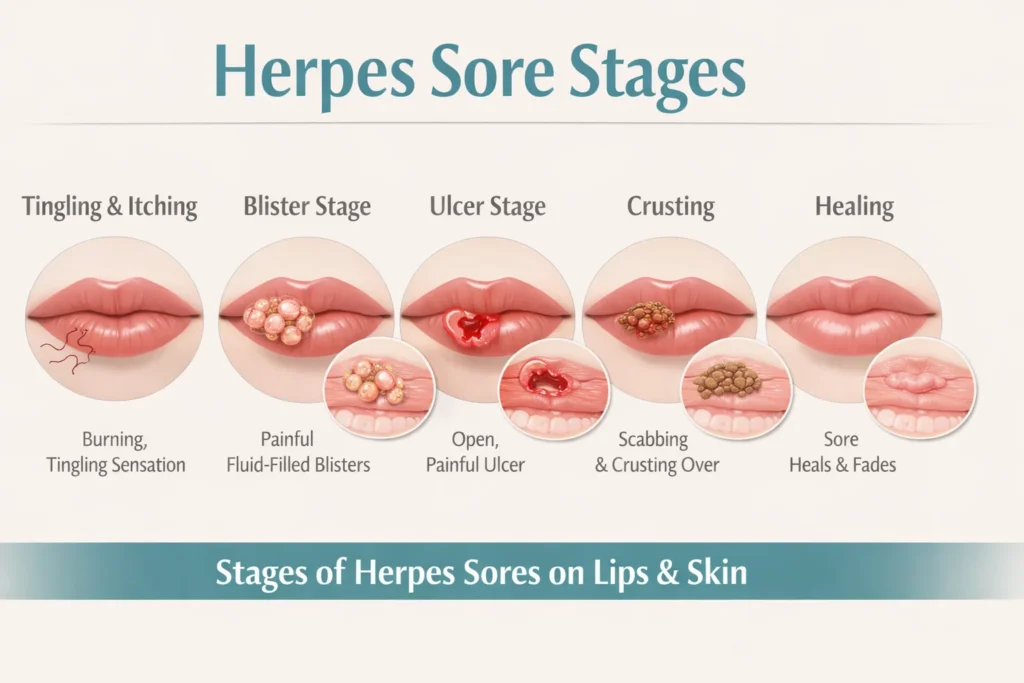
These sores may start as itching, tingling, redness, or tiny bumps before turning into blisters that burst, crust over, and heal within a few weeks. Herpes symptoms can vary from mild to severe, and some people may have no visible signs at all.
Understanding What Herpes Really Looks Like
If you’ve ever searched “what does herpes look like,” you’re definitely not alone. Many people notice a bump, rash, blister, or irritation and immediately wonder if it could be herpes. The challenge is that herpes symptoms can look different from person to person and may resemble pimples, ingrown hairs, razor burn, allergic reactions, or other skin conditions.
That’s why understanding the visual signs, stages, and common symptoms is important.
Herpes is a very common viral infection caused by the herpes simplex virus (HSV). There are two main types:
- HSV-1 – Most commonly linked to oral herpes or cold sores around the mouth
- HSV-2 – More commonly associated with genital herpes
However, both types can affect either the mouth or genitals.
What Do Herpes Sores Look Like?
Herpes sores often follow a recognizable pattern. They usually begin with irritation before turning into visible blisters.
Common Visual Signs of Herpes
Herpes may appear as:
- Tiny fluid-filled blisters
- Clusters of sores grouped together
- Red or inflamed skin
- Open ulcers after blisters burst
- Yellowish crusting during healing
- Painful or tender spots
- Itchy or burning patches
The sores can be:
- Small or large
- Flat or raised
- Clear, white, red, or yellowish
- Mild or extremely painful
Some outbreaks are barely noticeable, while others are more severe.
What Does Oral Herpes Look Like?
Oral herpes commonly appears around the lips or mouth and is often called a cold sore or fever blister.
Typical Appearance of Oral Herpes
Oral herpes may include:
| Stage | What It Looks Like |
|---|---|
| Early stage | Tingling, itching, or burning around lips |
| Blister stage | Small fluid-filled blisters appear |
| Ulcer stage | Blisters break open and become sores |
| Healing stage | Crusting and scabbing form |
Common Locations
- Lips
- Corners of the mouth
- Around the nose
- Chin
- Inside the mouth (sometimes)
Symptoms Often Included
- Pain or tenderness
- Burning sensation
- Swollen lips
- Mild fever during first outbreak
- Swollen lymph nodes
What Does Genital Herpes Look Like?
Genital herpes can look different depending on skin tone, outbreak severity, and whether it’s a first infection or a recurring outbreak.
Common Appearance of Genital Herpes
Genital herpes may appear as:
- Small blisters around the genitals
- Painful open sores
- Tiny red bumps
- Raw irritated patches
- Crusting during healing
Common Locations in Females
- Vulva
- Vaginal area
- Buttocks
- Inner thighs
- Around the anus
Common Locations in Males
- Penis
- Scrotum
- Groin
- Buttocks
- Around the anus
What Does Early Herpes Look Like?
The earliest herpes symptoms are often easy to miss.
Before visible sores appear, many people experience:
- Tingling
- Itching
- Burning
- Skin sensitivity
- Mild redness
This stage is called the prodrome stage and may happen hours or days before blisters form.
Some people mistake early herpes for:
- Chafing
- Razor burn
- Acne
- Heat rash
- Irritation from clothing
Herpes Stages: How It Changes Over Time
Herpes sores usually go through several stages.
| Stage | Appearance | Duration |
|---|---|---|
| Tingling stage | Itching or burning skin | 1–2 days |
| Blister stage | Small fluid-filled bumps | 2–4 days |
| Ulcer stage | Blisters burst into sores | Several days |
| Crusting stage | Scabs or dry skin form | 3–7 days |
| Healing stage | Skin clears up | 1–2 weeks |
First outbreaks are often more noticeable than future ones.
Does Herpes Always Look Obvious?
No. Many herpes cases are very mild.
Some people have:
- One tiny sore
- A crack in the skin
- Mild redness
- Symptoms mistaken for pimples
- No symptoms at all
This is why herpes can spread without someone realizing they have it.
What Can Be Mistaken for Herpes?
Many skin conditions can resemble herpes.
Common Conditions Confused With Herpes
| Condition | How It Differs |
|---|---|
| Pimples | Usually contain pus, not clear fluid |
| Ingrown hairs | Often centered around hair follicles |
| Razor burn | Appears after shaving with widespread irritation |
| Yeast infection | Usually causes itching without blisters |
| Allergic reaction | More widespread rash than clustered sores |
| Canker sores | Occur inside mouth, not outside lips |
| Syphilis | Often painless sores instead of painful blisters |
Because symptoms overlap, testing is the only reliable way to confirm herpes.
What Does Herpes Look Like on Different Skin Tones?
Herpes can appear differently depending on skin color.
On Lighter Skin
- Redness may be more visible
- Sores may look pink or bright red
- Crusting may appear yellowish
On Darker Skin
- Sores may look purple, brown, or darker than surrounding skin
- Redness may be less noticeable
- Healing spots may temporarily darken
This variation sometimes makes diagnosis more difficult without medical evaluation.
What Does a First Herpes Outbreak Look Like?
The first outbreak is often the most intense.
Symptoms may include:
- Multiple painful blisters
- Fever
- Body aches
- Swollen lymph nodes
- Pain during urination
- Fatigue
The first outbreak may last 2–4 weeks before healing.
Later outbreaks are usually shorter and milder.
What Does Recurrent Herpes Look Like?
Recurring herpes outbreaks are often less severe.
They may include:
- Fewer sores
- Mild itching
- Small clusters of blisters
- Faster healing
- Less pain
Some people recognize warning signs before outbreaks happen.
Common triggers include:
- Stress
- Illness
- Sun exposure
- Hormonal changes
- Lack of sleep
Can Herpes Look Like a Pimple?
Yes, herpes is frequently mistaken for pimples.
Differences Between Herpes and Pimples
| Feature | Herpes | Pimple |
|---|---|---|
| Pain | Often painful or burning | Usually mild tenderness |
| Fluid | Clear fluid in blisters | White or yellow pus |
| Pattern | Clustered sores | Single bump |
| Healing | Crusts and scabs | Dries gradually |
| Tingling | Common before outbreak | Rare |
A single bump doesn’t automatically mean herpes.
Can Herpes Appear Inside the Mouth?
Yes. Oral herpes may appear:
- On gums
- Tongue
- Roof of mouth
- Inside cheeks
These sores may feel painful while eating or drinking.
However, sores only inside the mouth are sometimes more likely to be canker sores rather than herpes.
How Common Is Herpes?
Herpes is extremely common worldwide.
Millions of people have HSV-1 or HSV-2, and many never know they’re infected because symptoms can be mild or absent.
This is one reason awareness and testing matter.
How Is Herpes Diagnosed?
Doctors may diagnose herpes through:
- Physical examination
- Swab testing from sores
- Blood tests
If you notice unusual sores, blisters, or recurring symptoms, a healthcare professional can help determine the cause.
When Should You See a Doctor?
You should consider medical advice if:
- You have painful blisters or sores
- Symptoms keep returning
- You experience fever or severe pain
- You are unsure whether it’s herpes
- Symptoms interfere with daily life
Getting evaluated early can help reduce discomfort and provide answers.
Emotional Impact and Common Misconceptions
Many people feel anxious after noticing symptoms or hearing the word “herpes.” However, herpes is a common medical condition and does not define someone’s worth, cleanliness, or lifestyle.
Common Myths
| Myth | Reality |
|---|---|
| Only certain people get herpes | Anyone can get herpes |
| Herpes is always obvious | Many people have mild symptoms |
| You can always tell visually | Testing is often necessary |
| Herpes never improves | Many people have infrequent outbreaks |
Accurate information helps reduce unnecessary fear and stigma.
Professional and Medical Terms Related to Herpes
Here are a few related terms you may encounter:
| Term | Meaning |
|---|---|
| HSV | Herpes simplex virus |
| Cold sore | Oral herpes blister |
| Fever blister | Another name for cold sore |
| Outbreak | Active period of sores |
| Lesion | Medical term for sore or skin change |
Real-World Examples of How People Describe Herpes Symptoms
People often describe herpes symptoms differently.
Common Descriptions
- “It felt like burning before I saw anything.”
- “The sores looked like tiny water blisters.”
- “I thought it was razor burn at first.”
- “It started as one bump and turned into clustered sores.”
Because symptoms vary, visual appearance alone isn’t always enough for diagnosis.
Practical Tips If You Notice Possible Symptoms
If you think you may have herpes symptoms:
- Avoid picking at sores
- Keep the area clean and dry
- Avoid sharing items that touch sores
- Consider medical testing for confirmation
- Avoid self-diagnosing based only on internet images
Internet photos often show severe cases and may not reflect mild outbreaks.
FAQs
Can herpes look like just on e bump?
Yes. Some herpes outbreaks appear as a single bump or sore rather than multiple blisters.
What color are herpes sores?
Herpes sores may look red, pink, white, yellowish, or skin-colored depending on the stage and skin tone.
Does herpes itch or hurt?
Herpes often causes itching, burning, tingling, tenderness, or pain, especially during outbreaks.
Can herpes look like acne?
Yes. Herpes is commonly mistaken for pimples or ingrown hairs, especially in mild cases.
How long do herpes sores last?
Most outbreaks heal within 1–3 weeks depending on severity and whether it’s a first outbreak.
Is herpes always visible?
No. Many people with herpes have very mild symptoms or no visible symptoms at all.
What does healing herpes look like?
Healing herpes sores often dry out, crust over, scab, and gradually fade.
Can you identify herpes by appearance alone?
Not always. Many conditions resemble herpes, so medical testing is the most accurate way to confirm it.
Conclusion
Understanding what herpes looks like can help reduce confusion, panic, and misinformation. Herpes commonly appears as clusters of painful blisters or sores that go through stages including tingling, blistering, ulcer formation, crusting, and healing. However, symptoms vary widely from person to person.
Some outbreaks are very noticeable, while others are so mild they’re mistaken for pimples, irritation, or ingrown hairs. Because herpes can resemble many other skin conditions, professional medical testing is the most reliable way to know for sure.
The most important takeaway is this: noticing symptoms does not mean you should panic or assume the worst. Accurate information, proper medical guidance, and early evaluation are the best steps forward.
Discover More Related Articles:
- What Does Skin Cancer Look Like: Types & Their Visible Symptoms In 2026
- Third Base Mean in a Relationship: Decoding Relationship Lingo In 2026

Ryan Thompson is an experienced content writer specializing in slang terms, texting abbreviations, and word meanings. He writes for meanvoro.com, where he creates accurate and easy-to-understand language content for readers.