
Definition
Dry socket is a dental condition where the blood clot at the site of a tooth extraction becomes dislodged or dissolves, exposing the underlying bone and nerves.
If you’ve recently had a tooth removed—especially a wisdom tooth—you might be worried about complications. One of the most common concerns is something called dry socket, and many people start searching: what does dry socket look like?
This worry usually comes from discomfort after extraction, unusual pain, or a healing area that doesn’t “look right.” Understanding how dry socket appears can help you recognize it early, avoid panic, and know when to contact a dentist.
Dry socket is not just about appearance—it is also about pain level, healing delay, and exposed bone inside the socket. In this guide, we’ll break everything down in a simple, human-friendly way so you know exactly what to look for and what to expect.
In simple terms:
- The extraction site looks empty or hollow
- You may see white bone instead of dark red clot
- The area may look dry, irritated, or slightly grayish
- Healing tissue is missing or delayed
This is often accompanied by intense pain, especially 2–5 days after tooth removal.
Understanding Dry Socket in Simple Words
Dry socket (medical term: alveolar osteitis) is a complication that happens after a tooth is pulled out. Normally, a blood clot forms in the socket to protect the bone and nerves underneath.
When that clot:
- Falls out too early, or
- Doesn’t form properly
…the bone gets exposed, leading to pain and slow healing.
It is most common after:
- Wisdom tooth removal
- Difficult extractions
- Smoking or poor aftercare
- Using straws too early after surgery
What Does Dry Socket Look Like Visually?
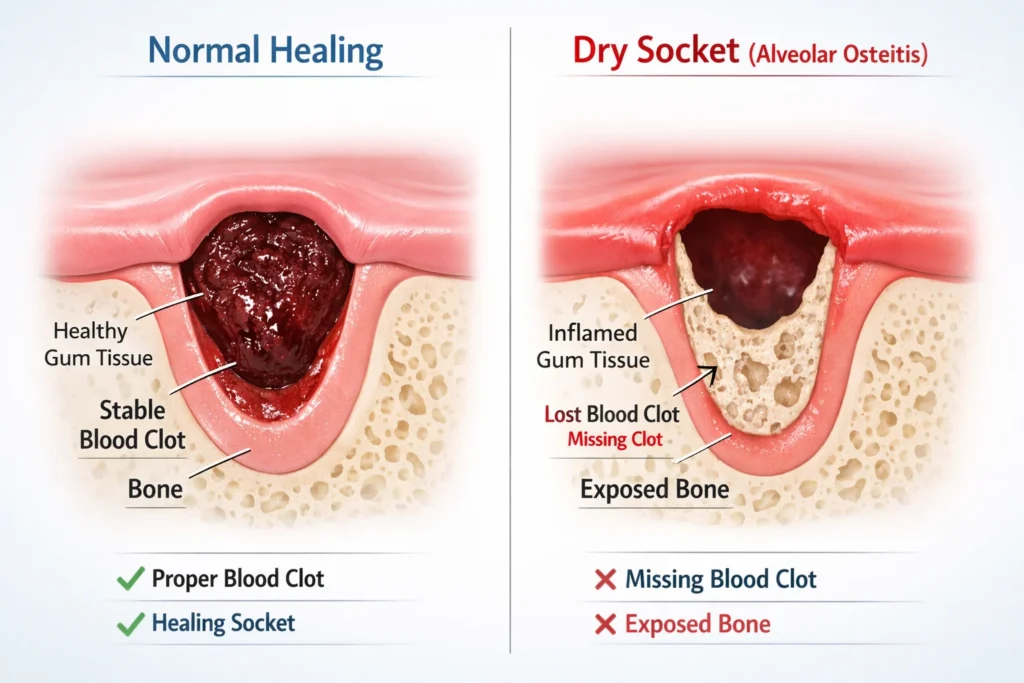
When people ask “what does dry socket look like,” they are usually trying to compare normal healing vs abnormal healing.
Here’s what you might notice:
1. Empty-looking socket
Instead of a dark red or dark brown clot, the socket may look hollow.
2. Visible bone
A key sign is a white or light-colored bone surface inside the hole.
3. No blood clot
A normal healing socket has a clot. Dry socket often looks like it is missing.
4. Dry or irritated tissue
The area may look dry, shiny, or inflamed.
5. Possible bad odor
Although not visible, dry socket may be associated with unpleasant smell or taste.
Comparison: Normal Healing vs Dry Socket Appearance
| Feature | Normal Healing Socket | Dry Socket |
|---|---|---|
| Blood clot | Present (dark red/black) | Missing or dissolved |
| Appearance | Covered, healing tissue forming | Hollow, exposed bone visible |
| Color | Red → pink → light tissue | White/gray bone visible |
| Pain level | Mild and improving | Severe and increasing |
| Odor | None or mild | Often unpleasant smell |
This table helps quickly understand the difference between normal healing and a problematic socket.
Origin and Medical Background of Dry Socket
Dry socket has been recognized in dentistry for decades. The medical term alveolar osteitis describes inflammation of the bone socket after tooth extraction.
Why it happens:
- Loss of protective blood clot
- Bacteria exposure in the socket
- Poor blood supply to the area
Why it is called “dry socket”:
Because the socket looks dry instead of filled with a protective clot.
The term became popular because patients often notice the visual “empty hole” appearance combined with severe pain.
Why Dry Socket Looks the Way It Does
The appearance is directly linked to what is happening inside your mouth:
- No clot = bone exposed
- Bone exposure = white/gray visible surface
- Healing delay = empty-looking cavity
- Irritation = inflamed surrounding gums
This is why dry socket has such a distinct visual look compared to normal healing.
Common Symptoms Along With Appearance
Dry socket is not only visual—it also has strong symptoms:
Main symptoms:
- Severe throbbing pain (often radiating to ear or jaw)
- Pain starting 2–5 days after extraction
- Visible empty socket
- Bad taste in mouth
- Bad breath
- Pain not relieved by normal painkillers
If the socket looks abnormal AND pain is increasing, it may indicate dry socket.
Real-Life Examples of How People Describe It
Here are some common ways patients describe what they see:
- “It looks like a deep hole with something white inside.”
- “The blood clot disappeared and now I can see bone.”
- “It looks dry instead of dark and filled.”
- “It hurts more and the socket looks empty.”
These descriptions match the typical visual appearance of dry socket.
When Does Dry Socket Usually Appear?
Dry socket doesn’t show up immediately. It usually appears:
- 2 to 5 days after tooth extraction
- After initial bleeding has stopped
- When clot dislodges or breaks down
If the socket looks unusual on day 1, it is usually normal healing—not dry socket yet.
Related Terms and Similar Conditions
To better understand dry socket, it helps to compare it with related dental terms:
1. Normal healing socket
A healthy clot forms and gradually turns into gum tissue.
2. Infection
Caused by bacteria, may include swelling and pus (different from dry socket).
3. Bone exposure
A general term where bone is visible (dry socket is one cause).
4. Post-extraction pain
Normal discomfort after tooth removal, usually mild and improving.
Alternate Meanings of “Dry Socket”
In dental context, “dry socket” has only one meaning. However, in casual conversation, people may confuse it with:
- “Empty tooth hole”
- “Complication after tooth extraction”
- “Exposed bone in mouth”
There are no other major non-medical meanings.
Professional vs Patient Language
Dentists may use formal terms, while patients describe it differently:
| Professional Term | Patient-Friendly Version |
|---|---|
| Alveolar osteitis | Dry socket |
| Socket without clot | Empty hole |
| Bone exposure | White thing inside tooth hole |
| Post-extraction complication | Healing problem after tooth removal |
Understanding both helps in communication with dentists.
What to Do If You Think It Looks Like Dry Socket
If you suspect dry socket based on appearance:
- Avoid touching the area
- Do not rinse aggressively
- Contact a dentist quickly
- Follow professional cleaning and dressing instructions
Only a dentist can confirm the condition properly.
Prevention Tips
To reduce the risk of dry socket:
- Avoid smoking for at least 48–72 hours
- Don’t use straws after extraction
- Follow aftercare instructions carefully
- Eat soft foods
- Keep mouth clean but gentle
These steps help protect the blood clot.
FAQs
- What does dry socket look like in the mouth?
It usually looks like an empty space where the tooth was removed, sometimes with visible white or light gray bone instead of a blood clot. - How can I tell if it is dry socket or normal healing?
Dry socket typically looks dry, empty, and is accompanied by increasing pain. Normal healing shows a dark blood clot and gradually improving discomfort. - Does dry socket always look white?
Often yes, because exposed bone can appear white or light gray. However, it may also look simply hollow or dry without a clear color. - Is dry socket visible to the eye?
Yes, in many cases it can be seen as an empty socket where the blood clot is missing or has dissolved. - When does dry socket appear visually?
It usually becomes noticeable around 2–5 days after a tooth extraction, once the initial healing clot is lost. - Does dry socket smell bad?
Yes, it can sometimes cause bad breath or an unpleasant taste in the mouth due to exposed bone and bacteria. - Can dry socket heal on its own?
Yes, it eventually heals naturally, but dental treatment is often needed to reduce pain and protect the exposed area during healing. - Is dry socket dangerous?
It is not life-threatening, but it can be very painful and should be treated by a dentist to prevent complications and speed up recovery.
Conclusion:
Understanding what dry socket looks like helps you identify it early and avoid unnecessary worry after tooth extraction. The key visual signs include an empty-looking socket, visible bone, missing blood clot, and a dry appearance. It is usually accompanied by strong, increasing pain a few days after surgery.
While it can look alarming, dry socket is treatable and temporary. Recognizing it early and getting dental care ensures faster relief and proper healing. The most important step is to monitor your recovery and follow post-extraction instructions carefully.
Discover More Related Articles:
- What does similar mean in math: Complete Beginner’s Guide In 2026
- A Bed Bug Look Like: Size, Shape & Color In 2026

Ryan Thompson is an experienced content writer specializing in slang terms, texting abbreviations, and word meanings. He writes for meanvoro.com, where he creates accurate and easy-to-understand language content for readers.