Definition
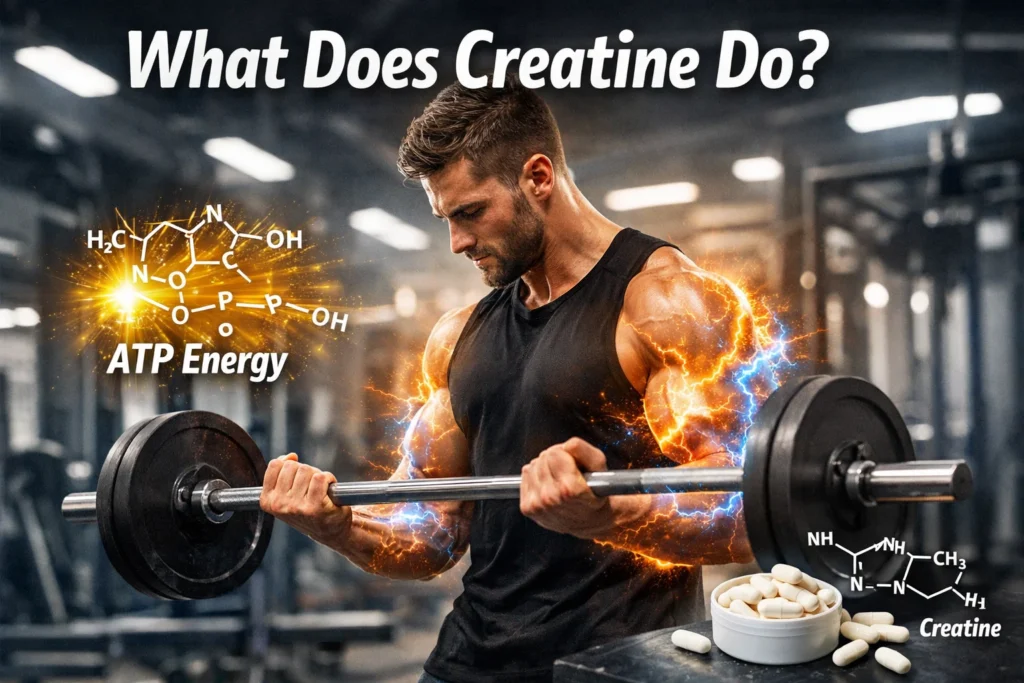
Creatine is a natural substance found in muscle cells that helps produce energy during high-intensity exercise.
It works by rapidly regenerating ATP (adenosine triphosphate), the body’s primary energy source, which improves strength, power, and exercise performance.
If you’ve ever been around fitness communities, gym workouts, or sports training, you’ve probably heard people mention creatine more than once. From athletes to beginners trying to build muscle, this supplement has become one of the most researched and widely used performance enhancers in the world.
But here’s the real question people ask:
What does creatine actually do in the body—and is it worth it?
The answer is more interesting than just “it helps build muscle.” Creatine plays a key role in energy production, strength development, brain function, and workout performance. It’s not a magic powder, but a scientifically proven compound your body already uses every single day.
Let’s break it down in a simple, human-friendly way.
Origin of Creatine and Why It Became Popular
Creatine was discovered in the early 1800s by a French scientist named Michel Eugène Chevreul. The name comes from the Greek word kreas, meaning “meat,” because it was first found in animal muscle tissue.
However, creatine became globally popular in the 1990s when athletes and bodybuilders began using it for:
- Faster muscle recovery
- Increased strength
- Better sprint performance
Since then, thousands of scientific studies have confirmed its effectiveness, making it one of the most trusted supplements in sports nutrition today.
What Does Creatine Do in the Body?
At its core, creatine acts like a quick energy booster for your muscles.
When you perform intense activity—like sprinting, lifting weights, or jumping—your body uses a molecule called ATP for energy. The problem? ATP runs out very quickly.
This is where creatine helps:
- It restores ATP faster
- It allows you to train harder for longer
- It improves short bursts of high-intensity performance
In simple words:
Creatine helps your muscles recharge energy faster so you can push harder during workouts.
Key Benefits of Creatine
Creatine offers multiple science-backed benefits, especially for active individuals.
1. Increased Strength
Creatine helps you lift heavier weights and perform more reps.
2. Muscle Growth Support
It increases water content in muscle cells, making them look fuller and supporting long-term muscle growth.
3. Improved Exercise Performance
Perfect for activities like:
- Sprinting
- Weightlifting
- Football or basketball
- HIIT workouts
4. Faster Recovery
Reduces muscle fatigue and improves recovery between sets.
5. Brain Function Support
Some studies suggest creatine may support memory and cognitive performance, especially during stress or sleep deprivation.
How Creatine Works (Simple Breakdown)
Here’s a quick table to understand it better:
| Step | What Happens |
|---|---|
| 1 | You perform high-intensity activity |
| 2 | Your body uses ATP for energy |
| 3 | ATP gets depleted quickly |
| 4 | Creatine phosphate helps regenerate ATP |
| 5 | You regain energy faster and continue performance |
Real-Life Examples of Creatine Use
Example 1: Gym Workout 💪
You’re doing bench press:
- Without creatine: You fatigue after 6 reps
- With creatine: You manage 8–10 reps with better strength
Example 2: Sprinting 🏃
A sprinter using creatine may experience:
- Faster explosive starts
- Better repeated sprint ability
Example 3: Everyday Fitness
Even casual gym-goers notice:
- More energy during workouts
- Less fatigue afterward
Creatine vs Other Supplements
Many people confuse creatine with protein or pre-workout supplements. Here’s a simple comparison:
| Supplement | Purpose | Main Effect |
|---|---|---|
| Creatine | Energy production | Strength + performance |
| Protein | Muscle repair | Muscle recovery |
| Pre-workout | Energy boost | Temporary alertness |
Key difference:
Creatine works inside your muscles at a cellular energy level, while protein builds and repairs muscle tissue.
Different Types of Creatine
There are several forms, but not all are equally effective.
1. Creatine Monohydrate (Most Popular)
- Most researched
- Most effective
- Affordable
2. Micronized Creatine
- Easier digestion
- Better mixing in water
3. Creatine HCL
- Smaller dose needed
- More expensive
👉 Most experts recommend creatine monohydrate as the best starting option.
Does Creatine Have Other Meanings?
Outside fitness, “creatine” does not have multiple meanings. However, people sometimes confuse it with:
- “Creatinine” → a waste product measured in kidney tests
- “Protein supplements” → different nutritional category
So in most contexts, creatine strictly refers to the fitness supplement.
How to Take Creatine (Simple Guide)
Recommended Dosage:
- 3–5 grams daily
When to Take It:
- Before workout OR after workout
- Timing is less important than consistency
Tips for best results:
- Drink enough water 💧
- Take it daily (even rest days)
- Mix with juice or water
Common Myths About Creatine
Myth 1: Creatine damages kidneys
❌ False for healthy individuals
Myth 2: It causes instant muscle gain
❌ It supports gradual performance improvement
Myth 3: Only bodybuilders need it
❌ Anyone doing physical activity can benefit
Safety and Side Effects
Creatine is considered one of the safest sports supplements when used correctly.
Possible mild effects:
- Water retention
- Slight weight gain (muscle water content)
- Temporary bloating (in some users)
These effects are usually harmless and temporary.
Comparison With Related Terms
Creatine vs Creatinine
- Creatine: Energy source
- Creatinine: Waste product from muscle metabolism
Creatine vs Protein
- Creatine: Boosts performance
- Protein: Builds muscle tissue
Polite or Professional Alternatives
If you want to use a more professional tone instead of “creatine,” you can say:
- “Creatine supplement”
- “Creatine monohydrate”
- “Performance-enhancing supplement (creatine-based)”
FAQs
1. What does creatine do in simple words?
It helps your muscles produce more energy during intense workouts.
2. Is creatine safe to take daily?
Yes, for healthy individuals, daily use is considered safe.
3. Does creatine make you gain weight?
It may increase water content in muscles, causing slight weight gain.
4. When should I take creatine?
Any time of the day, but consistency matters most.
5. Do I need to cycle creatine?
No, cycling is not necessary for most users.
6. Can beginners use creatine?
Yes, it is safe and effective for beginners too.
7. Does creatine help build muscle?
Yes, indirectly by improving workout performance.
8. Can I take creatine without working out?
It is safe, but benefits are mainly seen with exercise.
Conclusion:
Creatine is one of the most effective and scientifically proven supplements for improving strength, energy, and workout performance. It doesn’t work like a shortcut, but more like a support system for your muscles.
If your goal is better workouts, improved endurance, and gradual muscle growth, creatine can be a valuable addition to your fitness routine.
Discover More Related Articles:
- Minus 1 Station Mean in Pregnancy: Signs and Facts for 2026
- Star Level Mean in Clash Royale: Uses & Benefits In 2026

Ryan Thompson is an experienced content writer specializing in slang terms, texting abbreviations, and word meanings. He writes for meanvoro.com, where he creates accurate and easy-to-understand language content for readers.