Definition
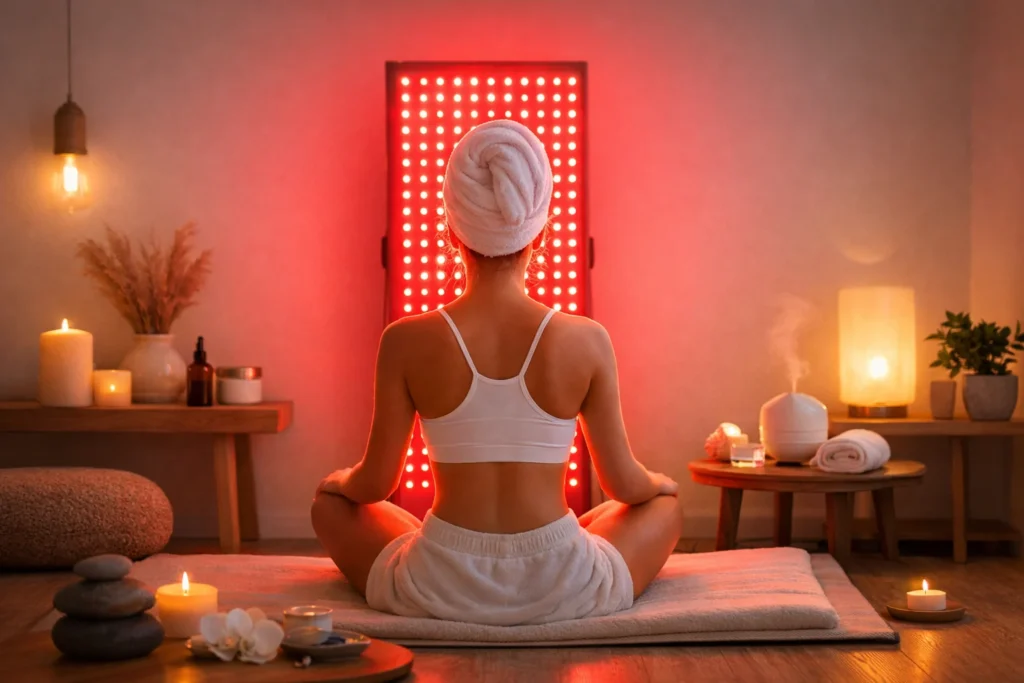
Red light therapy is a non-invasive treatment that uses low-wavelength red or near-infrared light to stimulate cellular energy production, improve skin health, reduce inflammation, and support tissue repair in the body.
If you’ve been scrolling through wellness TikTok, skincare forums, or even gym recovery routines, you’ve probably seen people sitting in front of glowing red panels looking like they’re in a sci-fi movie. That’s red light therapy, and it’s quickly becoming one of the most talked-about wellness technologies today.
But here’s the real question: what does red light therapy do exactly, and does it actually work or is it just another wellness trend?
The short answer: it uses specific wavelengths of light to stimulate your body’s natural healing processes. The longer answer is far more interesting, involving cellular energy, skin rejuvenation, muscle recovery, and even potential mood benefits.
Let’s break it down in a clear, friendly, and science-backed way so you can understand exactly how it works and whether it might be useful for you.
What Is Red Light Therapy?
Red light therapy (often shortened as RLT) is a treatment that exposes your skin to low-level red or near-infrared light. Unlike UV rays from the sun, this light is not harmful and does not burn or damage skin.
Instead, it penetrates deep into the skin layers and interacts with your cells especially the mitochondria (often called the “powerhouses” of cells).
Simple Explanation:
Red light therapy helps your cells produce more energy, which may support:
- Healing
- Repair
- Regeneration
- Reduced inflammation
Think of it like giving your body’s cells a gentle “energy boost” so they can do their job better.
How Does Red Light Therapy Work?
Red light therapy works through a process called photobiomodulation (don’t worry, it sounds more complicated than it is).
Here’s what happens step by step:
- Light enters your skin
- Cells absorb the red/near-infrared wavelengths
- Mitochondria produce more ATP (cell energy)
- Increased energy helps cells repair and function better
In Simple Terms:
More light → more cellular energy → better repair and recovery.
Origin and Rise in Popularity
Red light therapy isn’t brand new. It actually traces back to NASA research in the 1990s, where scientists explored how light could help plants grow in space. They later discovered it might also help human tissue repair.
From there, it slowly moved into:
- Medical research labs
- Dermatology clinics
- Sports recovery centers
- At-home wellness devices
Why It Became Popular:
- Non-invasive (no surgery or needles)
- Painless and relaxing
- Used for skin and recovery goals
- Celebrity and influencer exposure
- Increasing scientific research support
Today, you can find red light panels in spas, gyms, and even home skincare setups.
What Does Red Light Therapy Do?
Red light therapy is often used for a variety of wellness and cosmetic purposes. While results can vary, here are the most commonly reported benefits:
1. Skin Health Improvement
- May reduce wrinkles and fine lines
- Supports collagen production
- Improves skin texture and tone
- May help with acne and redness
2. Muscle Recovery and Pain Relief
- Reduces muscle soreness after workouts
- Supports faster recovery
- May ease joint stiffness
3. Inflammation Reduction
- Helps calm irritated tissues
- May support chronic pain conditions
4. Hair Growth Support
Some studies suggest it may stimulate hair follicles in people experiencing thinning hair.
5. Wound Healing
Used in clinical settings to help speed up tissue repair.
Common Uses of Red Light Therapy
People use red light therapy in different ways depending on their goals:
- Skincare routines (anti-aging, acne reduction)
- Fitness recovery (post-workout healing)
- Pain management (back, neck, joints)
- Hair regrowth treatments
- General wellness and relaxation
Example: How People Actually Use It
Here’s a realistic look at how different users apply red light therapy:
| User Type | Goal | Usage Example |
|---|---|---|
| Skincare user | Anti-aging | 10–15 minutes on face, 3–5 times weekly |
| Athlete | Muscle recovery | Full-body session after workouts |
| Office worker | Pain relief | Neck/back exposure after long sitting |
| Wellness enthusiast | Relaxation | Evening light therapy routine |
Does Red Light Therapy Really Work?
This is where things get nuanced.
What Research Suggests:
- Positive effects on skin health (moderate evidence)
- Potential benefits for muscle recovery
- Possible pain reduction in some cases
What It’s NOT:
- A miracle cure
- Instant results treatment
- A replacement for medical care
Honest Take:
Red light therapy may help improve certain conditions gradually, especially when used consistently, but results vary from person to person.
Red Light Therapy vs Other Light Therapies
Let’s compare it to similar treatments to avoid confusion.
| Therapy Type | Light Used | Purpose | Safety |
|---|---|---|---|
| Red Light Therapy | Red / near-infrared | Healing, skin, recovery | Generally safe |
| Blue Light Therapy | Blue light | Acne treatment, bacteria reduction | Safe with supervision |
| UV Therapy | Ultraviolet | Skin conditions (psoriasis, vitiligo) | Requires medical control |
Key Difference:
Red light therapy does NOT use harmful UV rays, making it much safer for regular use.
Is Red Light Therapy the Same as Infrared Therapy?
Not exactly, but they are closely related.
- Red light therapy: visible red light, focuses on skin and surface tissues
- Infrared therapy: deeper penetration, targets muscles and joints
Many modern devices combine both for better results.
Polite or Professional Ways to Talk About It
If you’re discussing it in a professional setting, you might say:
- “low-level light therapy”
- “photobiomodulation treatment”
- “red and near-infrared light treatment”
These terms sound more clinical and are commonly used in research or medical discussions.
Safety and Usage Tips
Red light therapy is generally considered safe, but proper use matters.
Tips:
- Don’t overuse (stick to recommended session times)
- Protect eyes if device requires it
- Use consistently for best results
- Follow device instructions carefully
- Stay hydrated for better skin response
Who Should Be Careful:
- People with light sensitivity conditions
- Those on photosensitizing medications
- Individuals with certain medical conditions (consult a doctor first)
Example Scenarios
Positive Tone Example:
“I started using red light therapy for my skin, and after a few weeks, my complexion looks more even and calm.”
Neutral Tone Example:
“It’s a relaxing routine, but I’m still waiting to see noticeable changes.”
Dismissive Tone Example:
“It feels nice, but I’m not sure it’s doing much for me.”
Does Red Light Therapy Have Any Alternate Meanings?
In most contexts, red light therapy refers only to the wellness treatment.
However, the phrase “red light” alone can sometimes mean:
- Traffic signal stop light 🚦
- Warning or danger signal
- Red-light district (context-specific urban term)
But in health and wellness discussions, it almost always refers to the therapeutic light treatment.
FAQs
1. What does red light therapy do for your skin?
It may improve collagen production, reduce wrinkles, and support clearer skin.
2. How long does it take to see results?
Most people notice changes after 4–8 weeks of consistent use.
3. Is red light therapy safe for daily use?
Yes, when used properly and within recommended time limits.
4. Can red light therapy help with pain?
It may reduce inflammation and support pain relief in some users.
5. Does red light therapy really grow hair?
Some studies suggest it may stimulate hair follicles, but results vary.
6. Can I use red light therapy at home?
Yes, many devices are designed for safe at-home use.
7. Is red light therapy better than skincare products?
It works differently often used alongside skincare, not instead of it.
8. Are there side effects?
Side effects are rare but may include mild eye strain or skin sensitivity if overused.
Conclusion:
Red light therapy is a non-invasive wellness treatment that uses red and near-infrared light to support your body’s natural healing processes. It is mainly used for improving skin health, reducing inflammation, and supporting muscle recovery.
While it is not a quick fix or miracle cure, many people find it helpful when used consistently over time. The key idea is simple: it helps your cells produce more energy so they can repair and function more efficiently.
If you are considering it, think of red light therapy as a supportive wellness tool, not a replacement for medical treatment or healthy lifestyle habits.
If you think of it as a support system for your body’s natural healing process, you’ll have the most realistic expectations and the best experience.
Discover More Related Articles:

Ryan Thompson is an experienced content writer specializing in slang terms, texting abbreviations, and word meanings. He writes for meanvoro.com, where he creates accurate and easy-to-understand language content for readers.