
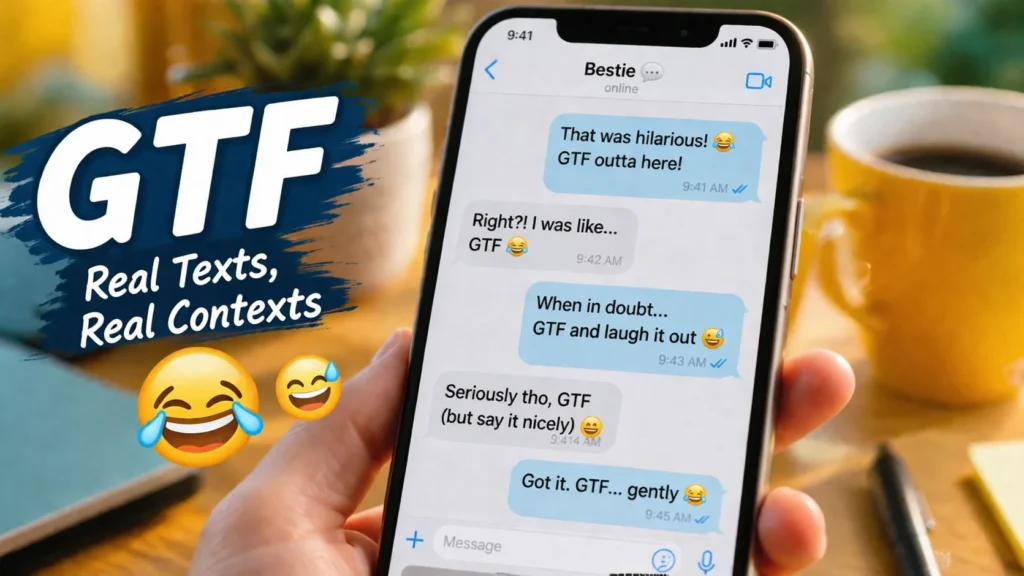
Definition
GTF in text messaging typically stands for “Get The F*,”** often used in phrases like “GTF out” or “GTF away.” It conveys a strong, sometimes aggressive, message telling someone to leave or go away.
If you’ve ever been texting, chatting online, or scrolling through social media, you might have come across the abbreviation GTF and wondered what it means. With the rise of shorthand, acronyms, and internet slang, understanding these abbreviations has become essential to keeping up with digital conversations.
In this guide, we’ll break down GTF, explore its origins, how it’s used, related terms, alternatives, and more.
Origin of GTF
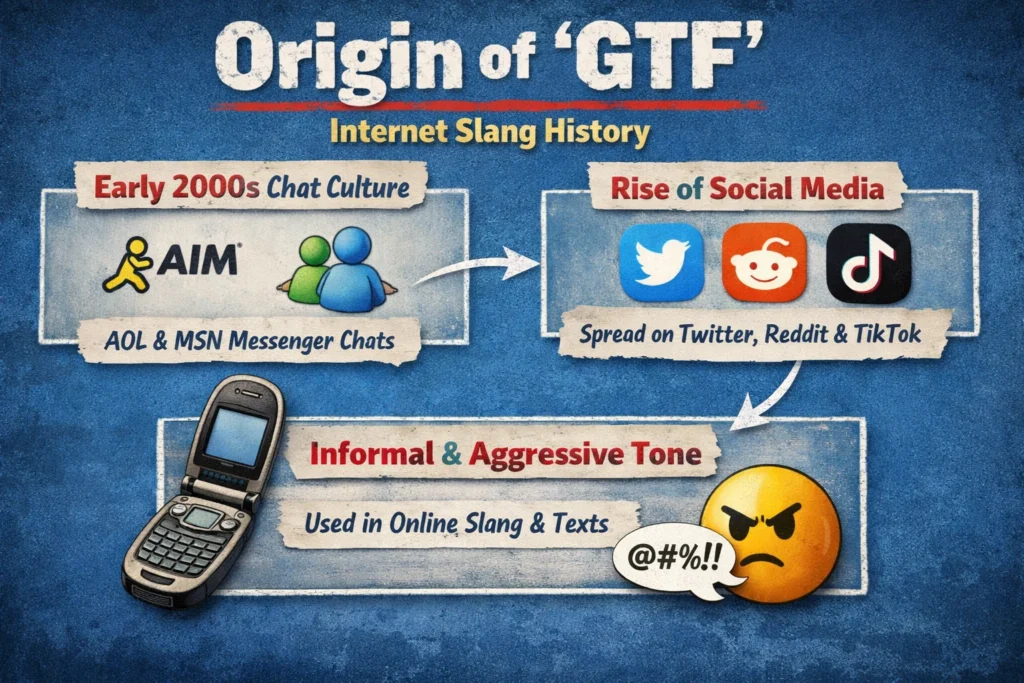
The abbreviation GTF originates from internet slang and texting shorthand that became popular in the early 2000s with the rise of instant messaging, chat rooms, and online forums. Users began abbreviating phrases for speed and convenience, often combining letters from each word.
- Internet culture roots: Early AOL Instant Messenger (AIM) and MSN Messenger chats
- Texting shorthand: Used to reduce typing effort on mobile phones
- Popularity boost: Social media platforms like Twitter, Reddit, and TikTok have spread its usage
Although it is widely recognized among younger audiences and frequent internet users, it is less common in formal communication due to its aggressive tone.
GTS
GTS is a common abbreviation that can have different meanings depending on the context. In text messages and online chats, it most often means “Go To Sleep.” It is usually used when someone is staying up late or when a conversation is ending for the night. In other situations, GTS can also stand for different phrases, so the exact meaning depends on where and how it is used.
Usage of GTF

GTF is most commonly used in informal digital conversations. The tone and context matter a lot. Here’s a breakdown:
Contextual Usage
- Friendly or playful:
- Example: “GTF, you scared me! 😂”
Here, GTF is used jokingly rather than aggressively.
- Example: “GTF, you scared me! 😂”
- Neutral:
- Example: “GTF out of the kitchen, I’m cooking!”
Used as a casual way to ask someone to leave a space.
- Example: “GTF out of the kitchen, I’m cooking!”
- Negative or dismissive:
- Example: “GTF from my chat, I don’t want to talk.”
This conveys anger, frustration, or strong dismissal.
- Example: “GTF from my chat, I don’t want to talk.”
Tips for Usage
- Avoid in professional contexts: It is considered vulgar or offensive.
- Be mindful of audience: Only use it with friends or in informal settings where the tone is understood.
- Combine with emojis: Can soften or clarify tone, e.g., 😂 or 😅 for playful intent.
Examples of GTF in Text
| Example Text Message | Tone | Explanation |
|---|---|---|
| “GTF out, you’re late again!” | Playful | Light teasing among friends |
| “GTF away from my stuff!” | Neutral | Asking someone to leave belongings alone |
| “GTF from my life, I can’t deal!” | Negative | Strong rejection or anger |
| “LOL, GTF! You scared me 😱” | Friendly | Joking, not literal aggression |
Comparison with Related Terms
| Abbreviation | Meaning | Tone | Notes |
|---|---|---|---|
| GTFO | Get The F*** Out | Negative | Very similar to GTF, slightly more common |
| GTG | Got To Go | Neutral | Completely different, means leaving politely |
| G2G | Got To Go | Neutral | Text shorthand variant of GTG |
| STFU | Shut The F*** Up | Negative | Used to tell someone to be quiet, more aggressive |
Alternate Meanings of GTF
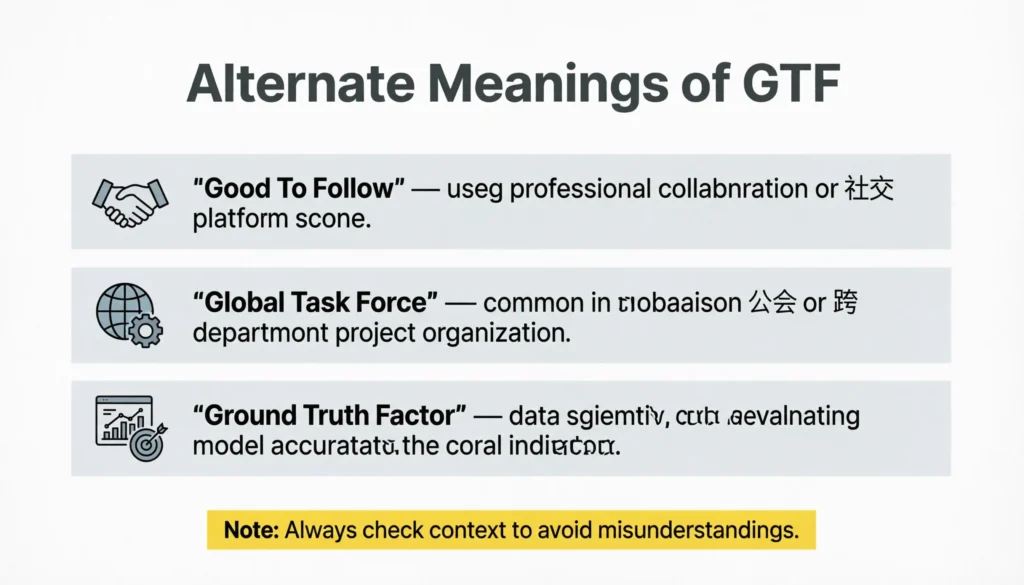
Although the primary meaning of GTF is “Get The F***,” there are other less common interpretations depending on context:
- Good To Follow – Used in professional or social media contexts
- Global Task Force – Seen in gaming or organizational communications
- Ground Truth Factor – Technical term in data science
Note: Always check context to avoid misunderstandings.
Polite or Professional Alternatives
If you want to convey a similar message without using vulgarity:
- “Please leave”
- “Kindly step away”
- “Could you move, please?”
- “I need some space”
These alternatives maintain clarity but are appropriate for professional or sensitive environments.
FAQs
1. Is GTF the same as GTFO?
Yes, both abbreviations convey telling someone to leave, but GTFO is more commonly recognized as aggressive, while GTF can sometimes be playful.
2. Can I use GTF in professional messages?
No, it is considered vulgar and unprofessional. Use polite alternatives like “please leave” instead.
3. Why do people use GTF online?
People use it for speed, humor, or to express strong emotion quickly in informal messaging.
4. Can emojis change the tone of GTF?
Absolutely! Adding 😂, 😅, or 😜 can make it playful instead of aggressive.
5. Is GTF commonly used among teens?
Yes, teens and young adults who are active on social media or texting platforms often use it.
6. Are there safe alternatives for social media?
Yes, phrases like “please go” or “step away” can replace GTF without offending anyone.
7. How should I respond if someone says GTF to me?
Context matters. If it’s playful, laugh or joke back. If it’s aggressive, consider ignoring or disengaging.
8. Does GTF appear in gaming?
Yes, gamers often use it in chats to tell opponents or teammates to leave a game or area.
Conclusion
GTF is a shorthand phrase rooted in internet and texting culture, meaning “Get The F***.” While it’s commonly used among friends and online communities, it carries a tone that can range from playful to aggressive.
Understanding the context, audience, and alternatives ensures you use it appropriately and avoid misunderstandings. Always remember that emojis, tone, and wording can make a big difference in how digital messages are interpreted.
Practical Tips:
- Use GTF only in informal contexts
- Pair with emojis to clarify tone
- Avoid in professional or sensitive conversations
- Consider polite alternatives for clarity
Discover More Related Articles:
- “NT” Mean in Gaming: GO, and Other Multiplayer Games for 2026
- Forced Air Mean in a House: A Homeowner’s Beginner Guide for 2026

Jessica Brown is a language-focused writer who creates well-researched articles on word meanings, abbreviations, and everyday expressions. She contributes to meanvoro.com, delivering simple, reliable, and reader-friendly content designed to make complex terms easy to understand.