
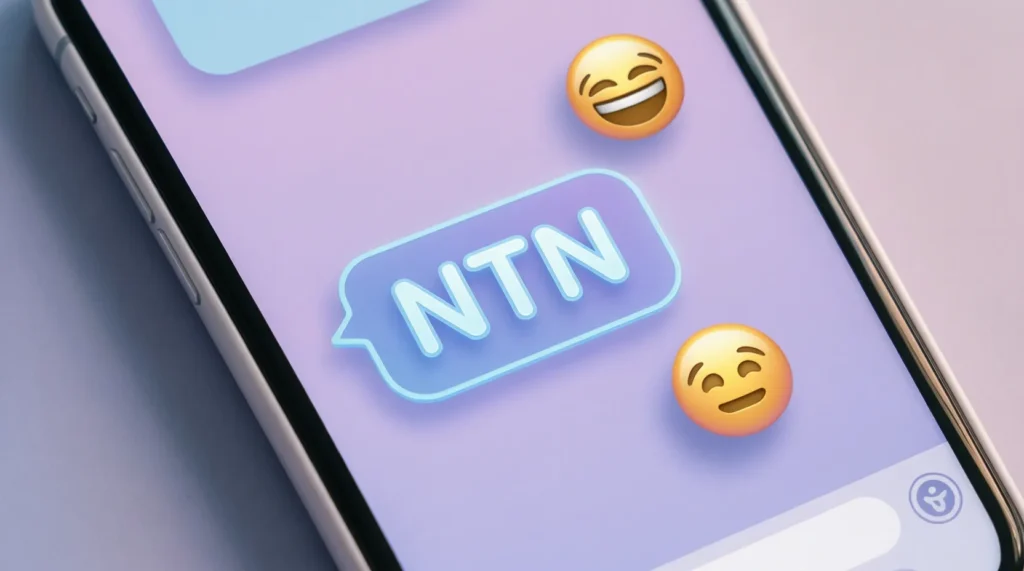
NTN (in text) – NTN is an acronym commonly used in online chats and messaging apps, meaning “Not Too Nice.”
In the fast-paced world of texting, social media, and online chats, acronyms are a quick and convenient way to express thoughts. One abbreviation you might have seen is “NTN Meaning Slang.”
If you’ve been wondering, “What does NTN mean in text?”, you’re in the right place. This guide will explain its definition, origins, contexts, examples, comparisons, and even professional alternatives.
It’s typically used to describe a mild critique, a neutral observation, or a subtle expression of disapproval depending on the context.
Origin of NTN
The origin of NTN in texting isn’t officially documented, but like most modern acronyms, it likely emerged from informal online communities and messaging platforms where brevity is key.
Common Usage of NTN in Texting
NTN is versatile, and its tone can vary depending on the context. Here’s a breakdown of how it’s commonly used:
Friendly or Casual Tone
- Example: “Your new profile pic is NTN 😅”
- Meaning: The sender thinks it’s okay but not outstanding.
- Context: Among friends, used lightly without offense.
Neutral or Observational Tone
- Example: “That movie was NTN.”
- Meaning: Neither good nor bad, just average.
- Context: Used when giving a factual opinion without emotional judgment.
Negative or Dismissive Tone
- Example: “His behavior today was NTN.”
- Meaning: Slightly disapproving, indicating it didn’t meet expectations.
- Context: Could signal mild disappointment.
Examples
| Context | Message Example | Tone | Explanation |
|---|---|---|---|
| Friendly | “That joke was NTN 😂” | Light-hearted | The sender found it okay, not hilarious. |
| Neutral | “The service at the café was NTN.” | Neutral | Just an average experience. |
| Negative | “His attitude was NTN today.” | Slightly critical | Mildly disapproving of someone’s behavior. |
| Playful Banter | “Your outfit is NTN 😏” | Teasing | Friendly teasing about style. |
How to Use NTN Correctly
Using NTN requires understanding the context and tone of your conversation. Here are some tips:
- Know Your Audience – Using NTN with close friends is safe, but in professional contexts, it may seem vague or slightly negative.
- Pair with Emojis – Emojis help convey tone:
- 😂 Lighthearted
- 😏 Teasing
- 😐 Neutral
- Avoid Overuse – Using NTN too often may come across as bland or dismissive.
- Clarify if Needed – If someone seems confused, expand: “NTN = Not Too Nice, just okay.”
Comparison With Related Acronyms
NTN is one of many acronyms used to express opinion or sentiment. Here’s how it compares:
| Acronym | Meaning | Tone | Example |
|---|---|---|---|
| NTN | Not Too Nice | Mildly critical | “His answer was NTN.” |
| SMH | Shaking My Head | Disbelief | “SMH, I can’t believe that.” |
| Meh | Indifference | Neutral/apathetic | “The game was meh.” |
| LOL | Laugh Out Loud | Amused/positive | “That meme made me LOL 😂” |
| TBF | To Be Fair | Neutral/considerate | “TBF, she tried her best.” |
Alternate Meanings of NTN
Although Not Too Nice is the most common meaning in text, NTN can also refer to other contexts:
- National Tax Number – In countries like Pakistan, “NTN” is used for tax identification.
- Neural Transmission Network – Used in neuroscience or AI contexts.
Tip: Always consider context—if someone texts “NTN” in a chat about taxes, it likely doesn’t mean “Not Too Nice.”
Polite or Professional Alternatives
If you want to convey a similar message without sounding dismissive, consider these:
| Phrase | Use Case |
|---|---|
| “It’s okay” | Neutral, casual feedback |
| “Could be better” | Mild critique, polite tone |
| “Not bad” | Lightly positive, friendly |
| “Average” | Neutral observation |
FAQs
Q: What does NTN mean in texting?
A: NTN stands for Not Too Nice, used to express mild critique or neutral opinion.
Q: Is NTN positive or negative?
A: It depends on context it can be friendly, neutral, or slightly negative.
Q: Can I use NTN professionally?
A: It’s best used casually. In professional communication, use terms like “average” or “not bad.”
Q: Is NTN commonly used among teens?
A: Yes, it’s more popular among younger audiences on platforms like WhatsApp, Discord, and TikTok.
Q: What emoji pairs well with NTN?
A: 😅 😂 😐 😏 depending on tone lighthearted, teasing, or neutral.
Q: Can NTN be misunderstood?
A: Yes, without context it may seem dismissive, so pairing with clarification or emojis is recommended.
Q: Are there other meanings of NTN?
A: Yes, it can also mean National Tax Number or Neural Transmission Network, depending on context.
Q: How is NTN different from “meh”?
A: NTN implies mild critique or being “okay,” whereas “meh” shows indifference or lack of interest.
Conclusion
Understanding what NTN means in text can help you communicate more clearly and avoid confusion in casual conversations.
The tone can feel friendly, neutral, or lightly negative depending on context, wording, and emojis.
Overall, acronyms like NTN are part of modern digital language. When used thoughtfully, they can make conversations faster, more expressive, and more natural without causing misunderstandings.
- JOI Mean in Porn | Understanding the Adult Content Slang Term In 2026
- The Root Tele Mean in Television | Understanding the Word’s Origin In 2026
- Closed Circle Mean in Math |The Symbol Most Students Misunderstand In 2026

Jessica Brown is a language-focused writer who creates well-researched articles on word meanings, abbreviations, and everyday expressions. She contributes to meanvoro.com, delivering simple, reliable, and reader-friendly content designed to make complex terms easy to understand.