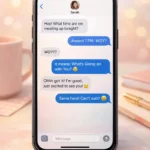

SMM in texting most commonly means “shaking my head”, used to express disappointment, disbelief, mild frustration, or quiet disapproval in a casual, abbreviated way.
If you’ve ever received a text that simply says “SMM Mean in Text” and paused for a second wondering what it meant, you’re not alone. Texting slang moves fast, and short abbreviations like SMM can carry different meanings depending on context.
Sometimes it’s neutral, sometimes dismissive, and other times it’s just a quick way to keep a conversation moving.
In this in-depth guide, we’ll break down what SMM means in text, where it comes from, how people actually use it in real conversations, and what it really sounds like emotionally when someone sends it. By the end, you’ll know exactly how to read and respond to SMM without confusion.
What Does SMM Mean in Texting and Online Chat?
In everyday text messages, SMM = “Shaking My Head.”
It’s similar to SMH, but usually feels softer, quieter, or less dramatic.
People often use SMM when they don’t agree with something, they’re mildly annoyed, find something disappointing or foolish, or want to react without starting an argument. Unlike long replies, SMM communicates emotion quickly, sometimes too quickly, which is why it can feel confusing or passive.
Origin and Popularity of SMM
Where Did SMM Come From?
SMM evolved naturally from SMH (Shaking My Head), which is a very popular internet acronym. It also emerged from a desire for shorter, quicker responses in informal texting culture, especially among younger users.
Over time, some people dropped the “H” and started using SMM instead, especially in fast chats where tone is understood without explanation.
How Popular Is SMM?
While SMH is still more common globally, SMM appears frequently in one-on-one text messages, group chats, casual social media replies, and gaming or Discord chats. It’s especially popular when someone wants to express quiet judgment without escalating the conversation.
Real-World Usage: How SMM Is Used in Texts
SMM is rarely enthusiastic. Its tone depends heavily on context and punctuation.
Common Emotional Tones of SMM
| Tone | What It Communicates |
|---|---|
| Neutral | Mild disagreement or disbelief |
| Dismissive | I don’t approve, but I’m not arguing |
| Frustrated | Quiet annoyance |
| Playful (rare) | Light teasing among close friends |
Example
| Context | Text Message | Meaning |
|---|---|---|
| Friend forgot plans | “You seriously forgot again? smm” | Mild disappointment |
| Bad decision | “You paid that much for it? smm” | Disapproval |
| Repeated mistake | “Same mistake every time smm” | Frustration |
| Casual reaction | “Still raining today smm” | Annoyance, not anger |
Friendly vs Neutral vs Negative Usage
Friendly / Lighthearted
Used jokingly between friends:
“You really watched the whole season in one night? smm 😂”
Here, SMM feels playful, not judgmental.
Neutral / Observational
Used to comment without strong emotion:
“Traffic again smm”
This expresses annoyance without blaming anyone.
Negative / Dismissive
Used when someone is irritated:
“I already told you that. smm”
This version can feel cold or passive-aggressive, especially without emojis.
SMM vs Similar Texting Abbreviations
Here’s how SMM compares to related slang:
| Term | Meaning | Tone |
|---|---|---|
| SMM | Shaking my head | Mild, quiet |
| SMH | Shaking my head | Stronger, more expressive |
| IDK | I don’t know | Neutral |
| TBH | To be honest | Honest, direct |
| OMG | Oh my God | Emotional, surprised |
Key difference:
SMM is usually less dramatic than SMH and more understated.
Alternate Meanings of SMM
While “shaking my head” is the most common meaning in texting, SMM can mean other things in different contexts:
- Social Media Marketing (professional/business context)
- Somebody Missed Me (rare, outdated)
- Send Me More (very uncommon)
In texting and casual chat, SMM almost always means “shaking my head.”
How to Know What SMM Means in Your Conversation
Ask yourself:
- What was said right before?
- Is the conversation casual or serious?
- Is there an emoji attached?
- Is the sender joking or frustrated?
Emoji Clues
- 😂 or 😅 → playful
- 😒 or 🙄 → annoyed
- No emoji → possibly dismissive
Polite or Professional Alternatives to SMM
SMM is informal and not recommended in professional messages.
| Situation | Alternative |
|---|---|
| Professional email | I’m a bit concerned about this. |
| Polite disagreement | I see this differently. |
| Calm frustration | That’s disappointing. |
| Friendly chat | Wow, that’s surprising. |
Using full sentences avoids misunderstandings and keeps tone respectful.
When You Should and Shouldn’t Use SMM
Use SMM When
- Texting close friends
- Reacting casually
- You want to express mild emotion quickly
Avoid SMM When
- Messaging someone sensitive
- Talking to teachers, coworkers, or clients
- Discussing serious topics
FAQs
- What does SMM mean in text messages?
It usually means “shaking my head,” expressing disappointment or disbelief. - Is SMM the same as SMH?
They are similar, but SMM is usually softer and less dramatic than SMH. - Is SMM rude?
It can feel rude if used without emojis or explanation, especially in serious conversations. - What does SMM mean from a girl or boy?
Same meaning—tone depends on context, emojis, and relationship. - Can SMM be playful?
Yes, especially when paired with emojis like 😂 or 😅. - Is SMM used on social media?
Yes, but less commonly than SMH. - What does SMM mean in professional settings?
Usually Social Media Marketing, not “shaking my head.” - Should I reply to SMM?
You can clarify, joke back, or move on—context matters.
Practical Tips for Using SMM Correctly
- Add emojis if you don’t want to sound harsh
- Avoid using it repeatedly—it can feel dismissive
- Don’t use it in formal or sensitive discussions
- When unsure, write the full phrase instead
Conclusion:
SMM is a short, informal way of saying “shaking my head” in text messages. It’s commonly used to express mild disappointment, disbelief, or quiet frustration without starting a full discussion.
The tone of SMM depends on context and the emojis used. It’s a casual expression, not suitable for professional settings, and is generally softer than SMH while still conveying emotion.
Use it thoughtfully to avoid misunderstandings. Understanding small acronyms like SMM can make texting clearer, smoother, and less awkward.
Discover More Related Articles:
- Futz Meaning | From Urban Dictionary & Social Media In 2026
- What Does Parasocial Mean | Streaming & Celebrity Culture In 2026

Ryan Thompson is an experienced content writer specializing in slang terms, texting abbreviations, and word meanings. He writes for meanvoro.com, where he creates accurate and easy-to-understand language content for readers.