Definition:
In crochet, “frog” means to unravel or rip out stitches in a project to correct a mistake or redo part of the work. The term comes from the phrase “rip it, rip it,” which sounds like a frog’s croak. Frogging allows crocheters to undo rows or stitches so they can fix errors or change their design.
If you’ve ever spent hours crocheting a project only to realize there’s a mistake several rows back, you may have heard someone say, “You’ll have to frog it.” At first, that might sound strange. What do frogs have to do with yarn and crochet hooks?
In the crochet world, “frogging” is a common and sometimes unavoidable part of the creative process. Whether you’re a beginner or an experienced crocheter, understanding this quirky term can help you navigate patterns, fix mistakes, and communicate with other crafters more easily.
Let’s break down exactly what “frog” means in crochet, where the term comes from, how it’s used, and when you might need to do it.
What Does “Frog” Mean in Crochet?
In simple terms, to frog a crochet project means to pull out stitches and undo part of the work.
Crocheters frog their work when they:
- Notice a mistake in the pattern
- Miscount stitches
- Want to adjust sizing
- Change yarn or hook size
- Redesign part of a project
Instead of starting a project completely over, frogging lets you rewind your work back to the point where everything was correct.
Example
Imagine you’re crocheting a blanket and realize you skipped a stitch five rows ago. The only way to fix it properly is to frog the rows back to that point and redo them.
While it can feel frustrating, experienced crocheters often say:
“Frogging is just part of the crochet journey.”
Why Is It Called “Frogging”?
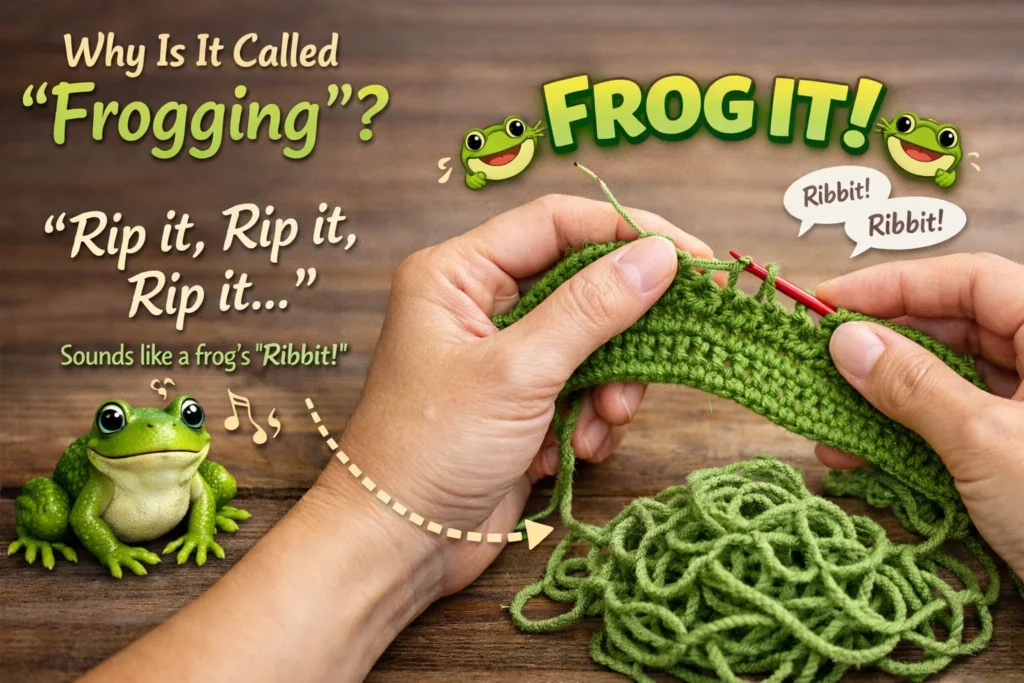
The word “frog” in crochet comes from a playful pun.
When you undo stitches, you often rip the yarn out stitch by stitch. Crocheters jokingly say:
“Rip it, rip it, rip it…”
That phrase sounds very similar to the croaking sound frogs make, which is why the term “frogging” became popular in the crafting community.
How the Term Spread
The phrase likely originated in knitting and crochet communities decades ago but became especially popular through:
- Online crochet forums
- Crafting blogs
- Social media crochet groups
- YouTube tutorials
- Crochet pattern instructions
Today, “frog it” is widely recognized among yarn crafters worldwide.
How Frogging Works in Crochet
Frogging is actually very simple.
You just pull the yarn out from your stitches, reversing your work row by row.
Basic Steps to Frog Crochet
- Remove your crochet hook.
- Locate the end of the yarn from the last stitch.
- Gently pull the yarn to undo the stitches.
- Continue pulling until you reach the point you want to fix.
- Insert the hook back into the correct stitch.
- Resume crocheting.
Tips for Easier Frogging
- Pull slowly to avoid tangles
- Keep yarn untwisted
- Roll yarn back into a ball if necessary
- Use stitch markers to track rows
Real-Life Usage of “Frog” in Crochet Conversations
Crocheters use this term frequently in everyday crafting discussions.
Example Sentences
| Situation | Example Sentence | Tone |
|---|---|---|
| Fixing a mistake | “I realized I added an extra stitch, so I had to frog three rows.” | Neutral |
| Pattern troubleshooting | “If the pattern doesn’t match your count, you might need to frog it.” | Helpful |
| Crochet humor | “Spent two hours crocheting… and ten minutes frogging it all.” 😅 | Friendly |
| Craft group chat | “Don’t worry! We all frog our projects sometimes.” | Encouraging |
When Should You Frog a Crochet Project?
Frogging isn’t always necessary, but there are situations where it’s the best solution.
Common Reasons to Frog
1. Stitch Count Errors
If your stitch count is wrong, the pattern may stop lining up later.
2. Pattern Mistakes
Sometimes crocheters accidentally skip instructions.
3. Uneven Tension
Redoing rows can help achieve consistent tension.
4. Size Problems
If a garment is too big or too small, frogging may be required.
5. Design Changes
You might simply decide you prefer a different stitch or color.
Crochet Terms Related to Frogging
Crochet has its own vocabulary, and several terms are related to frogging.
| Term | Meaning | Difference from Frogging |
|---|---|---|
| Tink | Undo stitches one by one backward | Slower and more controlled |
| Rip Back | Another term for frogging | Same concept |
| Unravel | Removing stitches completely | Can refer to entire project |
| Fixing | Correcting mistakes | May or may not require frogging |
Frog vs Tink
While “frog” is common in crochet, “tink” is more often used in knitting.
- Frog → pull stitches out quickly
- Tink → undo stitches one at a time
Is Frogging Always Necessary?
Not always.
Many crocheters choose to leave small mistakes if they won’t affect the final result.
When You Might Skip Frogging
- Tiny stitch errors
- Slight tension differences
- Minor visual imperfections
- Hidden mistakes inside projects
Some crafters follow the popular saying:
“Handmade items should have a little personality.”
Pros and Cons of Frogging
Like many crochet techniques, frogging has advantages and disadvantages.
Advantages
- Fixes mistakes properly
- Maintains pattern accuracy
- Prevents future issues
- Saves yarn compared to restarting
Disadvantages
- Time-consuming
- Can feel frustrating
- May cause yarn tangles
- Some yarn types snag easily
Types of Projects Where Frogging Happens Most
Certain crochet projects are more likely to require frogging.
Common Examples
Garments
- Sweaters
- Cardigans
- Tops
Sizing mistakes are common.
Amigurumi
Crochet toys require precise stitch counts.
Blankets
Large patterns make stitch errors easier to miss.
Lace Crochet
Complex stitches often require adjustments.
Tips to Avoid Excessive Frogging
While frogging is normal, there are ways to reduce how often it happens.
Helpful Crochet Habits
1. Count stitches every row
This prevents small mistakes from becoming bigger ones.
2. Use stitch markers
Markers help track pattern repeats.
3. Read the pattern first
Understanding instructions avoids confusion later.
4. Check tension frequently
Consistent tension improves overall results.
5. Take breaks
Crocheting while tired leads to mistakes.
Alternate Meanings of “Frog”
Although the term has a specific meaning in crochet, “frog” can mean different things in other contexts.
Other Meanings
| Context | Meaning |
|---|---|
| Animal | A small amphibian known for jumping and croaking |
| Sewing/Fashion | A decorative fastener used on garments |
| Military slang | Historically used as a nickname for French soldiers |
| Programming | A debugging technique acronym (rare usage) |
However, in crochet communities, the word almost always refers to unraveling stitches.
Polite or Professional Alternatives
In formal tutorials or instructions, some creators use different wording instead of “frog.”
Alternatives
- Unravel the stitches
- Undo previous rows
- Rip back the stitches
- Remove the last rows
For example:
Instead of saying
“Frog the last three rows,”
A pattern might say:
“Unravel the last three rows and restart from Row 12.”
Crochet Community Culture Around Frogging
Interestingly, frogging has become part of crochet humor and culture.
Crafters often joke about it because everyone experiences it.
Popular Crochet Jokes
- “Crochet: 10% stitching, 90% frogging.”
- “I didn’t make a mistake… I just discovered a new frogging opportunity.”
- “If in doubt, frog it!”
These jokes help make the learning process less frustrating.
FAQs:
1. Why do crocheters say “frog”?
Crocheters say “frog” because the phrase “rip it, rip it” sounds like a frog’s croak. It refers to ripping out stitches to undo work.
2. What does it mean to frog a crochet project?
To frog a crochet project means to unravel stitches to fix a mistake or redo part of the pattern.
3. Is frogging bad in crochet?
No. Frogging is a normal and helpful part of crochet that allows you to correct errors and improve your project.
4. Can you frog crochet without damaging yarn?
Yes. If you pull the yarn gently and avoid snagging, most yarn types can be frogged without damage.
5. What is the difference between frogging and unraveling?
They are essentially the same. Frogging is just the crochet community’s slang term for unraveling stitches.
6. Do professional crocheters frog their work?
Absolutely. Even experienced crocheters frog rows when patterns don’t line up or mistakes occur.
7. How far should you frog a crochet project?
You should frog until you reach the point where the stitches were still correct, then continue crocheting from there.
8. Is frogging common in crochet?
Yes. Most crocheters frog at least occasionally, especially when working on complex patterns or large projects.
Conclusion
In the crochet world, “frog” simply means to undo or unravel stitches so you can fix a mistake or adjust your project. The quirky term comes from the playful phrase “rip it, rip it,” which resembles a frog’s croak.
Although frogging can feel frustrating in the moment, it’s actually an essential skill that helps crocheters create better, more accurate projects.
The next time someone in a crochet group says “I had to frog it,” you’ll know exactly what they mean — and you’ll realize it’s just part of the crafting adventure.
Discover More Related Articles:

Jessica Brown is a language-focused writer who creates well-researched articles on word meanings, abbreviations, and everyday expressions. She contributes to meanvoro.com, delivering simple, reliable, and reader-friendly content designed to make complex terms easy to understand.