
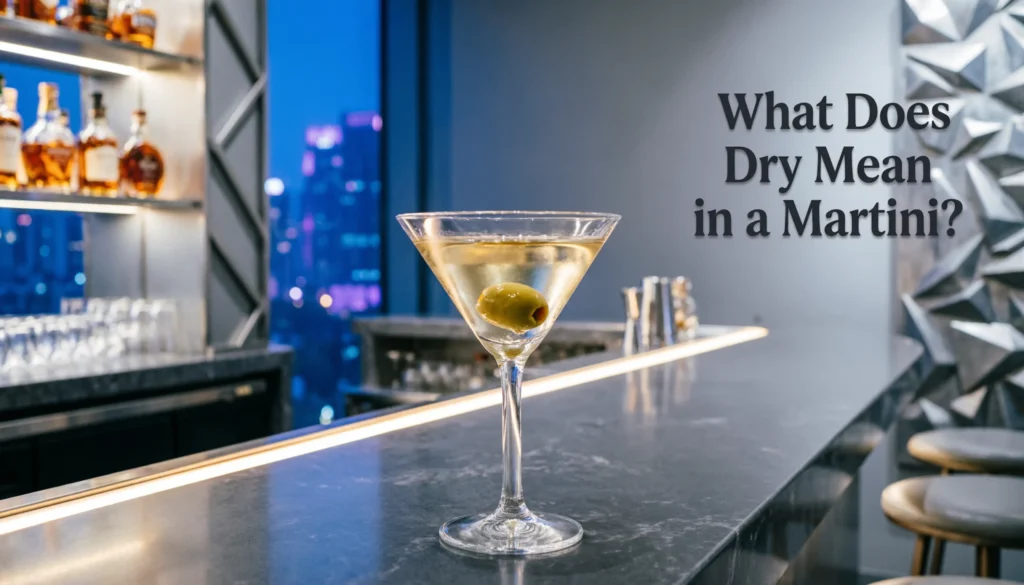
Definition:
In a martini, “dry” means the drink contains less vermouth and more gin or vodka. The drier the martini, the smaller the amount of vermouth used. A “very dry” martini may contain only a tiny splash of vermouth or simply a rinse of the glass.
If you have ever ordered a martini and heard someone say “Make it dry,” you may have wondered what that really means. Does it affect sweetness? Alcohol level? Flavor?
The word “dry” in cocktail culture has a specific meaning, especially when it comes to one of the world’s most iconic drinks: the martini.
A martini is known for its simplicity and sophistication. Traditionally made with gin and vermouth, this classic cocktail has evolved into many variations. The term “dry” plays a major role in how the drink tastes and feels.
Understanding what “dry” means helps you:
- Order a martini confidently
- Adjust flavor to your preference
- Understand cocktail terminology
- Appreciate the history of classic drinks
Whether you prefer bold and spirit-forward flavors or a smoother balance, knowing how “dry” works changes the entire experience.
What Is a Martini?
A classic martini typically contains:
- Gin
- Dry vermouth
- Ice
- Garnish such as an olive or lemon twist
Some variations use vodka instead of gin.
The ratio between gin or vodka and vermouth determines how “dry” the martini is.
What Does “Dry” Actually Mean?
In cocktail terminology, “dry” refers to less sweetness and less vermouth.
Dry vermouth itself is not sugary like sweet vermouth. However, it adds herbal, floral, and slightly sweet notes. Reducing it makes the martini:
- Stronger in alcohol taste
- Cleaner and sharper
- More spirit-forward
- Less aromatic
The less vermouth used, the “drier” the martini.
Levels of Dryness in a Martini
Here is how dryness typically works:
| Martini Type | Vermouth Amount | Flavor Profile |
|---|---|---|
| Wet Martini | More vermouth | Smoother, herbal, slightly softer |
| Standard Dry Martini | Small amount of vermouth | Balanced but spirit-forward |
| Very Dry Martini | Minimal vermouth | Strong, crisp, sharp |
| Extra Dry Martini | Vermouth rinse only | Almost pure gin or vodka |
A “wet” martini is the opposite of dry and contains more vermouth.
Example Orders and What They Mean
Here are common martini orders and their meanings:
| Order | Meaning |
|---|---|
| Dry martini | Less vermouth than standard |
| Extra dry martini | Very little vermouth |
| Very dry martini | Barely any vermouth |
| Wet martini | More vermouth than usual |
| Bone dry martini | No vermouth at all |
Does “Dry” Mean Less Alcohol?
No. In fact, a drier martini usually tastes stronger.
Since vermouth has a lower alcohol content than gin or vodka, reducing it increases the alcohol concentration of the drink.
So:
- More vermouth = slightly softer taste
- Less vermouth = stronger spirit flavor
The History of the Dry Martini
Early martinis in the late 1800s actually contained much more vermouth than today’s versions. Over time, preferences shifted toward drier drinks.
During the early 20th century:
- Gin became more dominant
- Drinkers preferred sharper flavors
- “Dry martini” became fashionable
The modern dry martini is now considered the classic version.
Famous Cultural Influence
The dry martini gained global fame thanks to fictional spy James Bond, who famously ordered his martinis “shaken, not stirred.”
Although Bond’s version is typically vodka-based, the idea of a dry martini became associated with elegance, confidence, and sophistication.
Dry Martini vs Other Martini Styles
Understanding how dry compares to other styles helps clarify the concept.
| Martini Style | Key Feature | Taste |
|---|---|---|
| Dry Martini | Less vermouth | Crisp and strong |
| Dirty Martini | Olive brine added | Salty and savory |
| Gibson | Garnished with cocktail onion | Slightly sweet and sharp |
| Sweet Martini | Uses sweet vermouth | Richer and smoother |
A dry martini focuses on purity and simplicity.
Real-Life Context Examples
Here is how “dry” might be used in conversation:
Friendly tone:
“I like my martini extra dry. Just a whisper of vermouth.”
Neutral tone:
“He ordered a dry gin martini with olives.”
Sophisticated tone:
“A properly balanced dry martini highlights the botanical notes of the gin.”
The tone often reflects personal preference and cocktail culture knowledge.
Common Mistakes About “Dry”
Many people assume “dry” means:
- Less alcohol
- No ice
- Not sweet at all
In reality, “dry” specifically refers to less vermouth, not necessarily sweetness alone.
Polite Ways to Order a Dry Martini
If ordering in a professional or upscale setting, you might say:
- “I’ll have a dry gin martini, please.”
- “Vodka martini, extra dry.”
- “Gin martini, very dry, with a lemon twist.”
Clear communication ensures you receive the exact flavor profile you want.
FAQs
- What does dry mean in a martini?
It means less vermouth and more gin or vodka. - Is a dry martini stronger?
Yes, because it contains proportionally more high-proof spirit. - What is an extra dry martini?
A martini with very little vermouth, sometimes just a rinse. - Does dry mean no vermouth?
Not always. “Bone dry” typically means no vermouth at all. - Is dry the same as dirty?
No. Dirty means olive brine is added. - What is a wet martini?
A martini with more vermouth. - Does dry mean unsweet?
In cocktails, it usually implies less sweetness, but specifically refers to vermouth quantity. - Which is more traditional, wet or dry?
Historically, martinis were wetter. Modern preferences favor dry versions.
Practical Tips for Choosing Your Martini Style
- If you enjoy herbal notes, choose a slightly wet martini.
- If you prefer strong, bold flavors, order it dry.
- If you want intense alcohol presence, request extra dry.
- Experiment with garnishes like olives or lemon twist to enhance flavor.
Conclusion
In a martini, “dry” simply means less vermouth and a stronger emphasis on gin or vodka. The drier the martini, the sharper and more spirit-forward it becomes.
Understanding this small but powerful word helps you:
- Order confidently
- Customize flavor
- Appreciate cocktail history
- Avoid confusion at the bar
Whether you enjoy a balanced martini or one that is nearly pure gin, knowing what “dry” means ensures your drink matches your taste.
Discover More Related Articles:
- Lamentation Mean in the Bible: Why It Matters for Christians in 2026
- Adam Mean in the Bible: Symbolism, and Impact in 2026

Madison Taylor is an experienced content writer who focuses on researching and explaining word meanings, slang, and texting terms. She writes for meanvoro.com, creating clear and accurate to help readers understand language easily.