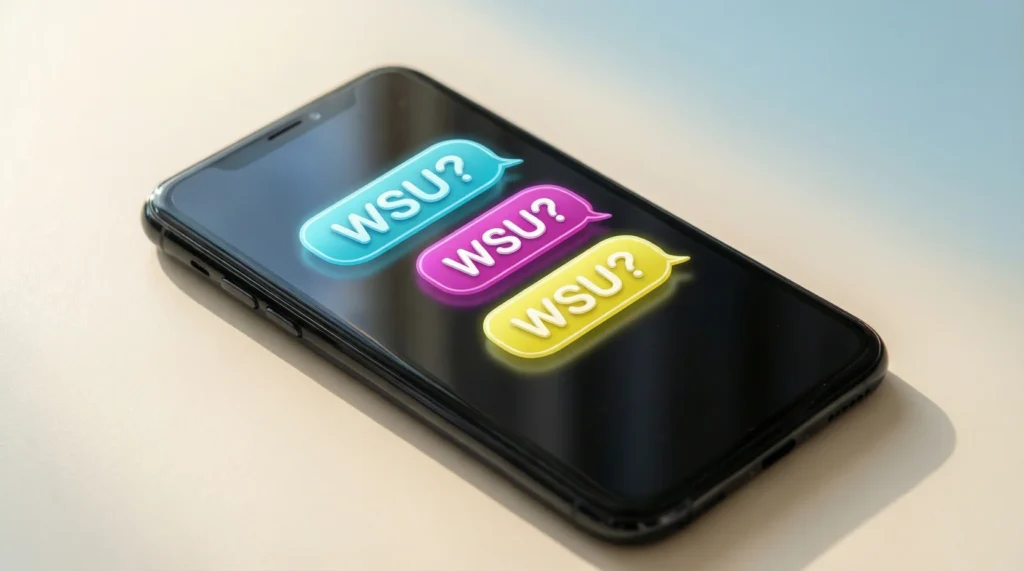
Ever opened a message that simply says “WSU Meaning in Chat and Texting” and paused to figure out what it means? You’re not alone. Short slang terms like WSU are everywhere in texting, Snapchat, Instagram DMs, and WhatsApp.
While they look simple, their meaning can shift slightly depending on tone, context, and how well you know the person.
This in-depth guide explains what WSU means in texting, how people actually use it in real conversations, and how you can respond naturally without sounding awkward or confused.
Definition
WSU most commonly means “What’s up?” in texting ad online messaging.
It is a casual greeting used to ask how someone is doing or what they are currently up to.
What Does WSU Mean in Texting?
In everyday digital conversations, WSU is shorthand for “What’s up?”
People use it to:
- Start a conversation
- Check in with someone
- Ask what someone is doing right now
It serves the same purpose as phrases like:
- “Hey, what’s going on?”
- “Sup?”
- “How’s it going?”
In short, WSU is friendly, informal, and widely understood.
Origin and Popularity of WSU
Where did WSU come from?
WSU developed from the natural shortening of common phrases during the rise of texting culture. As people began typing faster and using fewer characters, phrases like “What’s up?” were shortened into slang forms.
Over time, WSU became a convenient, recognizable abbreviation that worked well in casual digital communication.
Why did WSU become so popular?
WSU remains popular because it is:
- Quick to type
- Easy to understand
- Flexible in tone
- Suitable for casual conversations
It is especially common among teens and young adults, but it is used by people of all ages in informal messaging.
How WSU Is Used in Real Conversations
WSU is most often used as a conversation starter, but its tone can change depending on punctuation, emojis, and context.
It commonly appears in:
- Text messages
- Snapchat chats
- Instagram DMs
- WhatsApp conversations
Tone Variations of WSU With Examples
Friendly or Casual Tone
This is the most common usage.
Example:
“WSU? Haven’t talked all day 😊”
Meaning:
A relaxed way to say hello and check in.
Neutral Tone
Short and straightforward.
Example:
“WSU”Meaning:
A simple greeting with no strong emotion attached.
Curious or Flirty Tone
Often includes emojis or follow-up questions.
Example:
“WSU 👀”
“WSU tonight?”
Meaning:
Curiosity about plans or subtle flirting.
Dry or Bored Tone
Punctuation can change how it feels.
Example:
“WSU.”
Meaning:
May come across as uninterested or low-effort, depending on the situation.
Example:
| Message | Tone | Meaning |
|---|---|---|
| WSU? | Friendly | Casual greeting |
| WSU 👀 | Curious or flirty | Interested in plans |
| WSU tonight? | Social | Asking about availability |
| WSU. | Dry or neutral | Minimal effort check-in |
| WSU lol | Playful | Lighthearted opener |
How to Respond to WSU Naturally
Your response should match the tone of the message and your relationship with the sender.
Casual responses
- “Not much, you?”
- “Just relaxing.”
- “Watching a show.”
Friendly responses
- “Hey! Just got home, what about you?”
- “Busy day, finally free.”
Playful or flirty responses
- “Waiting to see what you’re doing.”
- “Thinking about you.”
WSU Compared to Similar Texting Slang
| Slang | Full Meaning | Typical Use |
|---|---|---|
| WSU | What’s up? | General greeting |
| SUP | What’s up? | Very casual |
| WYD | What are you doing? | Asking about activity |
| HRU | How are you? | Emotional check-in |
| WYA | Where are you? | Asking location |
| HMU | Hit me up | Asking to be contacted |
Alternate Meanings of WSU
Although rare in texting, WSU can have other meanings depending on context.
- Washington State University
- Western Sydney University
In casual messages or social media chats, however, WSU almost always means “What’s up?”
Polite or Professional Alternatives to WSU
WSU is informal and not ideal for professional communication.
Better alternatives include:
- “Hello, how are you?”
- “Hope you’re doing well.”
- “Just checking in.”
- “How’s everything going?”
These options sound clearer and more respectful in work or formal settings.
When You Should Avoid Using WSU
Avoid using WSU:
- In work emails
- When messaging teachers or supervisors
- In formal introductions
In those situations, complete sentences help create a better impression.
Why WSU Is Still Common Today
WSU continues to be widely used because it fits modern communication habits. It is quick, casual, and low-pressure, making it an easy way to start a conversation without sounding too formal or intrusive.
FAQs
What does WSU mean in texting?
WSU usually means “What’s up?” and is used as a casual greeting.
Is WSU rude?
No, but it can sound dry if sent without context or emojis.
Can WSU be flirty?
Yes, especially when paired with emojis or questions about plans.
What is the difference between WSU and WYD?
WSU is a general greeting, while WYD asks specifically what someone is doing.
Is WSU professional?
No, it is best reserved for casual conversations.
How should I reply to WSU?
You can reply by saying what you’re doing or asking the same question back.
Does WSU always mean “What’s up?”
In texting, yes, in most cases.
Is WSU still popular?
Yes, it is still commonly used in everyday texting and social media chats.
Conclusion:
WSU is a simple and widely used texting abbreviation that means “What’s up?” It is best used in casual conversations and works well as a friendly conversation starter. Tone matters, so punctuation and emojis can change how it feels. When messaging professionally, it is better to use full phrases instead.
Used correctly, WSU keeps conversations light, natural, and easygoing.
Search More Related Articles :
- The Meaning of the Rainbow in the Bible : Explained for Christians (2026)
- VOC Paint Meaning: Low-VOC vs Traditional Paints Compared (2026)

Jessica Brown is a language-focused writer who creates well-researched articles on word meanings, abbreviations, and everyday expressions. She contributes to meanvoro.com, delivering simple, reliable, and reader-friendly content designed to make complex terms easy to understand.